
Pending Withdrawals Can Be Reversed. That’s Not a Bug. It’s the Most Dangerous Feature in Your Casino Account.
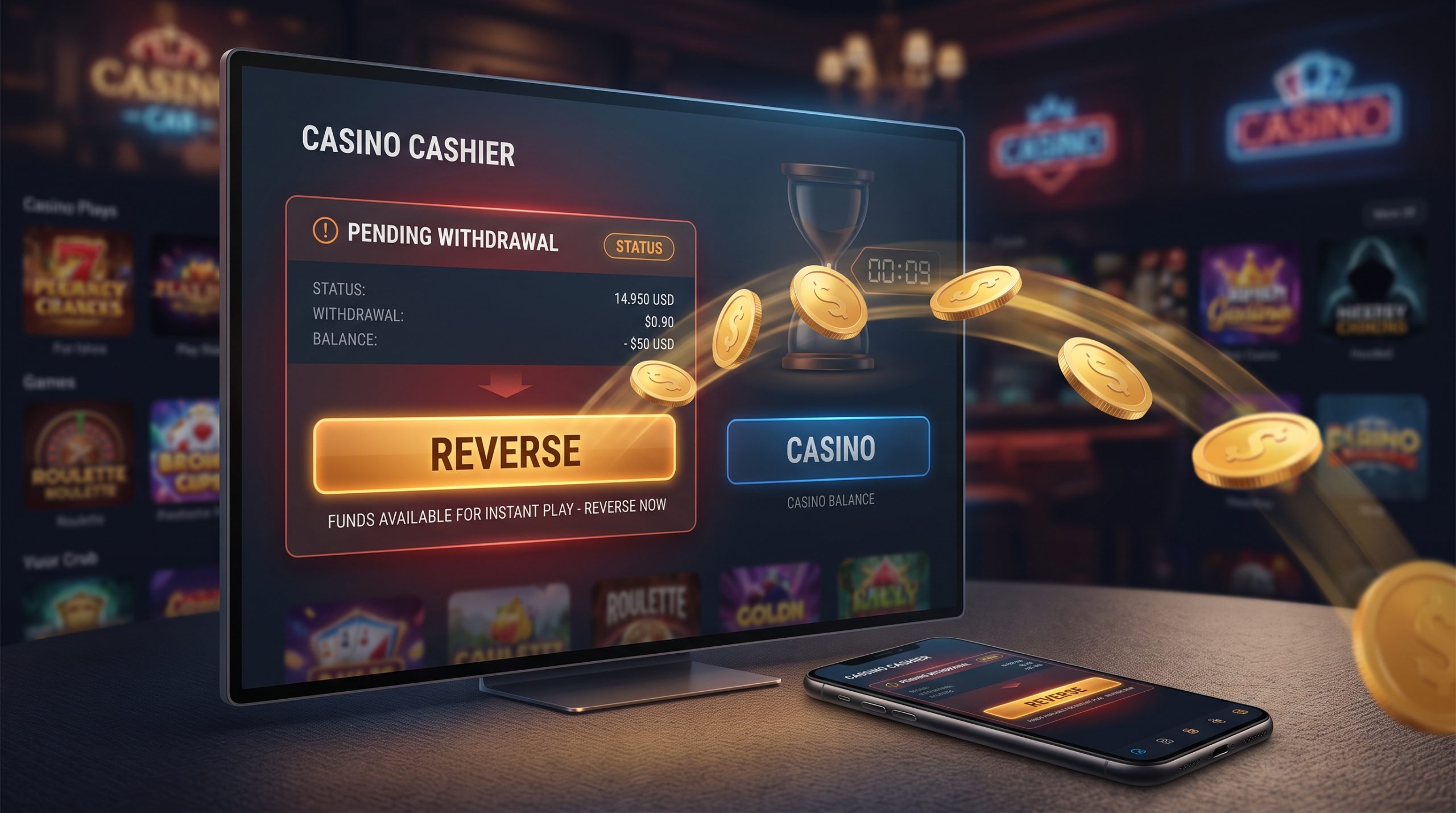
Every Canadian online casino has a cashier page designed to make deposits feel instant and withdrawals feel like a process. That’s not an accident. But there’s one specific feature buried in that process that does more damage to player bankrolls than any wagering requirement or bonus term I’ve ever written about. It’s the pending withdrawal reversal button.
You request a withdrawal. The casino puts it in “pending” status. And then, for a window that can last anywhere from 24 to 72 hours depending on the operator, a button appears that lets you cancel the withdrawal and dump the funds back into your playable balance. It’s presented as flexibility. A convenience. A chance to change your mind. What it actually does is give you a countdown timer to talk yourself out of leaving with your money.
This isn’t a glitch or an oversight. It’s a deliberate design choice, and understanding how it works changes the way you think about every withdrawal you make.
How the Pending Window Actually Works
When you submit a withdrawal request at most online casinos available to Canadian players, the funds don’t leave the platform immediately. They enter a holding state. The casino labels this “pending” or “processing,” and during this window, the money sits in a kind of limbo. It’s been removed from your playable balance, but it hasn’t been sent to your bank or e-wallet yet.
The length of this window varies. Some operators process withdrawals within a few hours. Others hold them for 24, 48, or even 72 hours before the internal review is complete and the payment is actually released. During that entire window, many casinos display a “cancel” or “reverse” option in the cashier. One click, and the withdrawal request disappears. The funds reappear in your casino balance, ready to be wagered again.
The mechanic is simple. The psychology behind it is not.
Why It Exists, and Why the Explanation Doesn’t Hold Up
The standard justification is player convenience. Maybe you requested a withdrawal by mistake. Maybe you changed your mind about the amount. Maybe you need the funds available for a different reason. Fair enough. But that reasoning falls apart when you look at how the feature is implemented.
The reversal button is typically prominent. It’s easy to find, easy to click, and requires minimal confirmation. Meanwhile, the withdrawal itself takes time to process. The asymmetry is the tell. Making a withdrawal is slow. Reversing one is instant. If this were genuinely about convenience, the reversal process would be just as deliberate as the withdrawal process. It isn’t, because convenience isn’t the primary function.
The primary function is re-engagement. A player who has decided to cash out is a player who has stopped playing. The pending window, combined with a visible reversal option, creates a friction point between the decision to leave and actually leaving. Every hour that money sits in pending status is another hour the player might reconsider.
The Session Psychology That Makes This Dangerous
I’ve written before about how the second session matters more than the first. The pending reversal is the mechanism that turns a clean exit into a second session. Here’s the pattern I’ve seen described by players more times than I can count: they win, they request a withdrawal, they close the browser. Then, hours later, they log back in to “check the status.” The money is still pending. The reversal button is right there. The game lobby is one click away.
The decision to withdraw was made with a clear head. The decision to reverse is almost never made with one. It’s made at 11 p.m. after a long day, or during a break when you’re bored, or because you saw an email from the casino promoting a new game. The reversal button doesn’t create the impulse. It removes the barrier between the impulse and the action.
This is why the feature does disproportionate harm. It targets the exact moment when a player is most vulnerable to changing a good decision into a bad one.
Which Operators Handle This Differently
Not every casino handles the pending window the same way. Provincially regulated operators in Ontario, operating under AGCO and iGaming Ontario’s framework, generally process withdrawals faster and with less ambiguity. Some operators in the regulated space have moved toward “no reversal” policies, where once a withdrawal is submitted, it cannot be cancelled. That’s a meaningful player protection measure, and it’s worth checking before you sign up anywhere.
On the grey market side, pending windows tend to be longer, and the reversal option is almost always available. Some offshore operators extend the pending period to 48 or 72 hours specifically because the data shows a percentage of players will reverse during that time. The longer the window, the higher the reversal rate. That’s not speculation. It’s the reason the window exists at that length.
When I’m evaluating a casino’s cashier, the pending reversal policy is one of the first things I check. An operator that doesn’t let you reverse a pending withdrawal is, in practical terms, a safer place to play than one that does. It’s a small detail that reveals a lot about whose side the platform is designed to serve.
What You Can Actually Do About It
If you play at a casino that allows pending reversals, the most effective countermeasure is also the simplest: don’t log back in to check. The withdrawal will process whether you watch it or not. Checking the status serves no functional purpose. It only puts you back in front of the reversal button.
Some players I’ve spoken with use a practical workaround. They complete KYC verification before their first withdrawal, so there’s no document-related delay that might extend the pending window. They withdraw via Interac e-Transfer when available, because Interac transfers on the payment-processor side are typically fast once the casino releases the funds. The goal is to shrink the total time between “I want to cash out” and “the money is in my bank account” to as short a window as possible.
Another approach: choose operators that explicitly advertise no-reversal withdrawal policies. It’s not a common marketing point, but it should be. Any casino willing to remove that button is telling you something about how they think about player retention versus player protection.
The Regulatory Angle Nobody’s Pushing
Under Ontario’s regulatory framework, there are requirements around responsible gambling tools, transaction transparency, and player protection. But as of June 2025, there’s no specific published rule that prohibits pending withdrawal reversals or mandates a maximum pending window length. The UK Gambling Commission banned reversal options entirely in 2020. That single rule change was one of the most impactful player protection measures any regulator has implemented in the past decade.
Canadian regulators haven’t followed suit yet. Whether AGCO or the newer Alberta iGaming framework under AGLC will address this remains to be seen. But if you’re looking for a single regulatory change that would do more for Canadian players than almost anything else on the table, this is it. Eliminate the reversal button. Force operators to process withdrawals as final. The technology exists. The will is the variable.
Honest Assessment
The pending withdrawal reversal is the single most player-hostile feature that’s still treated as normal in online casino design. It’s not hidden in fine print. It’s not buried in terms and conditions. It’s a button, sitting in your cashier, waiting for you to make a decision you’ve already made once and unmake it. The fact that it’s framed as a convenience feature makes it worse, not better. Convenience that consistently works against the player’s interest isn’t convenience. It’s retention engineering with a friendly label.
If you play at a casino that offers reversals, treat the pending window as a no-login zone. If you’re choosing between two otherwise similar operators, pick the one that doesn’t let you reverse. And if a regulator is reading this: the UK already solved this problem. The playbook exists.
The best withdrawal is the one you never see again after you click submit. Any casino that agrees with that statement will remove the button. The ones that don’t agree are telling you exactly where their priorities sit.
Gambling is entertainment with a cost attached, so set limits before you play and visit our Responsible Gaming page for support resources, safer-play tools, and help options if gambling stops feeling fun.



Leave a Comment