
Your Casino’s Two-Factor Authentication Is Optional. Here’s Why Turning It On Changes Everything About Your Account Security.
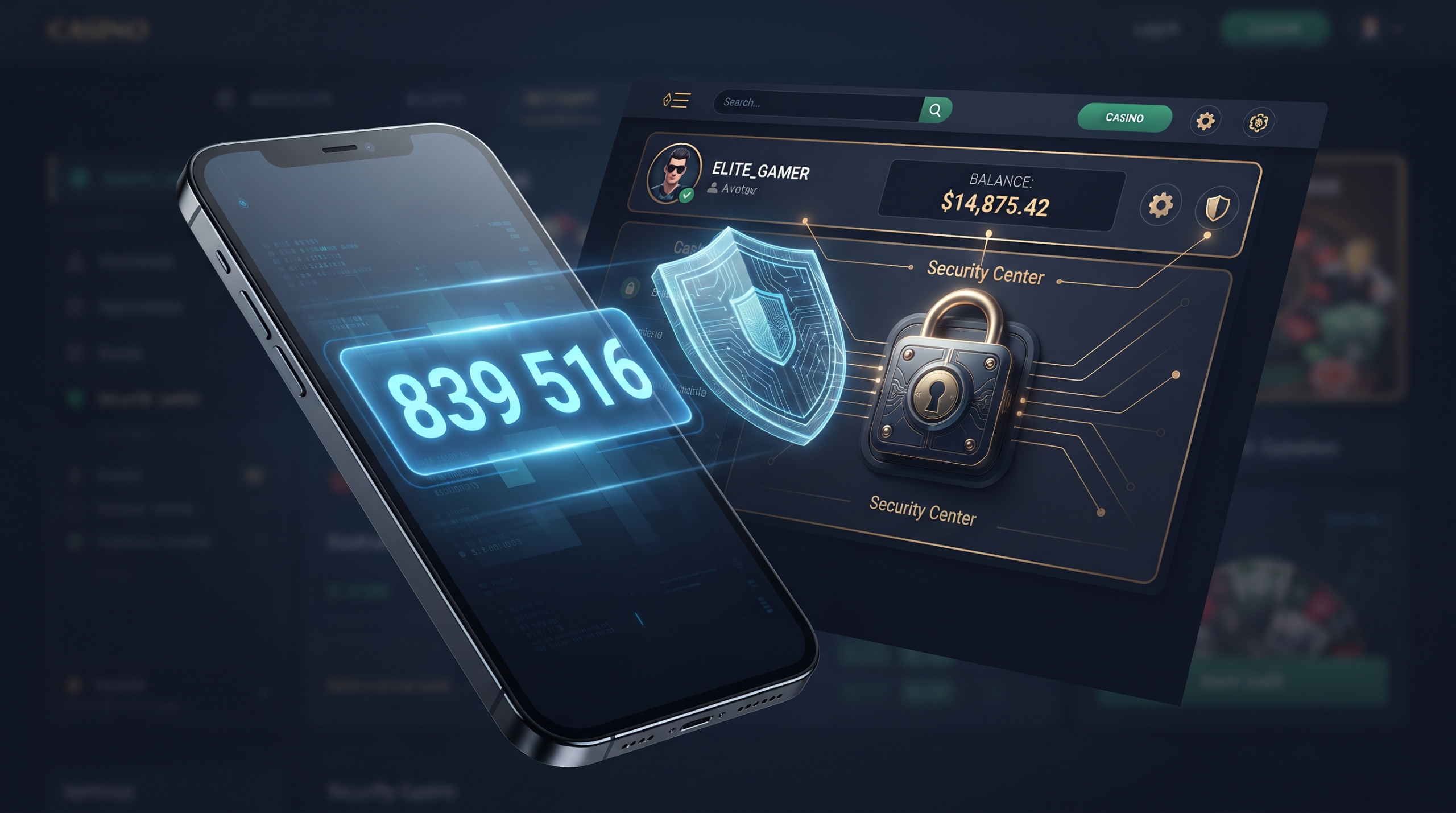
Every Canadian online casino will let you deposit, play, and request a withdrawal with nothing more than a password. That password sits between your bankroll and anyone who can guess it, phish it, or find it in a data breach from a completely unrelated site. The security gap isn’t theoretical. It’s the default setting.
Two-factor authentication closes that gap. It adds a second verification step, usually a code sent to your phone or generated by an app, so a stolen password alone isn’t enough to access your account. The feature exists at most regulated operators. It’s almost always optional. And the overwhelming majority of players never turn it on, because nobody makes them and the casino doesn’t exactly advertise it.
That’s worth examining, because the players most likely to skip 2FA are the same ones carrying real balances, loyalty points, and saved payment methods in accounts protected by a single string of characters they probably reuse somewhere else.
What Two-Factor Authentication Actually Does at a Casino
Two-factor authentication, or 2FA, requires two separate pieces of evidence before granting access. The first factor is something you know: your password. The second is something you have: typically your phone. When you log in, the casino sends a one-time code via SMS or prompts you through an authenticator app like Google Authenticator or Authy. You enter the code, and only then does the session open.
The mechanism is simple. The protection it provides is not trivial. Without 2FA, an attacker who obtains your password through a phishing email, a credential-stuffing attack, or a third-party data breach has immediate access to your casino account. With 2FA enabled, they also need physical access to your phone or authenticator app. That’s a fundamentally different level of difficulty.
Most provincially regulated operators in Canada offer SMS-based 2FA at minimum. Some support authenticator apps, which are more secure because they don’t rely on your mobile carrier. The distinction matters. SIM-swapping attacks, where someone convinces your carrier to transfer your number, can defeat SMS-based 2FA. App-based 2FA is resistant to that vector. If your casino offers the app option, that’s the one to use.
Why Most Players Never Enable It
I’ve looked at the account settings pages of more than a dozen operators available to Canadian players. The 2FA toggle is almost never on the main dashboard. It’s buried under “Security,” sometimes nested inside “Advanced Settings,” occasionally behind a submenu that requires scrolling past notification preferences and marketing opt-ins. It’s there. It’s not prominent.
Casinos have no commercial incentive to push 2FA adoption. Every additional login step introduces friction, and friction reduces session frequency. A player who has to find their phone, open an app, and enter a six-digit code every time they log in is a player who might not bother logging in at all. From the operator’s perspective, the calculus is straightforward: security features that reduce engagement don’t get promoted.
Players, meanwhile, tend to underestimate the value of what’s sitting in their casino account. It’s not just the cash balance. It’s saved Interac e-Transfer details, linked credit cards, accumulated loyalty points, and a verified identity tied to completed KYC documents. An account compromise doesn’t just risk the $150 in your balance. It risks the payment infrastructure you’ve connected to it.
What an Unsecured Account Actually Exposes
When someone gains access to your casino account without 2FA in place, the damage extends beyond what most players expect. The immediate risk is a balance drain, either through play or, if the attacker can modify withdrawal details, through a direct cash-out attempt. But regulated operators typically flag withdrawal requests to new payment methods, so the more common exploitation is subtler.
An attacker with account access can view your saved payment methods, including partial card numbers and linked bank details. They can see your full name, date of birth, address, and any KYC documents you’ve uploaded. That’s enough personal information to attempt identity fraud well beyond the casino. They can also change your email address and password, locking you out of your own account and complicating the recovery process.
Recovery after a compromise is slow. You’ll need to contact support, verify your identity again, and wait for an investigation. If the attacker played through your balance, the operator is under no obligation to refund it. Under most terms of service, account security is the player’s responsibility. The casino provided the tools. You chose not to use them.
How to Enable It and What to Expect
The process takes about 90 seconds. Log into your casino account, navigate to account settings, and look for a “Security” or “Login Security” section. If 2FA is available, you’ll see an option to enable SMS verification or connect an authenticator app. For SMS, you confirm your phone number and enter a test code. For an authenticator app, you scan a QR code, and the app generates rotating six-digit codes every 30 seconds.
Once enabled, every login requires the second factor. Some operators also require it for withdrawal requests, which adds another layer of protection at the exact moment it matters most. If your casino offers 2FA for withdrawals specifically, enable that too.
One critical step most guides skip: save your backup codes. When you set up app-based 2FA, the casino or the authenticator app will generate a set of one-time recovery codes. Store these somewhere secure and offline. If you lose your phone, these codes are the only way back into your account without a lengthy support interaction. I’ve seen players lock themselves out permanently because they enabled 2FA, lost their device, and had no recovery codes saved. The security feature that protects you from attackers can also protect your account from you.
SMS vs. Authenticator App: The Difference That Matters
SMS-based 2FA is better than no 2FA. That’s the baseline. But it has a known vulnerability. SIM-swapping attacks involve a bad actor convincing your mobile carrier to port your phone number to a new SIM card. Once they control your number, they receive your SMS codes. It’s not common in the context of casino accounts specifically, but it’s a well-documented attack vector in financial fraud generally.
Authenticator apps like Google Authenticator, Authy, or Microsoft Authenticator generate codes locally on your device. They don’t rely on your carrier, can’t be intercepted through SIM swaps, and work even without cellular service. Authy offers encrypted cloud backup of your 2FA tokens, which means you can recover them on a new device. Google Authenticator historically required manual transfer, though recent versions have added limited sync options.
If your casino supports authenticator apps, use one. If it only offers SMS, enable SMS. The hierarchy is clear: app-based 2FA is stronger than SMS, and SMS is dramatically stronger than nothing.
The Password Problem Underneath
2FA matters as much as it does because password hygiene across casino players is, to put it plainly, poor. A 2019 Google survey found that 65% of people reuse passwords across multiple sites. There’s no reason to believe casino players are different. If you use the same password for your casino account and your email, a breach at either service compromises both.
The practical fix is a password manager. Tools like Bitwarden or 1Password generate unique, complex passwords for every site and store them securely. Combined with 2FA, you’ve moved from the weakest possible account security to something genuinely robust. The password manager handles the complexity. The authenticator app handles the second factor. Neither requires technical expertise.
This isn’t paranoia. It’s proportional response. You’ve completed KYC, uploaded government ID, linked a bank account, and deposited real money. The account deserves the same security posture you’d give your online banking. Most banks mandate 2FA. Casinos make it optional. The risk profile is similar. The default protections are not.
Honest Assessment
Two-factor authentication is the single highest-impact security action available to Canadian casino players, and it takes less than two minutes to set up. The fact that it’s buried in settings menus and never promoted during onboarding tells you everything about where account security sits in the operator’s priority stack. It’s below the bonus banner, below the game lobby, below the push notification opt-in.
That’s not going to change. Operators won’t mandate 2FA because it adds friction to login, and friction costs them sessions. So the responsibility falls entirely on the player. If you’re carrying any balance, any saved payment method, or any uploaded KYC document in a casino account protected by nothing more than a password, you’re running a risk that costs nothing to eliminate. Enable app-based 2FA if it’s available. Enable SMS if it’s not. Save your backup codes. Move on.
The irony is that casinos will verify your identity exhaustively before they’ll pay you, but they’ll let anyone with your password access your account without a second thought. 2FA corrects that imbalance. It’s the one security decision the casino leaves entirely to you, and it’s the one that matters most.
Gambling is entertainment with a cost attached, so set limits before you play and visit our Responsible Gaming page for support resources, safer-play tools, and help options if gambling stops feeling fun.
Leave a Comment