
Reality Checks Interrupt Your Session With a Pop-Up. Here’s Why Most Players Dismiss Them and What Happens When You Don’t.
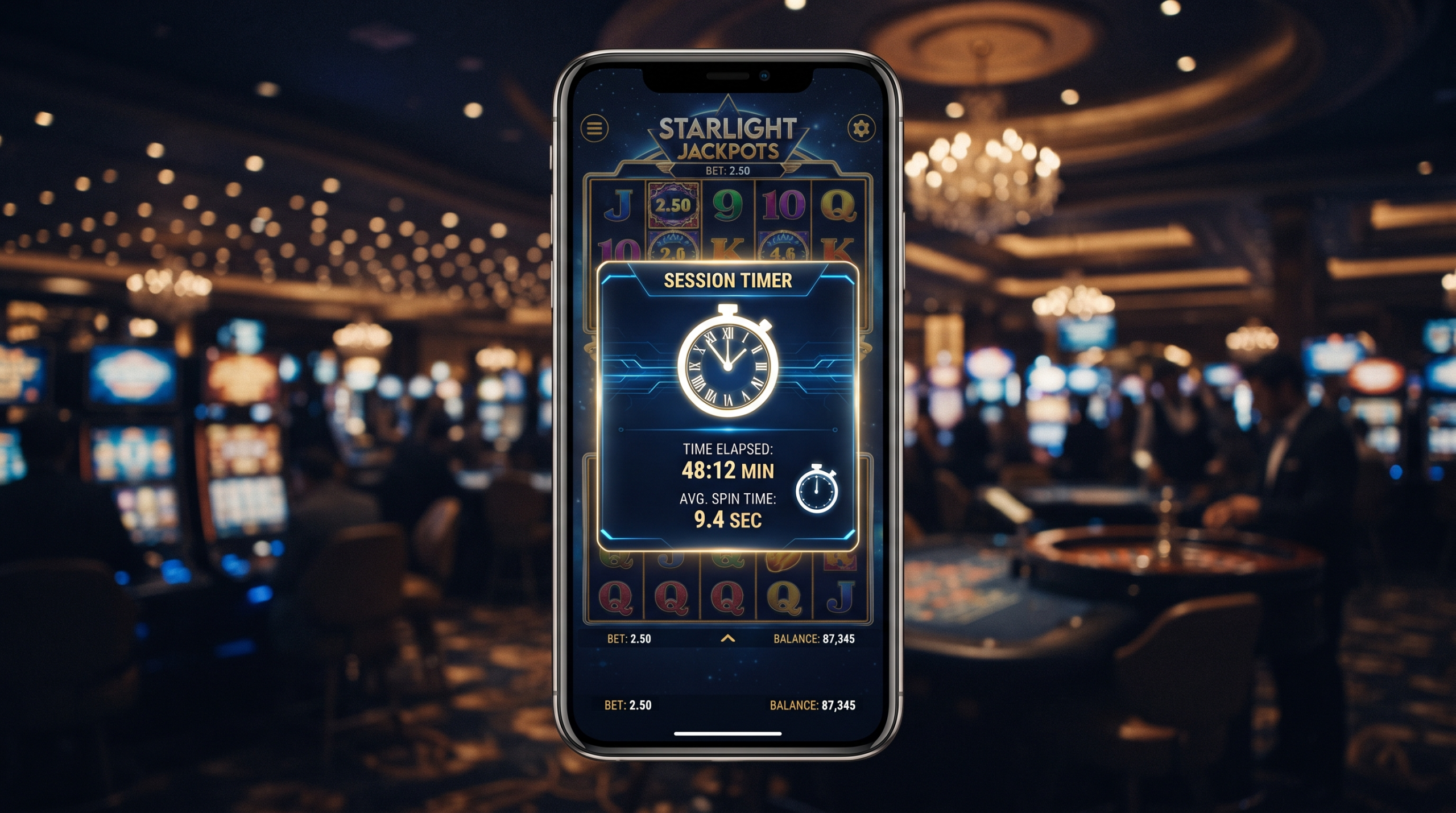
Somewhere around the 45-minute mark of an online casino session, a pop-up appears. It tells you how long you’ve been playing, sometimes how much you’ve deposited or wagered, and gives you the option to continue or log out. Most players close it in under two seconds. I’ve done it myself without reading a single line. The reality check is one of the most universally available responsible gambling tools in any regulated Canadian casino, and it might also be the most universally ignored.
That’s not because the tool is useless. It’s because it arrives at exactly the moment you’re least inclined to engage with it. You’re mid-session, mid-spin, mid-decision. The pop-up feels like an interruption rather than information. But the data it shows you is the one thing your brain is actively working to obscure during play: elapsed time and cumulative spend. Those two numbers, presented together, are more powerful than most players give them credit for.
The reality check deserves a closer look, not as a checkbox on a regulator’s compliance list, but as a tool that actually works when you let it.
What a Reality Check Actually Does
A reality check is a timed pop-up that appears at intervals you set, typically between 10 and 60 minutes, depending on the operator. When it fires, it pauses your session and displays a summary. The minimum information is usually session duration. Many operators also include net deposits, total wagered, and net win or loss for the session. Some give you a single “continue” button. Others give you two: continue or log out.
Under Ontario’s regulatory framework, operators registered with iGaming Ontario are expected to offer reality check functionality as part of their responsible gambling toolkit. The specifics vary. Some operators default to 60-minute intervals. Others let you choose your own interval down to 10 or 15 minutes. A few bury the setting deep enough in account preferences that you’d need to go looking for it.
The mechanism is simple. A timer starts when your session begins. When it hits the interval, the pop-up fires. It doesn’t lock you out. It doesn’t force a cooldown. It just shows you the numbers and asks whether you want to keep going. That’s it.
Why Most Players Close It Without Reading
The default reaction to a reality check pop-up is dismissal. Not because players are reckless, but because of when it arrives. If you’re in the middle of a bonus round, or you’ve just hit a dry stretch and you’re waiting for a feature to land, the last thing you want is a pause screen telling you you’ve been playing for 45 minutes. The pop-up feels like friction, and friction during play gets removed as fast as possible.
There’s also a design problem. Many operators present the reality check as a small modal window with muted colours and minimal information. It looks like a cookie consent banner. It doesn’t feel important. The “continue” button is prominent. The “log out” button is smaller, greyed out, or positioned where your eyes don’t land first. I’ve seen implementations where the continue button is pre-selected, meaning a single tap or click dismisses the entire thing.
None of this is accidental. Operators are required to offer the tool. They’re not always incentivised to make it feel urgent. The result is a feature that technically exists but functionally gets treated like a loading screen.
The Two Numbers That Matter Most
Time and money are the two things online casino sessions are specifically designed to make you lose track of. There are no clocks on the game screen. There’s no running cost counter. Your balance updates in real time, but the human brain doesn’t process a declining balance the same way it processes a stated loss. If your balance started at $150 and it’s now at $80, you know you’re down. But the number “$70 lost” hits differently when it’s written in front of you on a pop-up than when it’s implied by a smaller balance figure in the corner of a game window.
Session duration is even more distorted. I’ve seen players describe 90-minute sessions as “maybe half an hour.” Online play compresses time perception in a way that land-based play doesn’t, partly because there’s no physical environment change, no drink arriving, no dealer rotation. The reality check is sometimes the only moment in a session where the actual elapsed time is stated plainly.
Those two numbers together, time elapsed and net spend, give you the cost-per-hour of your session. That’s the single most useful metric for understanding whether your entertainment budget matches your actual play pattern. A $40-per-hour session on a $100 budget means you’re done in two and a half hours. Most players never calculate that number. The reality check hands it to you.
How to Set It Up So It Actually Works
The default interval at most operators is 60 minutes. That’s too long. An hour of uninterrupted play is enough time to blow through a session budget on a medium-volatility slot without a single pause for reflection. If you’re playing at $1 per spin on a game that cycles roughly 600 spins per hour, you’ve put $600 through the game before the first reality check fires. Even at a 96% RTP, the expected cost of that hour is around $24, but variance means the actual result could be significantly worse.
Setting the interval to 15 or 20 minutes changes the dynamic. At 15 minutes, you get four check-ins per hour. Each one is a forced micro-pause. You see the numbers, you process them, and you make a conscious decision to continue rather than a reflexive one. The key is treating the pop-up as a decision point, not an interruption. When it appears, read the numbers. Compare your current balance to your starting balance. Check the clock. Then decide.
The setting is usually found under “Responsible Gaming” or “My Account” in the operator’s menu. Some operators label it “Session Reminder” or “Play Timer.” If you can’t find it, contact support and ask where it’s configured. If the operator doesn’t offer adjustable intervals, that’s worth noting. It tells you something about how seriously they treat the tool.
Reality Checks vs. Session Time Limits
These two tools get confused constantly, and they do fundamentally different things. A session time limit is a hard stop. When the timer expires, you’re logged out. No choice, no continue button. A reality check is a soft stop. It pauses, it informs, and it lets you decide. Both are valuable, but they serve different purposes.
Session time limits work best when you know in advance exactly how long you want to play. They’re a commitment device. Reality checks work best when you want to stay aware during open-ended sessions. They’re an awareness device. Using both together is the strongest approach: set a session time limit as your hard ceiling and a reality check at 15- or 20-minute intervals as your in-session monitoring.
The distinction matters because a reality check alone won’t stop you from playing past your limit. It asks you to make a decision, and decisions made mid-session are influenced by the session itself. The time limit removes the decision entirely. If you’ve read our piece on how session time limits work in regulated casinos, you’ll recognise the pattern: the tools that remove choice are more effective than the tools that inform it. But the tools that inform it are still worth using.
What Operators Don’t Show You in the Pop-Up
Most reality check pop-ups show deposits and session time. Very few show total wagered. That’s a significant omission. Your deposit amount and your wagered amount are completely different numbers. You might deposit $50 and wager $400 in a session because wins get recycled back into play. The deposit figure makes the session look cheaper than it is. The wagered figure tells you how much risk you’ve actually taken on.
Some operators also exclude bonus funds from the reality check calculation, which means if you’re playing through a wagering requirement, the pop-up might show a net position that doesn’t reflect the full picture. If you deposited $100, received a $100 bonus, and you’re now at $120, the reality check might show you as “up $20” when in reality you’ve lost $80 of real money and the remaining $120 includes bonus funds you haven’t cleared yet.
This isn’t universal, and it varies by operator. But it’s worth understanding that the reality check shows you a version of your session, not necessarily the complete version. Cross-referencing the pop-up data with your transaction history, which every regulated operator is required to provide, gives you the full picture. If you want to understand how bonus maths can distort your perception of a session, our breakdown of how non-cashable bonuses affect withdrawals covers the mechanics.
Honest Assessment
The reality check is a genuinely useful tool that’s been undermined by weak implementation and player habit. It’s not going to stop problem gambling on its own. No single tool does. But it solves a specific problem that every online casino player faces: the complete loss of time and cost awareness during active play. The data it provides, even in its most basic form, is the kind of information that changes decisions when you actually engage with it.
The fix is straightforward. Set the interval to 15 or 20 minutes. When the pop-up appears, read it. Compare the numbers to the budget you set before the session started. If you haven’t set a budget, the reality check just told you that too. The players who benefit most from this tool aren’t the ones in crisis. They’re the ones who play regularly, enjoy it, and want to keep their sessions inside a range that stays comfortable. That’s most of you.
The best responsible gambling tools aren’t the ones that lock you out. They’re the ones that make you pause long enough to think clearly inside a system designed to keep you moving. The reality check is fifteen seconds of clarity in the middle of a session that doesn’t want you to have it. Whether you use those fifteen seconds is up to you, but at least configure the tool so you get the chance.
Gambling is entertainment with a cost attached, so set limits before you play and visit our Responsible Gaming page for support resources, safer-play tools, and help options if gambling stops feeling fun.



Leave a Comment