
Session Time Limits Are Built Into Every Regulated Casino. Here’s Why the Clock Matters More Than the Balance.

The balance is the number every player watches. It’s right there at the top of the screen, updating in real time, giving you the illusion that you’re in control of the session as long as the number stays above zero. But the balance doesn’t tell you how long you’ve been playing. It doesn’t tell you that the last ninety minutes felt like thirty. And it definitely doesn’t tell you that the cognitive shift that happens after two uninterrupted hours of high-volatility slots is exactly the state the casino’s engagement model is designed to produce.
Session time limits exist in every provincially regulated Canadian casino. They’re in the responsible gambling tools menu, usually two or three taps from the main lobby. Most players have never opened that menu. The ones who have often dismiss session timers as a tool for problem gamblers, not for them. That’s a misread of what the tool actually does and who it’s actually for.
Time is the variable that separates a recreational session from an expensive one. Here’s how the mechanic works, why the default favours the operator, and what setting it properly actually looks like.
What a Session Time Limit Actually Does
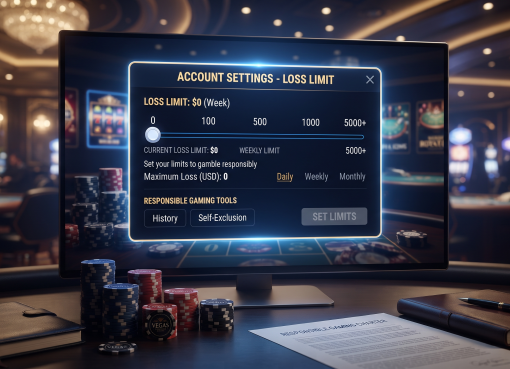
A session time limit is a player-configured tool that either alerts you or logs you out after a set duration of continuous play. The implementation varies by operator. Some offer a pop-up notification at the interval you choose. Others force a cooldown period, locking you out of the lobby for a set number of minutes. A few do both.
Under Ontario’s regulatory framework, operators registered with iGaming Ontario are required to offer session-duration tools. The specifics of how those tools behave differ. Some let you set intervals as short as 15 minutes. Others start at 30 or 60. The key distinction is between a reminder, which you can dismiss, and a hard limit, which logs you out regardless. If your operator only offers the reminder version, you need to understand that the tool is only as strong as your willingness to act on it.
The tool doesn’t reduce your losses directly. It interrupts the session. That interruption is the entire point.
Why Time Distortion Is the Casino’s Best Feature
Land-based casinos famously have no clocks and no windows. Online casinos don’t need to remove the clock. They just make everything else more interesting than checking it. Autoplay spins resolve in under three seconds. Bonus rounds trigger with sound and animation that reset your attention. The lobby is one tap away with a different game, a different theme, a different volatility profile. The friction to keep playing is zero. The friction to stop is entirely self-generated.
I’ve seen session logs from players who were genuinely surprised to learn they’d been playing for four hours. Not because they were in crisis. Because the interface is designed to compress perceived time. A 2019 study published in the Journal of Gambling Studies found that slot players consistently underestimated their session duration by 30 to 50 percent. Online environments, with their faster spin rates and seamless transitions, make that distortion worse, not better.
The operator doesn’t need you to lose control. They just need you to lose track of time. Those are different things, but they produce the same result on the balance sheet.
The Default Setting Is No Limit at All
This is the part that matters most and gets discussed least. When you open a new casino account, the session time limit is not pre-set. It defaults to off. You can play for eight hours straight without a single interruption from the platform. The deposit limit might be uncapped by default too, depending on the operator, but at least deposit limits have gotten public attention. Session limits haven’t.
The regulatory requirement is that the tool must be available. Not that it must be active. That distinction is enormous. It means the operator has fulfilled its obligation by putting the option in a submenu, and the player who doesn’t know it exists, or doesn’t think it applies to them, plays without any time-based guardrail at all.
Compare this to deposit limits, where some operators now prompt you to set one during registration. Session time limits almost never get that treatment. The reason is straightforward: longer sessions generate more revenue. An operator that defaults every new account to a 60-minute session limit would see immediate impact on gross gaming revenue. So they don’t.
How to Set One That Actually Works
The effective session limit isn’t the longest one you think you can handle. It’s the shortest one you’ll actually respect. For most recreational players, that’s somewhere between 30 and 60 minutes. If you’re playing high-volatility games, where cold stretches of 150 to 200 spins are routine, 60 minutes is roughly 400 to 500 spins at a normal pace. That’s enough to experience the game’s variance without the cognitive fatigue that leads to bet-size escalation.
Here’s a practical framework. Set the session limit before you set the deposit amount. Decide how long you’re going to play, then fund the session accordingly. If you’ve decided on 45 minutes of a $0.40-per-spin slot, you’re looking at roughly 250 to 300 spins. A $100 to $120 CAD deposit covers that session at that stake with a reasonable buffer for variance. The time limit and the budget should be calibrated together, not independently.
If your operator offers a hard logout rather than a dismissible reminder, use that version. The reminder is better than nothing, but I’ve seen enough of these tools to know that a pop-up arriving in the middle of a bonus round gets dismissed reflexively. The hard logout removes the decision from the moment entirely.
What Happens After the Timer Fires
The session limit is only the first half of the tool. The second half is the cooldown. Some operators enforce a mandatory break of 15 to 30 minutes after a session limit triggers. Others let you log back in immediately. If your platform allows instant re-login after a session limit, the tool is functionally a speed bump, not a wall.
The workaround is obvious and common: player hits the session limit, logs out, logs back in 30 seconds later, and starts a new session. The tool registered a “completed session” in the system. The player never actually stopped. This is why the cooldown period matters as much as the limit itself. Before you rely on a session timer, check whether your operator enforces a mandatory break after it triggers. If it doesn’t, you need to build that break into your own routine.
Walk away from the screen. Physically. Not to the kitchen and back. Put the phone in another room for 15 minutes. The cognitive reset requires actual separation from the interface, not just a paused screen.
Session Limits and Deposit Limits Work Together, Not Separately
A deposit limit without a session limit protects your bankroll but not your time. A session limit without a deposit limit protects your time but not your bankroll. The players who use both tools together are managing the two variables that actually determine the cost of online casino play: how much money goes in, and how long you sit there spending it.
The maths are simple. A player with a $200 weekly deposit limit and no session limit can burn through that $200 in a single two-hour session on a Tuesday night, then spend the rest of the week thinking about it. A player with the same $200 limit and a 45-minute session cap spreads that budget across multiple shorter sessions, each one starting from a neutral cognitive state rather than a fatigued one. The total spend might be identical. The experience and the decision quality are not.
Honest Assessment
Session time limits are the most underused responsible gambling tool in Canadian online casinos, and it’s not close. Deposit limits get the attention. Self-exclusion gets the headlines. Session timers sit in a submenu, defaulted to off, doing nothing for the vast majority of players who would genuinely benefit from them. They’re not a tool for people in crisis. They’re a tool for anyone who has ever looked at the clock after a session and been surprised by the number.
The operators know that longer sessions mean more revenue. The regulators require the tool to exist but not to be active by default. That gap between availability and activation is where the real cost accumulates. Set the limit before you play, pair it with a deposit cap, and choose the hard logout over the dismissible reminder every time. The five seconds of annoyance when the timer fires is the cheapest thing in your entire casino experience.
The balance tells you what you have left. The clock tells you what you’ve spent that you can’t get back. One of those numbers resets when you deposit again. The other one never does.
Gambling is entertainment with a cost attached, so set limits before you play and visit our Responsible Gaming page for support resources, safer-play tools, and help options if gambling stops feeling fun.

Leave a Comment