
Self-Exclusion Sounds Permanent. The Reality Is More Complicated Than Any Casino Tells You.

Self-exclusion is the one responsible gambling tool that’s supposed to be final. You activate it, the casino locks your account, and you’re done. That’s the pitch, and it’s not wrong exactly. But the mechanism behind self-exclusion at Canadian online casinos has more moving parts than the name suggests, and the gaps between what players expect and what actually happens are worth understanding before you’re in a position where you need the tool to work perfectly.
The problem isn’t that self-exclusion doesn’t do anything. It does. The problem is that it does different things depending on where you play, which platform you’re on, and whether the operator is provincially regulated or sitting in a grey market jurisdiction. Those differences matter enormously, and they’re almost never explained at the point where a player is making the decision.
This is what self-exclusion actually looks like once you press the button, and what it doesn’t cover.
What Self-Exclusion Actually Does to Your Account
When you self-exclude, the operator is supposed to close your account, return any withdrawable balance, and prevent you from opening a new one. That’s the baseline. At provincially regulated operators in Ontario, this is enforced under iGaming Ontario’s standards, which require the operator to block the player for the chosen exclusion period and remove them from all marketing communications within a defined timeframe.
The exclusion periods typically range from six months to five years, with some operators offering a permanent option. You choose the duration at activation. What most players don’t realise is that during the exclusion period, you generally cannot reverse the decision. That’s by design. The tool is built to hold even when the impulse to return is strong. But the enforcement of that hold varies more than it should.
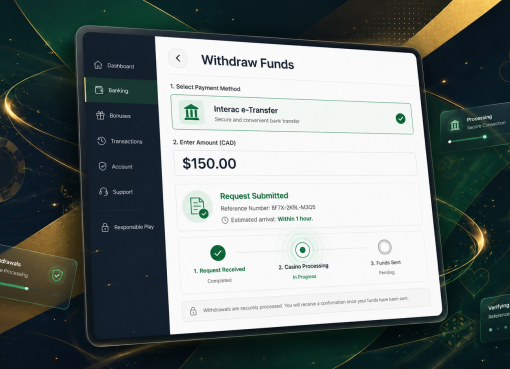
Your remaining balance is handled differently depending on the operator. Some process a withdrawal automatically. Others require you to contact support to claim it. I’ve seen published terms where the balance language is vague enough that a player could reasonably wonder whether they’d ever see the money. If you’re considering self-exclusion, withdraw your balance first. Don’t leave that step to the operator’s process.
The Multi-Site Problem Nobody Warns You About
Here’s the gap that matters most. Self-exclusion at one online casino does not automatically exclude you from every online casino. If you self-exclude at a single operator, you’re locked out of that operator. You can still sign up at a competitor five minutes later. For a tool that’s positioned as the strongest layer of protection, that’s a significant limitation.
Ontario has a centralised self-exclusion registry through iGaming Ontario that covers all provincially regulated operators in the province. If you register through that system, every licensed Ontario operator is supposed to block you. That’s a meaningful improvement over the single-site model. But it only covers operators registered with iGaming Ontario. Grey market sites sitting outside provincial regulation aren’t part of that registry. They can’t be. There’s no mechanism to compel an offshore operator to check a Canadian provincial exclusion list.
Alberta’s framework, launching with PlayAlberta’s expanded model and AiGC oversight, is building similar infrastructure. But the same limitation applies. If a player’s history is split across regulated and unregulated platforms, the exclusion only covers the regulated side. This is the single biggest structural weakness in self-exclusion as it exists today in Canada.
What Happens to Marketing After You Exclude
Under Ontario’s regulated framework, operators are required to remove self-excluded players from promotional communications. That includes email, SMS, push notifications, and targeted advertising where the operator controls the delivery. The timeline for removal is supposed to be prompt, though “prompt” isn’t always defined down to the hour.
In practice, I’ve seen enough player accounts of post-exclusion marketing to know this doesn’t always work cleanly. The operator might stop their direct emails within 48 hours, but affiliate marketing, retargeting ads served through third-party networks, and brand advertising on social media aren’t always caught by the same exclusion flag. You might self-exclude from a casino on Monday and see their ad in your Instagram feed on Wednesday. That’s not necessarily a compliance failure on the operator’s part. It’s a gap in how digital advertising works, and it’s one that the industry hasn’t fully solved.
If you’re self-excluding and want to reduce exposure to gambling marketing more broadly, you’ll need to take additional steps on your own. Browser ad-blockers, unsubscribing from affiliate newsletters, and adjusting your ad preferences on social platforms are all manual processes. The casino’s obligation covers what they control. The rest of the digital ecosystem doesn’t know you’ve excluded.
Grey Market Exclusion Is Barely Exclusion
At offshore or grey market casinos, self-exclusion exists as a feature in the account settings, but the enforcement behind it is fundamentally different. There’s no provincial regulator auditing whether the operator actually blocks you. There’s no centralised registry connecting grey market sites. And there’s no meaningful consequence for an operator that lets a self-excluded player back in.
Some grey market operators do honour their own self-exclusion tools. I’m not suggesting every offshore site ignores the feature. But the difference between a self-exclusion backed by regulatory oversight and one backed by an operator’s own policy is the difference between a lock and a suggestion. If you’re playing on unregulated platforms and you reach the point where self-exclusion feels necessary, the tool available to you is structurally weaker than what’s available at a provincially regulated site. That’s not an opinion. It’s how the enforcement works.
The Cooldown Before the Lock
Self-exclusion is not the same as a cooldown or a temporary account suspension, but the two get confused constantly. A cooldown, sometimes called a timeout or temporary break, locks your account for a shorter period, typically 24 hours to 30 days. Self-exclusion is the longer commitment, starting at six months and extending to permanent.
The distinction matters because the reinstatement process is completely different. A cooldown expires automatically. Your account reopens, your deposit limits reset to whatever they were, and you’re back. Self-exclusion, in most regulated environments, requires a deliberate reinstatement process after the exclusion period ends. At some operators, you need to contact support and wait a further cooling-off period, often 24 hours, before the account is reactivated. At others, the account stays closed unless you actively request reinstatement.
If you’re not sure which tool fits your situation, start with the shorter cooldown. You can always escalate to self-exclusion. You can’t easily reverse the other direction.
What Self-Exclusion Doesn’t Replace
Self-exclusion is a barrier, not a treatment. It blocks access to a platform or a set of platforms. It doesn’t address the underlying reasons a player might need it. This sounds obvious, but the way self-exclusion is positioned in most casino responsible gambling pages, it’s presented as the final step in a toolkit. Deposit limits, session reminders, reality checks, then self-exclusion at the top. The implication is that the tools escalate in severity and the last one solves the problem.
It doesn’t. Self-exclusion is most effective when it’s paired with external support. ConnexOntario offers a helpline at 1-866-531-2600. The national problem gambling helpline is available at 1-800-668-6016. These aren’t afterthoughts. They’re the part of the process that actually addresses what’s happening, rather than just blocking the access point.
Every provincially regulated operator in Canada is required to link to support resources. But linking to a helpline on a page most players never visit is not the same as making sure a player activating self-exclusion actually connects with support. That’s a design gap the industry still hasn’t closed.
Honest Assessment
Self-exclusion works, but it works within boundaries that are narrower than most players assume. At provincially regulated operators in Ontario, the centralised registry is a genuine improvement. It covers every licensed site with a single action, and the regulatory oversight behind it gives the mechanism teeth. That’s meaningful. Outside Ontario’s regulated market, and especially on grey market platforms, self-exclusion is only as strong as the operator’s willingness to enforce it, and there’s no one checking.
The tool is worth using if you need it. But understand what it covers and what it doesn’t before you activate it. Withdraw your balance first. Register through the provincial system if one exists in your jurisdiction, not just through the individual casino. And treat self-exclusion as the start of a process, not the end of one. The lock on the door helps. It’s not the only thing you need.
Self-exclusion is the responsible gambling tool with the most weight behind it, and it still has structural gaps that leave players more exposed than the name implies. Understanding those gaps isn’t a reason to distrust the tool. It’s a reason to use it with your eyes open, and to know where to go when the tool alone isn’t enough.
Gambling is entertainment with a cost attached, so set limits before you play and visit our Responsible Gaming page for support resources, safer-play tools, and help options if gambling stops feeling fun.

Leave a Comment