
Playtech Just Bought a Live Casino Studio in Canada. The Timing Tells You More Than the Deal.
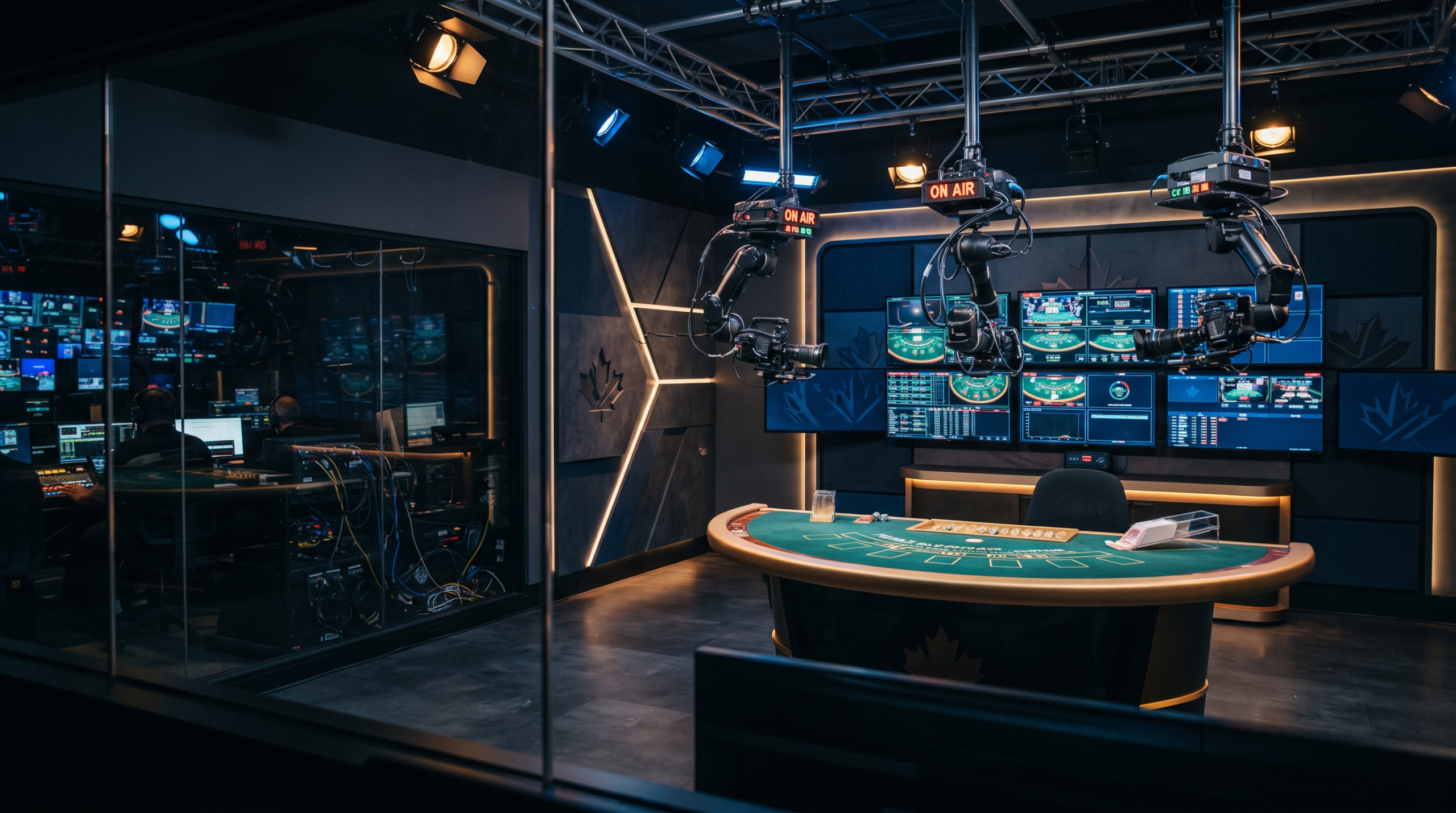
The most expensive thing in online casino isn’t the software. It’s the studio. Live dealer games require physical space, professional dealers, broadcast-grade cameras, redundant internet connections, and regulatory approval in every jurisdiction they serve. When a supplier builds or acquires a live studio in a specific country, they’re not testing a market. They’re committing to it. Playtech’s move to establish dedicated live casino infrastructure in Canada is the kind of decision that costs millions before a single hand is dealt.
That matters because the Canadian live dealer market has been served almost entirely from studios in Latvia, Malta, Romania, and the Philippines. Evolution dominates. Ezugi fills gaps. A few smaller providers run niche tables. But dedicated Canadian studio capacity from a tier-one supplier changes the competitive map in ways that aren’t immediately obvious from the outside.
This isn’t a story about one company buying a building. It’s a story about what happens when supplier infrastructure starts moving closer to the players it serves, and what that shift means for the operators caught in the middle.
What Playtech Actually Is to Canadian Players
If you play at online casinos in Canada, you’ve almost certainly played a Playtech game without knowing it. The company supplies slots, table games, and live dealer products to operators across multiple provinces. Their Age of the Gods progressive series sits in dozens of Canadian lobbies. Their live casino product powers tables at several grey-market and provincially regulated sites.
Playtech is the second-largest live casino supplier globally behind Evolution. That’s a distant second in most markets, but it’s still a position that gives them access to major operator contracts. In Canada specifically, their presence has grown as Ontario’s regulated market matured past its initial launch phase and operators started looking beyond the default Evolution integration.
The company was acquired by the Aristocrat Leisure group in 2022 for roughly $3.7 billion USD. Since then, the investment pattern has been clear: expand live casino capacity in regulated markets where Evolution’s dominance creates pricing leverage that operators resent but accept because there’s no comparable alternative.
What Actually Happened
Playtech has been building out its North American live casino footprint over the past 18 months, with studio capacity in New Jersey already operational. The Canadian expansion follows the same playbook: establish local infrastructure to serve a regulated market where latency, language, and operating hours matter to the player experience.
The official framing, as always, centres on “bringing world-class live entertainment closer to players.” That’s the press release version. The operational version is more straightforward: a Canadian studio means Canadian-hours dealers, lower latency for Canadian players, and the ability to offer French-language tables for Québec without routing through a European facility running on Central European Time.
What the announcements typically don’t say is how this changes the commercial conversation with operators. A supplier with local studio capacity can offer dedicated tables, branded environments, and exclusivity deals that a supplier streaming from Riga simply can’t match at the same service level. That’s the real product being sold.
Why the Timing Matters
Ontario’s regulated iGaming market launched in April 2022. It just passed its third anniversary. The first year was about getting licensed. The second was about acquiring players. The third has been about differentiation, and that’s where live casino becomes a competitive weapon rather than a checkbox feature.
Alberta’s regulated market is set to launch on July 13, 2025. That’s a second provincial market with its own regulatory framework under AGLC and AiGC, its own operator licensing process, and its own player base that has been served almost entirely by grey-market sites until now. A supplier that already has Canadian studio capacity when Alberta goes live has a structural advantage over one that’s still streaming from Eastern Europe.
The timing also reflects a broader pattern in the supplier market. Evolution’s near-monopoly in live casino has allowed them to set pricing terms that many operators find aggressive but unavoidable. Every operator I’ve seen discuss this privately uses the same word: “leverage.” When a second tier-one supplier builds local capacity, that leverage shifts, even if Evolution remains the larger provider. Competition on infrastructure, not just software, changes the negotiation.
The Infrastructure Problem Nobody Talks About
Live casino looks seamless from the player side. You open a table, a dealer greets you, cards are dealt. What you don’t see is the broadcast infrastructure behind it. A single live blackjack table requires multiple camera angles, OCR (optical character recognition) technology to read the cards in real time, a redundant internet connection with failover capability, and a trained dealer working a shift that aligns with peak player hours in the target market.
When that table is in Riga and the player is in Toronto, there’s a latency gap. It’s usually under 200 milliseconds, which sounds trivial until you consider that the entire experience depends on real-time interaction. More importantly, the dealer shift structure is built around European peak hours. A Canadian player logging in at 10 PM Eastern is hitting a table staffed for 4 AM in Latvia. The energy is different. The table minimums might be different. The game selection narrows.
A Canadian studio solves this mechanically. Dealers work Canadian shifts. Peak capacity aligns with Canadian evenings. French-language tables can run during Québec prime time without competing for studio space with Italian or German tables in a multi-market European facility. It’s not glamorous infrastructure, but it’s the kind that players notice without being able to name what changed.
What This Signals for the Supplier Market
The live casino supplier market has operated as a near-monopoly for years. Evolution acquired Ezugi, NetEnt’s live product, and Big Time Gaming’s parent company. They built studios on every continent. They set the terms. Operators who wanted live casino at scale had one realistic option and priced accordingly.
Playtech building Canadian capacity is part of a broader counter-strategy that Aristocrat has been funding since the acquisition. It’s not about matching Evolution table-for-table. It’s about being the credible second option in enough regulated markets that operators can use the competition to negotiate better terms with both suppliers. In procurement, the second-best option is often more valuable than the best one, because it’s the one that creates leverage.
For the Canadian market specifically, this could accelerate a pattern I’ve already seen in Ontario: operators differentiating on their live casino experience rather than their slot library. When every operator has the same 2,000 slots from the same 15 providers, the live casino floor becomes the place where brand identity gets built. Dedicated tables, custom environments, and Canadian-facing dealer teams become selling points that matter.
What Changes for Players
In the short term, honestly, not much. If you’re playing live blackjack or roulette at a Canadian-facing operator tonight, the experience won’t change tomorrow. Studio buildouts take months. Dealer hiring and training takes longer. Regulatory approvals in each province add more time.
In the medium term, Canadian players should see more live tables running during North American peak hours, more French-language options, and potentially lower table minimums as competition between suppliers gives operators more room to negotiate. I’ve seen this pattern play out in the UK market after multiple suppliers built London-area studios. More capacity meant more tables, and more tables meant operators could offer $1 and $5 minimums on live games that previously started at $10 or $25.
The less visible change is in game variety. When a supplier has dedicated Canadian capacity, they can justify building game shows, specialty tables, and format experiments specifically for this market. Evolution’s Crazy Time and Lightning Roulette were built for global audiences. A Canadian studio could produce content that doesn’t need to work in 30 markets simultaneously, and that creative freedom tends to produce more interesting games.
Honest Assessment
Playtech building Canadian live casino infrastructure is a meaningful competitive development, but it’s meaningful on a timeline that doesn’t match the news cycle. The studio won’t change your Tuesday night blackjack session this month. What it changes is the supplier dynamic that determines what your operator can offer you 12 to 18 months from now.
The real story isn’t Playtech versus Evolution. It’s that Canada’s regulated online casino market is now mature enough to attract the kind of capital-intensive infrastructure investment that only happens when suppliers believe the revenue justifies the cost. A live studio is a multi-million dollar commitment with a multi-year payback period. You don’t build one in a market you think might not last. That’s the signal worth paying attention to, even if the immediate player impact is minimal.
The games you play tonight will look the same as they did last week. But the infrastructure underneath them is shifting, and when infrastructure shifts, the player experience eventually follows. The suppliers building closest to the players tend to be the ones who understand the market best. Whether Playtech’s bet on Canadian capacity pays off depends on execution, not ambition. The ambition part is already clear.
Gambling is entertainment with a cost attached, so set limits before you play and visit our Responsible Gaming page for support resources, safer-play tools, and help options if gambling stops feeling fun.



Leave a Comment