
Playtech Just Sold Its Financial Trading Division. The Casino Side of the Business Is Now the Entire Business.

Playtech has been two companies sharing one ticker symbol for years. Half the business built casino and live dealer technology for operators across regulated markets. The other half, Finalto, ran a B2B financial trading platform that had nothing to do with gambling. That split made Playtech harder to value, harder to explain to investors, and harder for operators to position as a pure-play gambling supplier. Now the trading arm is gone, sold to Gopher Investments for $250 million USD, and Playtech is left with one identity: gambling technology company, full stop.
That sounds like a clean corporate story. Divest the non-core asset, sharpen the focus, reinvest. But the practical consequences land in specific places, and one of those places is the Canadian online casino lobby. Playtech’s live dealer product, its slot catalogue, and its platform licensing deals all compete for the same operator budgets that Evolution, Pragmatic Play, and Games Global are chasing. A Playtech with more capital and fewer distractions changes the competitive math.
The question isn’t whether the sale was smart. It’s what Playtech does with the focus it just bought.
What Playtech Actually Is to Canadian Players
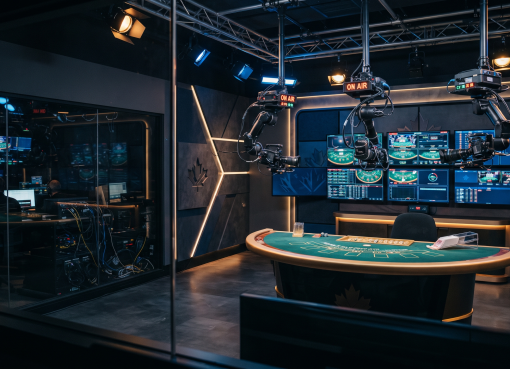
If you play at a grey-market casino that serves Canadian players, there’s a reasonable chance Playtech software is somewhere in the lobby. Age of the Gods slots, the Kingdoms Rise series, and a live dealer product that competes directly with Evolution’s tables. Playtech isn’t the dominant supplier in most Canadian-facing lobbies the way Pragmatic Play or Games Global titles are, but it’s present, and its live casino product is genuinely competitive.
In Ontario’s regulated market, Playtech has licensing agreements with several iGaming Ontario-registered operators. Its live dealer studios serve Canadian tables with localised hours, and its slot content appears alongside the usual Pragmatic and NetEnt catalogues. For players in provincially regulated environments, Playtech is a second-tier supplier that occasionally produces first-tier products.
The financial trading division, Finalto, was invisible to anyone who plays casino games. It existed on balance sheets and in investor presentations. Players never interacted with it. But it consumed management attention and capital that could have gone toward the gambling product. That’s the part that matters now.
What Actually Happened (and What the Statement Isn’t Saying)
Playtech completed the sale of Finalto to Gopher Investments, a deal that had been in various stages of negotiation and regulatory approval for over a year. The $250 million USD price tag gives Playtech a clean balance sheet and removes the division that consistently confused analysts trying to model the company’s gambling revenue.
The official language frames this as “strategic simplification.” That’s accurate as far as it goes. What the press release doesn’t say is that Finalto had become a drag on Playtech’s ability to pitch itself to operators as a focused technology partner. When you’re competing against Evolution, which does one thing and does it at massive scale, having a financial trading division on your books doesn’t help the sales conversation.
The timing is also worth noting. Playtech’s largest shareholder, the TTB Partners consortium led by Eddie Jordan’s group, pushed for this divestiture as part of a broader strategy to make Playtech acquisition-ready or at least valued purely on its gambling technology. Whether that means a future sale of the entire company or simply a higher stock price, the direction is clear: everything that isn’t gambling is gone.
The Mechanism Behind It
The gambling technology supplier market has consolidated into a structure where operators want fewer, deeper relationships. Evolution dominates live casino. Pragmatic Play has pushed into every vertical from slots to live to bingo. Games Global inherited the Microgaming network and is trying to modernise it. Light and Wonder merged three brands into one pitch. The common thread is focus. Operators don’t want to explain to their boards why their casino supplier also runs a forex trading platform.
Playtech’s gambling revenue has been growing, particularly in structured agreements where it provides the entire platform, not just game content. Its IMS platform powers several major operators, and its live casino studios in Riga, Manila, and Bucharest run 24-hour operations. But capital that went to maintaining Finalto’s regulatory compliance across financial jurisdictions, its technology stack, and its client relationships was capital that didn’t go toward building new live dealer formats or expanding into North American markets.
The $250 million from the sale isn’t transformative on its own. Playtech’s market cap sits around $2.5 billion USD. But the operational focus is worth more than the cash. Every product meeting, every board discussion, every R&D budget line now points at one thing.
What It Actually Signals
This is part of a broader pattern in the gambling supply chain. The era of diversified gambling-and-other-things companies is ending. Scientific Games split into two companies. Flutter divested non-core brands. Entain has been rumoured to be exploring similar simplification. The market is rewarding purity of purpose, both in investor valuations and in operator procurement decisions.
For Playtech specifically, the signal is that its live dealer product is where the growth ambition sits. The company has been investing in AI-driven personalisation tools for its live casino, building game show formats to compete with Evolution’s Crazy Time and Monopoly Live, and expanding its Asian-facing operations. A focused Playtech is a more aggressive competitor in exactly the markets where Evolution has enjoyed near-monopoly pricing power.
Whether that competition reaches Canadian lobbies in a meaningful way depends on operator decisions. But when a supplier gets leaner and more focused, the product pipeline tends to accelerate. I’ve seen this pattern before with Pragmatic Play’s expansion into live casino. The first year is infrastructure. The second year is when the content starts showing up everywhere.
What Changes for Players (If Anything)
Right now, nothing visible changes. The Playtech slots in your lobby are the same games with the same RTPs. The live dealer tables run the same way. Your operator’s cashier page, your Interac e-Transfer deposit, your withdrawal timeline, none of that is affected by a corporate divestiture.
What changes over the next 12 to 18 months is harder to predict but directionally clear. A focused Playtech with freed-up capital is likely to push harder into the Canadian regulated market, particularly Ontario, where iGaming Ontario’s framework allows licensed suppliers to serve multiple operators. More Playtech content in Ontario lobbies means more variety, and more competition among suppliers typically means better licensing terms for operators, which can translate into better promotional budgets for players.
The live casino angle is the one to watch. Evolution’s dominance in Canadian live dealer has meant that most operators offer essentially the same live product with different branding. A more aggressive Playtech live casino push could give operators a genuine alternative, and genuine alternatives tend to produce better player experiences because suppliers have to earn the screen space.
Honest Assessment
Selling Finalto was overdue. The financial trading division made Playtech harder to evaluate, harder to partner with, and harder to take seriously as a pure gambling technology competitor. The sale doesn’t transform Playtech overnight, but it removes the thing that was preventing transformation. In a supplier market that rewards focus, Playtech just eliminated its biggest distraction.
For Canadian players, the practical impact is a slow burn, not a headline. You won’t notice anything different this month. But the competitive dynamics in the supplier market affect what games appear in your lobby, what live dealer options your operator offers, and how hard suppliers work to earn your attention. A more focused Playtech makes that market more competitive, and more competitive supplier markets are better for the people sitting at the other end of the screen.
Corporate divestitures don’t make for exciting reading. Nobody opens their casino app and thinks about supplier balance sheets. But the structure of the supply chain determines the quality of the product, and this particular restructuring points the supply chain in a direction that benefits the player, even if it takes a while to get there.
Gambling is entertainment with a cost attached, so set limits before you play and visit our Responsible Gaming page for support resources, safer-play tools, and help options if gambling stops feeling fun.

Leave a Comment