
I Gave Someone Their First $50 Casino Budget. The Money Was the Easy Part.
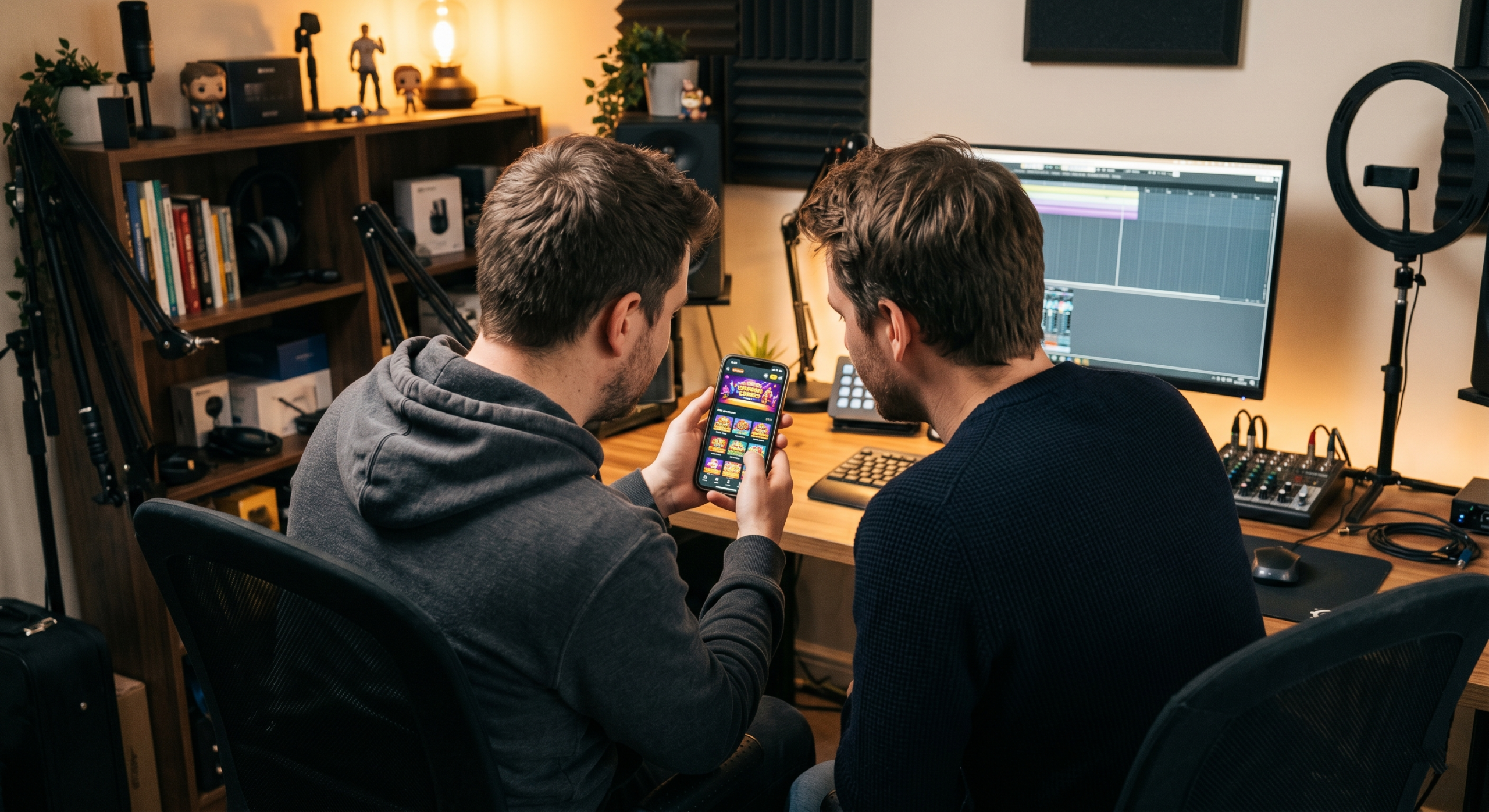
A friend asked me a few months ago if I could help him try online casino gaming for the first time. He’d seen some content about it, got curious, and figured that since I spend a lot of time thinking about this stuff, I’d be the right person to ask.
My first instinct was to say just don’t. Not because gambling is uniquely dangerous or because I’m cynical about the whole industry — I’m not. But because most people’s first casino experience is chaotic. They sign up on whatever site ranks first, grab whatever bonus looks biggest, pick a game they’ve seen in a YouTube clip, and wonder where their money went in twenty minutes.
I didn’t want that for him. So instead of pointing him somewhere and wishing him luck, I sat down with him and walked through the whole thing. The site selection, the budget, the games, the rules I’ve developed from years of testing these platforms. All of it.
What follows is roughly what I told him. If you’re new to this, it’s meant for you too.
Why $50 and Not More
The first question was about budget. He asked if $50 was enough to “actually do anything.”
I told him $50 is the right number for a first session precisely because it’s not a lot. That’s the point. The goal of a first casino session is not to win. It’s to understand what the experience actually feels like — the pace of it, the decisions involved, the emotional texture of losing a bet and winning one. You can’t learn that from a $5 session, but you also don’t need $200 to figure it out.
$50 is enough to play for a meaningful amount of time across a couple of different games at sensible bet sizes, make some actual decisions, and come away with a real sense of whether you enjoy this as entertainment. If you lose it, it stings a little but doesn’t hurt. If you somehow walk away up, great — but that’s not the objective and I made that clear upfront.
The goal is a good first experience, not a profitable one. Those are different things.
Picking a Site — The Part Nobody Thinks About First
His instinct was to just Google “online casino Canada” and sign up somewhere near the top. I understand that instinct. It’s also exactly backwards.
We spent about ten minutes on site selection before we looked at a single game. For someone in Ontario, I pointed him toward the AGCO’s registered operator list first. That’s a public document and it’s the fastest way to confirm you’re on a platform that’s actually accountable to a provincial regulator. It matters because if something goes wrong — a withdrawal hold, an account dispute, a technical issue — your options are very different on a regulated platform than on a grey market one.
Beyond that, I had him look at three things before anything else: the withdrawal process, the responsible gambling tools, and whether the bonus terms were written in plain language. Not the game lobby. Not the homepage banner. Those three pages.
A site that makes it easy to find how to cash out, how to set limits, and what the bonus actually requires is a site that’s thought about the player experience past the deposit. That’s the baseline I use. It took us about five minutes to find a site that passed that check.
The Bonus Question
He asked about bonuses immediately. Of course he did — the welcome offers are loud and the numbers sound appealing.
I told him to skip the bonus entirely for the first session.
This surprised him. Here’s why I said it: a welcome bonus almost always comes with wagering requirements, which means the money you get isn’t freely withdrawable. You have to play through a multiple of the deposit plus bonus amount before you can cash out anything. For a first session where the goal is to feel out the experience and stay in control of your budget, attaching a wagering obligation to your $50 is the wrong move. It changes the dynamic. Suddenly you’re not playing to enjoy yourself, you’re playing to clear a requirement.
The bonus will still be there next time. Understanding how the games actually feel when your money is your money — no strings attached — is more valuable on day one.
If he’d insisted on a bonus, I would have steered him toward something with low wagering requirements and no game restrictions. But first session? Clean $50 with no conditions attached.
Game Selection: Where I Steered Him and Why
This was the part he was most excited about and the part I was most careful with.
He wanted to play slots. That’s fine — slots are the most accessible format and there’s nothing wrong with starting there. But I had two conditions.
First, we picked a low-to-medium volatility slot with an RTP above 95%. Not because those slots pay out more in a session, but because the experience is steadier. High volatility slots are brutal for a first-timer. Long dry spells with nothing happening, then a spike, then nothing again. That rhythm is disorienting when you don’t know what to expect from it. A lower volatility game gives more frequent feedback, which makes the experience more readable.
Second, we set the bet size at $0.50 per spin. At that size, $50 gives you 100 spins before you’re out. That’s enough to actually experience the game, see a bonus round or two if you’re lucky, and make some decisions. At $2 a spin, $50 goes in about twenty-five spins and the session is over before you’ve learned anything.
We played about fifteen minutes on a slot and then I suggested we move to something with a decision component. We tried a few hands of blackjack at a low-limit table. I explained basic strategy at a high level — hit on soft 17, never split 10s, that kind of thing — and let him play. He liked having something to think about. The slot had been fun but passive. Blackjack felt like participation.
That’s a useful thing to know about yourself as a player.
The Rules I Gave Him Before We Started
Before we deposited anything, I had him agree to four things.
One: we set a stop-loss at $50. The whole budget. When it’s gone, the session ends. No topping up, no “just one more deposit.”
Two: if he got up at any point — even $5 ahead — he could choose to stop and that would count as a win. Not because profit is the measure of a good session, but because knowing when you’re ahead and choosing to stop is a skill worth practising.
Three: no chasing. If he lost three hands in a row or hit a dry spell on the slots, the reaction would not be to increase the bet size. The budget stays flat.
Four: the session had a time limit. One hour. Not because anything bad happens after an hour, but because having a defined end point takes the pressure off. You’re not in an open-ended drift. You have a frame.
These aren’t complicated rules. They’re also the rules most players don’t set before they start.
How It Actually Went
He came out about $12 down after an hour. Lost most of it on a slot that didn’t hit anything meaningful, made a bit back on blackjack, ended in the red but not dramatically.
What he said afterward stuck with me: “I thought I’d feel worse about losing. But it was actually fun and I kind of understood what was happening the whole time.”
That’s the outcome I was aiming for. Not a win. An experience he understood, could evaluate honestly, and would approach more clearly next time.
He asked when he could try it again. I told him whenever he felt like it — but to treat the $50 as the price of entry, not as something he’s owed back.
That reframe is everything.
What I’d Tell Anyone Starting Out
The casino industry is very good at making the entry feel simple and the exit feel complicated. The games are designed to be immediately accessible. The bonus terms are not. The deposit flow is frictionless. The withdrawal process has more steps.
None of that is a reason to avoid it. It’s a reason to go in knowing what you’re doing.
Pick a site with a real licence. Skip the bonus your first time. Set a hard budget before you touch anything. Choose games at bet sizes that give you time in the session, not just a few spins. And decide in advance what done looks like — whether that’s an hour, a budget, or a specific stopping point.
The players who have the worst experiences are almost never the ones who got unlucky. They’re the ones who didn’t decide anything before they started.
Gambling is entertainment with a cost attached, so set limits before you play and visit our Responsible Gaming page for support resources, safer-play tools, and help options if gambling stops feeling fun.


Leave a Comment