
Interac e-Transfer Withdrawals: Why Your Casino Deposit Method Doesn’t Always Work in Reverse

Interac e-Transfer is the fastest way to fund a Canadian online casino account. Deposits land instantly. The interface is familiar. The whole thing takes about ninety seconds from the moment you open the cashier. It’s the closest thing to frictionless that online gambling gets in this country.
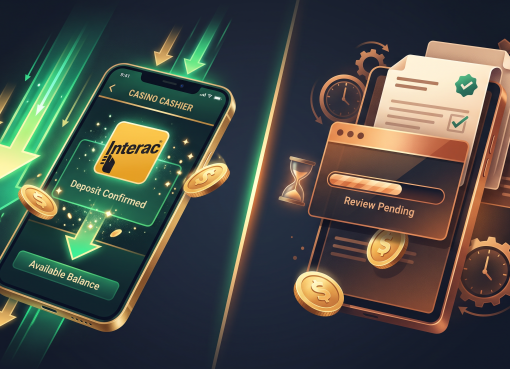
Then you win something, and you go back to that same cashier expecting the same experience in reverse. That’s where the gap opens. A surprising number of Canadian-facing casinos accept Interac deposits but don’t offer Interac as a withdrawal method. You deposited in seconds. Now you’re looking at a bank wire that takes three to five business days, or a credit back to a Visa that might take longer. The asymmetry isn’t a glitch. It’s structural, and understanding it before you deposit saves you a very specific kind of frustration.
This is a guide to how Interac actually works on the withdrawal side of a casino cashier, why so many operators don’t offer it for cashouts, and what to check before you commit your bankroll to a platform.
Why Deposits and Withdrawals Aren’t the Same System
When you make an Interac e-Transfer deposit at a casino, you’re pushing money from your bank account through Interac’s network to the operator’s payment processor. The casino receives confirmation almost immediately. Your balance updates. It feels like a single transaction because, from your side, it is.
Withdrawals reverse the flow, and that’s where the complexity multiplies. The casino has to initiate the transfer, route it through their payment processor, and that processor has to support Interac e-Transfer as an outbound method. Not all of them do. The payment processors that handle casino transactions often have different capabilities for inbound versus outbound payments. A processor might handle Interac deposits all day but route withdrawals through bank wire or card reversal because the outbound Interac integration is more expensive, more complex, or simply not part of their contract.
The result is that the deposit method and the withdrawal method are, in practice, two separate systems. The casino’s cashier page might list six deposit options and three withdrawal options. That’s not deceptive by design, but it catches players who assumed symmetry.
What the Cashier Page Tells You (If You Check It First)
Every casino has a payments page, and most of them list deposit and withdrawal methods separately. The problem is that almost nobody checks the withdrawal column before making their first deposit. The deposit flow is prominent, fast, and designed to get you playing. The withdrawal information is typically buried in a sub-tab, a terms page, or a FAQ section that requires scrolling past three promotions to find.
Here’s what to look for. Open the cashier or payments section and find the withdrawal options. If Interac e-Transfer is listed for withdrawals, check the stated processing time. Typical ranges are one to three business days for the casino’s internal review, plus the Interac transfer itself, which usually arrives within a few hours once sent. If Interac isn’t listed for withdrawals at all, your options are usually bank wire (three to five business days after approval), Visa credit-back (two to five business days), or an e-wallet if you set one up.
The absence of Interac withdrawals when Interac deposits are prominently featured is something I look for specifically when evaluating a casino. It’s not necessarily a dealbreaker, but it tells you something about how the operator prioritises the player experience on the way out versus the way in.
The Limits Aren’t Set Where You Think
One of the most common points of confusion with Interac casino transactions is who controls the limits. Players assume the casino sets the deposit cap. In many cases, the limit is actually set by your bank. Most Canadian banks impose daily Interac e-Transfer limits that range from $3,000 to $10,000 depending on the institution and your account type. Some banks allow you to request a higher limit. Some don’t.
On the withdrawal side, the casino does set its own limits. These are typically per-transaction, daily, and weekly or monthly caps. A common structure is $5,000 per transaction with a $10,000 weekly maximum, but this varies significantly by operator. Provincially regulated operators in Ontario tend to publish these figures clearly. Grey market sites often bury them in general terms and conditions, and the limits can be lower than you’d expect.
If you’re planning to play at stakes where a withdrawal above $5,000 is realistic, check the withdrawal caps before you deposit. A $25,000 win paid out in $5,000 weekly instalments over five weeks is a very different experience than receiving it in one transfer.
The KYC Delay That Catches Everyone
Interac deposits don’t require identity verification at most casinos. You sign up, deposit, and play. The KYC check typically triggers at your first withdrawal request. That means the first time you try to cash out, you’re suddenly asked for government ID, proof of address, and sometimes a photo of the payment method you used. The verification process can take anywhere from a few hours to 72 hours depending on the operator and how busy their compliance team is.
This isn’t specific to Interac, but it hits Interac users harder because the deposit was so fast. You went from zero to playing in ninety seconds. Now you’re waiting two days for someone to review a photo of your driver’s licence before your withdrawal even enters the processing queue. The withdrawal timer doesn’t start until KYC is approved at most operators.
The fix is straightforward: complete your KYC verification as soon as you create your account, before you ever request a withdrawal. Most casinos allow you to upload documents proactively. I’ve covered the full KYC process in detail in our guide to casino KYC verification in Canada, including what documents are accepted and what triggers additional checks.
Regulated vs. Grey Market: The Withdrawal Gap Widens
Provincially regulated operators in Ontario, operating under iGaming Ontario and AGCO oversight, are required to process withdrawals within specific timeframes and provide clear payment information. That doesn’t mean every regulated casino offers Interac withdrawals, but the ones that do tend to process them faster and more predictably. The regulatory framework creates accountability that grey market operators simply don’t face.
Grey market casinos, the offshore platforms that accept Canadian players without a provincial licence, have a much wider range of withdrawal experiences. Some are perfectly fine. Others have extended pending periods, reverse-withdrawal windows that let you cancel a cashout and keep playing, or withdrawal limits that make cashing out a large balance an exercise in patience. The payment processor relationships are different, the compliance requirements are different, and the recourse available to you if something goes wrong is fundamentally different.
I’ve written about the practical differences between grey market and regulated casinos in detail. On the specific question of Interac withdrawals, regulated operators are more likely to offer them and more likely to process them within the stated timeframe. That’s not a universal rule, but it’s a pattern I’ve seen consistently enough to state it plainly.
What to Actually Check Before You Deposit
This is the practical checklist, and it takes about five minutes. Before you make your first Interac deposit at any casino, open the payments or cashier page and confirm three things. First, is Interac e-Transfer listed as a withdrawal method, not just a deposit method? Second, what is the stated withdrawal processing time? Look for the internal review period separately from the transfer time. Third, what are the withdrawal limits per transaction, per day, and per week?
If the casino doesn’t list withdrawal methods clearly, check the terms and conditions. If the terms don’t specify, contact support and ask directly. The answer you get, and how quickly you get it, tells you something about the operator before you’ve risked a dollar. I’ve found that the casinos most willing to answer withdrawal questions upfront are generally the ones with the least to hide about their cashout process.
While you’re at it, check whether the casino requires you to withdraw using the same method you deposited with. Many do. If you deposited via Interac but the casino doesn’t offer Interac withdrawals, they’ll typically default to a bank wire to the account linked to your Interac. That works, but it’s slower. Knowing this in advance lets you make an informed choice about where to play. Our guide to the two-stage withdrawal process covers the full mechanics of how casino cashouts actually work.
Honest Assessment
Interac e-Transfer is the best deposit method available to Canadian casino players. It’s fast, familiar, and doesn’t require setting up a third-party wallet. But the withdrawal side is where operators reveal their priorities. A casino that offers Interac deposits but forces you into a bank wire for withdrawals has made a deliberate choice about where to invest in payment infrastructure, and that choice favours getting your money in over getting it out.
That doesn’t make every casino without Interac withdrawals a bad operator. Some genuinely solid platforms use bank wire or card reversal for cashouts and process them quickly. But the presence of Interac on both sides of the cashier is a signal. It means the operator has invested in the full payment loop, not just the half that generates revenue. When I’m evaluating a casino, Interac withdrawal availability is one of the first things I check, and its absence is one of the first things I note.
The deposit experience at a Canadian online casino is designed to feel effortless. The withdrawal experience is where the design choices actually matter. Five minutes checking the cashier page before your first deposit is the most valuable pre-play habit you can build, and it costs you nothing but a small delay before clicking the button.
Gambling is entertainment with a cost attached, so set limits before you play and visit our Responsible Gaming page for support resources, safer-play tools, and help options if gambling stops feeling fun.


Leave a Comment