
Immortal Romance vs. Thunderstruck II: Microgaming’s Two Best Slots. One Aged Better.
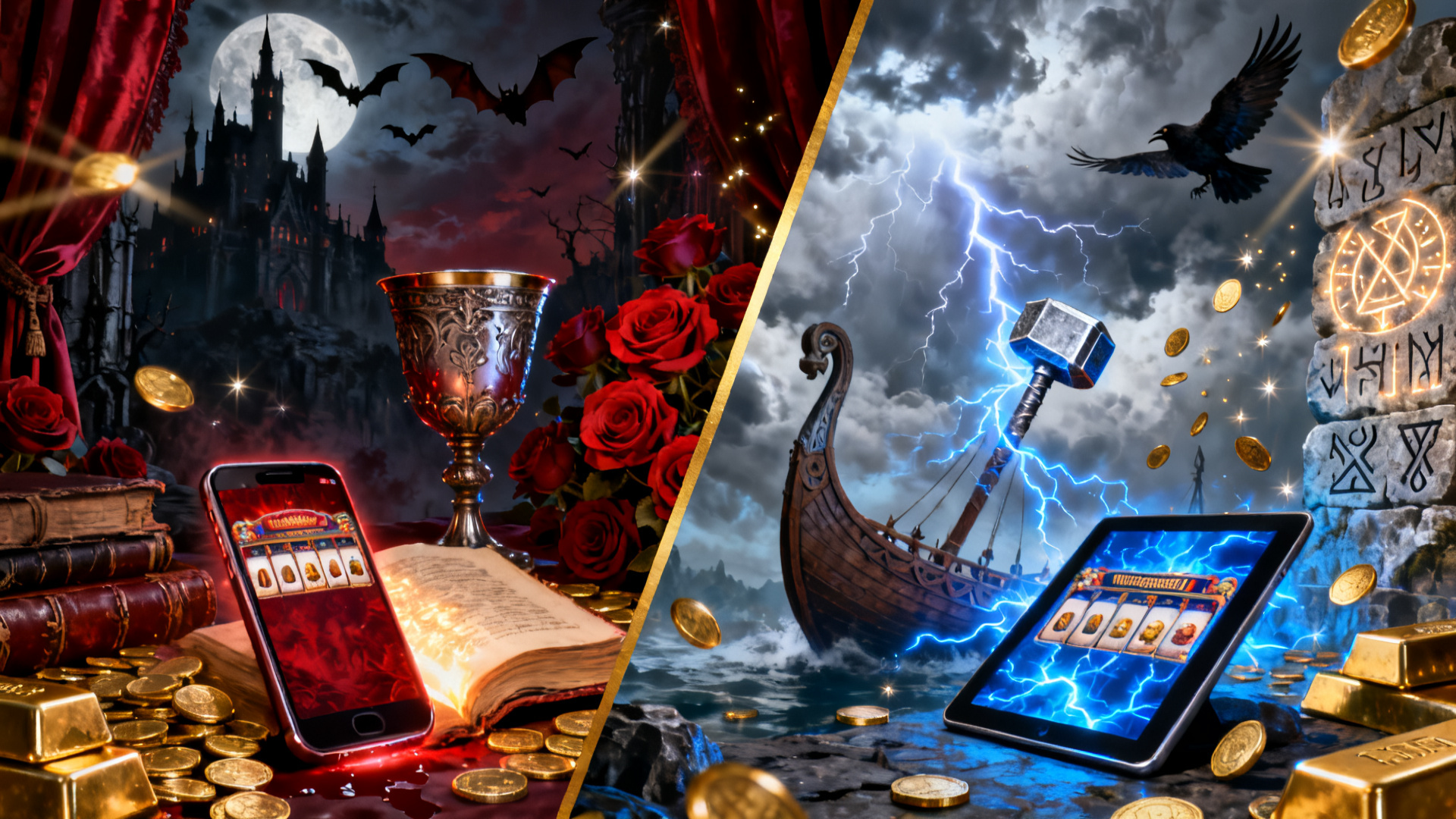
Every Canadian casino lobby has a legacy section, and two Microgaming slots sit at the top of it like they’ve been bolted in place. Immortal Romance and Thunderstruck II launched within two years of each other, both built on the same 243-ways engine, both carrying elaborate multi-stage bonus systems that were genuinely ahead of their time. They’re the games people recommend when someone asks “what should I play first.”
That recommendation made sense in 2011. It still circulates in 2025, mostly on autopilot. The problem is that these two games have aged on completely different trajectories. One still plays like a modern slot with a vintage skin. The other feels like a museum piece you keep loading because the name is familiar. The difference isn’t nostalgia. It’s mechanical.
I’ve spent enough sessions in both to know which one earns the lobby space and which one coasts on reputation. Here’s the breakdown.
The Shared Blueprint and Where It Splits
Both games use Microgaming’s 243-ways-to-win format. No traditional paylines. Any matching symbol on adjacent reels from left to right pays. Both carry a published RTP of 96.86%, which is identical down to the hundredth. Both feature a four-tiered bonus system where you unlock progressively better free spin rounds the more times you trigger the feature. On paper, they’re twins.
In practice, the similarity ends at the structure. The bonus mechanics inside each tier, the volatility profile those mechanics create, and the way each game distributes its payouts across a real session are fundamentally different. Thunderstruck II front-loads its value. Immortal Romance back-loads it. That single design choice changes everything about how these games feel at the 200-spin mark.
How Thunderstruck II’s Bonus System Actually Works
Thunderstruck II’s free spin feature is called the Great Hall of Spins. The first time you trigger it, you get Valkyrie: 10 free spins with a 5x multiplier. It’s decent. Not spectacular, but it returns something. The second and third triggers stay on Valkyrie. On your fifth trigger, you unlock Loki: 15 free spins with a Wild Magic feature. The ninth trigger opens Odin: 20 spins with a wild raven that applies a 2x or 3x multiplier. The fifteenth trigger unlocks Thor: 25 free spins with rolling reels where consecutive wins increase the multiplier up to 5x.
The issue is mathematical. You need 15 bonus triggers to reach the best round. At high volatility, bonus triggers don’t come every 50 spins. Depending on the session, you might see a trigger every 120 to 180 spins. That puts the Thor round somewhere around 1,800 to 2,700 spins deep. At $0.30 per spin, that’s $540 to $810 in base game cost before you even see the top-tier feature. Most recreational sessions end long before that.
What this means in practice is that Thunderstruck II’s best content is gated behind a wall most players never climb. The early Valkyrie rounds are functional but underwhelming. The game’s reputation is built on Thor, but Thor is a theoretical feature for most session budgets.
How Immortal Romance’s Bonus System Actually Works
Immortal Romance uses the Chamber of Spins, and the unlock structure is similar on the surface. First trigger: Amber, 10 free spins with a 5x multiplier. Triggers two through four stay on Amber. Fifth trigger unlocks Troy: 15 free spins with Vampire Bats that turn symbols wild. Eighth trigger opens Michael: 20 free spins with rolling reels and increasing multipliers up to 5x. Tenth trigger unlocks Sarah: 25 free spins with Wild Vine, which randomly turns symbols wild after every spin.
The critical difference is the trigger count. You need 10 triggers for Sarah, not 15. That’s a 33% reduction in the grind. But more importantly, Immortal Romance’s mid-tier rounds, particularly Troy and Michael, are significantly more productive than Thunderstruck II’s Loki and Odin. The rolling reels in Michael’s round create chain reactions that compound value in ways that Thunderstruck II’s middle tiers don’t match.
There’s also the Wild Desire feature, which triggers randomly in the base game and can turn up to five reels completely wild. It’s rare, but when it hits, it creates base game wins that Thunderstruck II simply can’t produce outside of its bonus rounds. This is the mechanical reason Immortal Romance feels more alive during cold stretches. There’s always the possibility of a base game event that resets your session trajectory.
What a Real Session Feels Like in Each
I’ve played enough of both to know the rhythm. Thunderstruck II’s base game is flat. The Norse theme is well-executed visually, but between bonus triggers, you’re watching small wins trickle in and waiting. The 243-ways format means you hit something most spins, but the amounts are typically 0.5x to 2x your bet. The game’s energy lives entirely in the bonus rounds, and the early bonus rounds don’t deliver enough to sustain interest.
Immortal Romance’s base game has the same small-win rhythm, but Wild Desire changes the texture. Even when it doesn’t trigger, you know it exists. It’s the difference between a flat highway and a flat highway where you know there’s a sharp turn somewhere ahead. The anticipation layer matters more than it sounds like it should. And when you do hit the Chamber of Spins, the mid-tier rounds feel like they’re actually trying to pay you, not just extending your session.
Both games are high volatility. Cold stretches of 80 to 120 spins without a meaningful win are normal in either. But Immortal Romance’s cold stretches feel shorter because the base game has more texture. Thunderstruck II’s cold stretches feel like exactly what they are.
What It Costs to Play Each One Properly
Both games have a minimum bet of $0.30 to activate all 243 ways. At that stake, a 200-spin session costs $60. For Thunderstruck II, I’d recommend a session budget of at least $90 to $120 at minimum bet, because the game’s value is so heavily concentrated in later bonus tiers that a short session rarely reaches them. You’re essentially paying for access to content you might not see.
Immortal Romance is more forgiving at the same budget. The Wild Desire feature and more productive mid-tier bonuses mean a $60 to $90 session at $0.30 has a reasonable chance of producing at least one notable event. That’s not a guarantee. It’s volatility. But the distribution curve is kinder to shorter sessions.
Neither game should be played at higher stakes unless your session budget scales proportionally. At $3.00 per spin, a 200-spin session is $600. That’s a budget conversation, not a game review conversation, and it’s worth having with yourself before you adjust the bet slider. Both games have provider-published RTPs of 96.86%, but some operators run lower configurations. Check the info screen or help menu before you start.
Who Each Game Is Actually For
Thunderstruck II is for the player who treats a slot like a long-term project. If you’re the type who loads the same game across multiple sessions, tracking your bonus tier progress and building toward the Thor round over weeks, Thunderstruck II rewards that patience. The Thor round, when you finally reach it, is genuinely one of the best free spin experiences Microgaming ever built. The rolling reels with escalating multipliers can produce wins that justify the entire grind. But you have to be honest about whether you’re that player.
Immortal Romance is for the player who wants a complete experience in a single session. Every session has the potential for a Wild Desire event. The bonus tiers unlock faster. The mid-tier rounds are more self-sufficient. If you play slots in 30-to-60-minute windows with a fixed budget, Immortal Romance gives you more game per dollar. It’s not lower volatility. It’s better-distributed volatility.
Honest Assessment
Immortal Romance aged better. That’s the verdict, and it’s not particularly close. Both games were exceptional when they launched, but the design choices in Immortal Romance, specifically the Wild Desire base game feature and the faster bonus tier progression, created a game that still works within how people actually play slots in 2025. Thunderstruck II’s 15-trigger unlock requirement was ambitious in 2010. In a market where players have hundreds of alternatives and shorter session windows, it’s a liability.
Thunderstruck II isn’t a bad game. It’s a good game with a structural problem: its best content is inaccessible to most of its audience most of the time. Immortal Romance solved that problem by making every tier of the experience worth playing, not just the final one. If you’re choosing between the two for your next session, Immortal Romance is the one that respects your time and your budget. Thunderstruck II is the one that asks you to invest both on faith.
Two games from the same developer, the same era, the same engine, and the same RTP. The difference is in how they distribute their value across a real session. One front-gates its best feature behind an unrealistic grind. The other gives you reasons to stay engaged from spin one. Legacy matters, but it doesn’t pay out.
Gambling is entertainment with a cost attached, so set limits before you play and visit our Responsible Gaming page for support resources, safer-play tools, and help options if gambling stops feeling fun.

Leave a Comment