
Mega Moolah vs. Mega Fortune: Two Progressive Jackpots. One Is a Better Use of Your Bankroll.
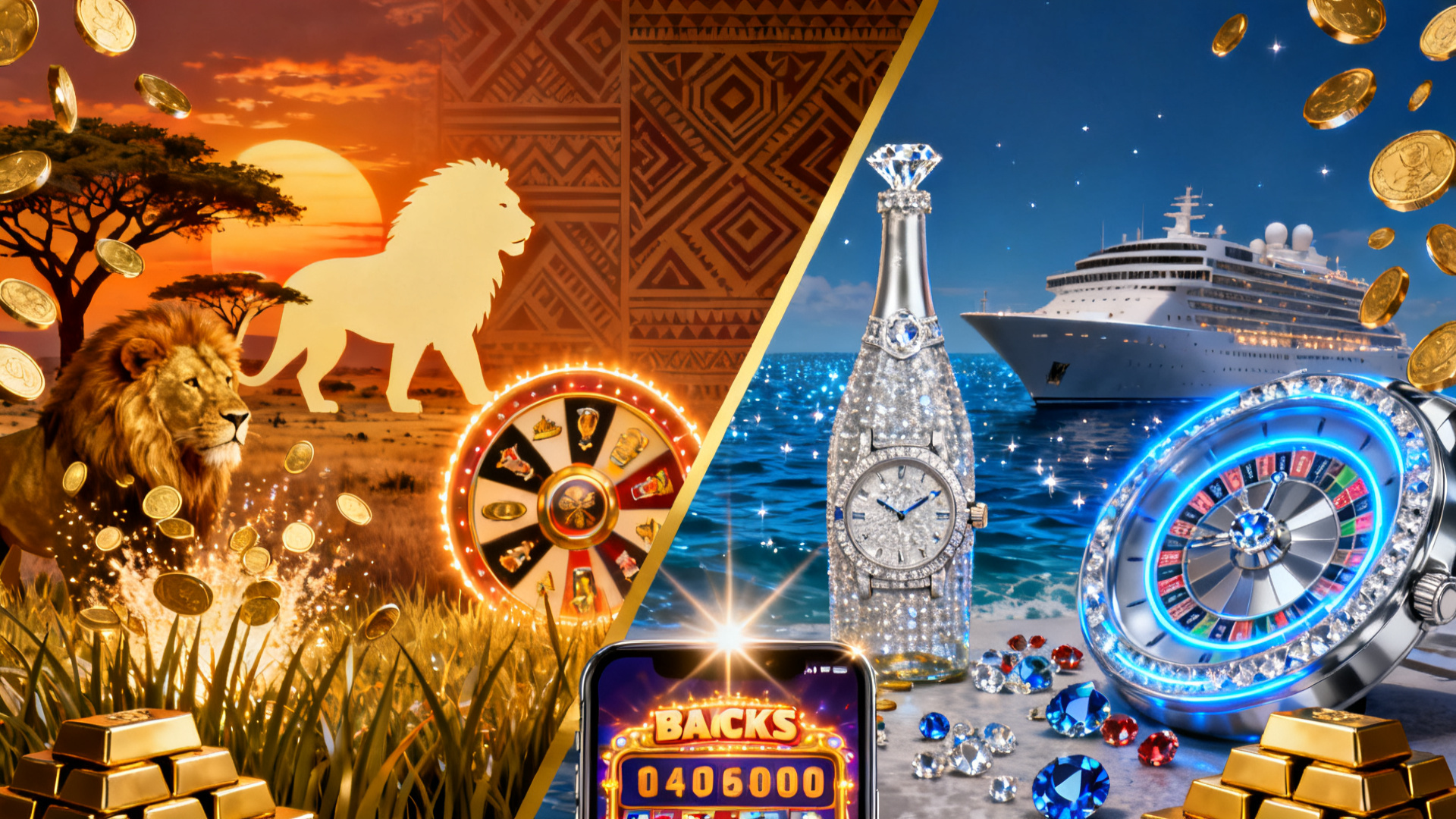
Progressive jackpot slots sell one thing: the number at the top of the screen. That counter ticking upward is the entire pitch. It works, too. Mega Moolah and Mega Fortune are two of the most played jackpot games in any Canadian casino lobby, and neither one survives on the strength of its base game. They survive because someone, eventually, wins seven figures.
But here’s the thing most players skip past. The jackpot is the least likely outcome of any session. What actually determines whether you enjoy yourself, or whether you burn through $200 in twenty minutes feeling nothing, is the base game, the trigger mechanic, and the cost per spin relative to what the non-jackpot experience delivers. On all three of those counts, these two games are meaningfully different.
I’ve spent enough time in both to know which one I’d sit down with if the jackpot didn’t exist. That’s the real test for any progressive slot, and it’s the one most comparisons never bother to run.
What You’re Actually Playing When the Jackpot Doesn’t Hit
Mega Moolah is a Microgaming title released in 2006. The African safari theme was dated when it launched and hasn’t improved. Five reels, 25 paylines, a free spins feature with a 3x multiplier. The base game pays like a low-to-mid volatility slot from the mid-2000s, because that’s exactly what it is. Wins are small, frequent enough to keep you spinning, and almost never exciting. The published RTP sits around 88.12%, which is notably low even by progressive jackpot standards.
Mega Fortune is NetEnt’s answer, released in 2009. Luxury yacht theme, champagne bottles on the reels, a base game built around a more conventional five-reel, 25-payline structure. It has a free spins feature triggered by scatter symbols, and the base game RTP is listed at approximately 96.6% before the jackpot contribution. That’s a significant difference. The base game actually returns something closer to what a modern slot player expects.
Strip away the jackpot counter and Mega Moolah is a below-average slot you wouldn’t play twice. Mega Fortune is an average slot you might play occasionally. Neither is going to win any design awards, but one of them bleeds your bankroll noticeably faster during the 99.99% of spins where the jackpot doesn’t trigger.
How Each Jackpot Actually Triggers
Mega Moolah uses a randomly triggered bonus wheel. Any spin, at any bet size, can activate the jackpot game. You spin a wheel with four tiers: Mini, Minor, Major, and Mega. The Mega tier is the one that produces the eight-figure headlines. The random trigger means there’s no skill, no pattern, and no way to influence the outcome. Higher bets are widely understood to increase the probability of triggering the wheel, but Microgaming has never published the exact weighting formula.
Mega Fortune uses a bonus wheel as well, but it’s triggered through gameplay. You need three bonus symbols on a payline to enter the bonus round. The wheel has three concentric rings. The outer ring awards smaller prizes. If the arrow lands on the green segment, you move to the middle ring, and then potentially to the inner ring where the Mega Jackpot sits. It’s a multi-stage process, and reaching the centre is genuinely rare.
The practical difference matters. Mega Moolah’s random trigger means you’re always technically in the running, which is psychologically powerful but mechanically opaque. Mega Fortune’s trigger is visible in the game. You see the bonus symbols land, you watch the wheel spin through stages, and the tension builds in a way that feels like a game mechanic rather than a lottery draw. Whether that matters to you depends on whether you want to feel like you’re playing a game or buying a ticket.
The RTP Gap Is Larger Than Most Players Realise
This is where the comparison gets uncomfortable for Mega Moolah. The published base game RTP of 88.12% means that for every $100 wagered, the theoretical return is $88.12. That remaining $11.88 is significantly higher than what most modern slots take. A typical online slot runs between 94% and 96.5%. Even accounting for the jackpot contribution, which Microgaming factors into the overall RTP, the effective return during normal play is low.
Mega Fortune’s base game RTP of approximately 96.6% is in line with standard NetEnt slots. The jackpot contribution sits on top of that. In practical terms, your bankroll lasts longer per session in Mega Fortune. If you’re playing 500 spins at $2.50 each, the difference between 88% and 96% RTP is roughly $100 in expected loss versus $50. Over a real session, that’s the difference between an hour of play and thirty minutes.
It’s also worth noting that some operators run adjusted RTP configurations on certain games. The figures above come from provider data, but the info screen inside the game at your specific casino is the only number that counts. Check it. If the RTP shown is lower than the provider’s published figure, the operator is running a reduced configuration.
What It Actually Costs to Play Each One Properly
Mega Moolah’s minimum bet is $0.25. But because higher bets are believed to increase the jackpot trigger probability, many players feel compelled to bet more. The maximum is $6.25 per spin. At $2.50 per spin, a session of 200 spins costs $500. With an 88% RTP, the expected return is around $440, meaning an expected loss of roughly $60 for that session length. That’s steep for what the base game delivers.
Mega Fortune’s minimum bet is $0.25 as well, with a maximum of $50. The bonus trigger requires specific symbol alignment on a payline, so bet level affects how many paylines are active. At $2.50 per spin over 200 spins, the same $500 investment returns approximately $483 in theory, an expected loss of around $17. The base game is simply more efficient with your money.
Neither game is cheap entertainment. Progressive jackpot slots take a cut to fund the prize pool, and that cut comes from your spins. But the difference in how quickly each game drains a session budget is real and measurable. If you’re setting a $100 session budget at $1 per spin, Mega Fortune gives you a meaningfully longer runway.
The Jackpot History Tells You Something, but Not What You Think
Mega Moolah holds the record for the largest online slot jackpot payout. The headline number was over $20 million CAD. It’s triggered major jackpots more frequently than Mega Fortune, and the average Mega jackpot tends to land somewhere between $5 million and $12 million CAD based on historical patterns. The jackpot has never gone past roughly $24 million before being won.
Mega Fortune’s largest payout was approximately €17.8 million (around $26 million CAD at the time). It triggers less frequently, which means the jackpot often climbs higher before someone wins. The average Mega jackpot has historically been in a similar range, though the intervals between wins tend to be longer.
Players sometimes interpret this data as strategy. It isn’t. A progressive jackpot that hasn’t hit in months isn’t “due.” The trigger probability doesn’t change based on the current jackpot size, even though the jackpot itself grows over time. The only thing historical data tells you is that both games do eventually pay out their top prizes. It tells you nothing about when.
Who Each Game Is Actually For
Mega Moolah is for the player who wants the biggest possible jackpot network, doesn’t care about the base game experience, and treats every session as a lottery ticket purchase with some slot mechanics attached. If you’re sitting down specifically because the counter says $14 million and you want a shot at it, Mega Moolah is the game. Just understand that the base game will cost you more per hour than almost any other slot in the lobby.
Mega Fortune is for the player who wants a progressive jackpot but also wants the non-jackpot session to be tolerable. The base game pays closer to industry standard, the bonus trigger is a visible mechanic rather than a random event, and your bankroll stretches further. If you’re the type who sets a $50 or $100 session limit and wants to actually play for a while, Mega Fortune is the more sustainable choice.
Neither game is for the player who prioritises base game quality. If you want a genuinely good slot experience, you’re better off playing something designed around its mechanics rather than its jackpot counter. Both of these games exist to fund and deliver a progressive prize. Everything else is secondary, and it shows.
Honest Assessment
Mega Fortune is the better game. Not because its jackpot is bigger or more likely to hit, but because the 99.99% of spins where the jackpot doesn’t trigger are meaningfully less punishing. An 88% RTP base game is hard to justify in 2025 when the alternative offers 96% and a comparable jackpot structure. Mega Moolah’s dominance comes from brand recognition and record-breaking headlines, not from being a better product.
If you’re playing a progressive jackpot slot, you’ve already accepted that the odds are astronomical and the base game is subsidising a prize pool. That’s fine. But accepting a worse base game on top of that, one that takes nearly 12 cents of every dollar compared to roughly 4 cents, is a choice you should make knowingly. Mega Moolah doesn’t earn that premium with its gameplay. It earns it with marketing.
Play Mega Fortune if you want a jackpot shot with a functional slot underneath it. Play Mega Moolah if the number on the counter is the only thing that matters to you. Both are valid reasons to sit down. Only one of them respects your session budget while you wait for something that probably isn’t coming.
The progressive jackpot is the promise. The base game is the price of admission. One of these games charges significantly more for a seat in the same theatre, and the show you’re watching while you wait isn’t any better. That’s the comparison that matters, and it’s the one the jackpot counter is designed to make you forget.
Gambling is entertainment with a cost attached, so set limits before you play and visit our Responsible Gaming page for support resources, safer-play tools, and help options if gambling stops feeling fun.



Leave a Comment