
Your Casino Withdrawal Got Approved. Here’s Why It Still Hasn’t Arrived.
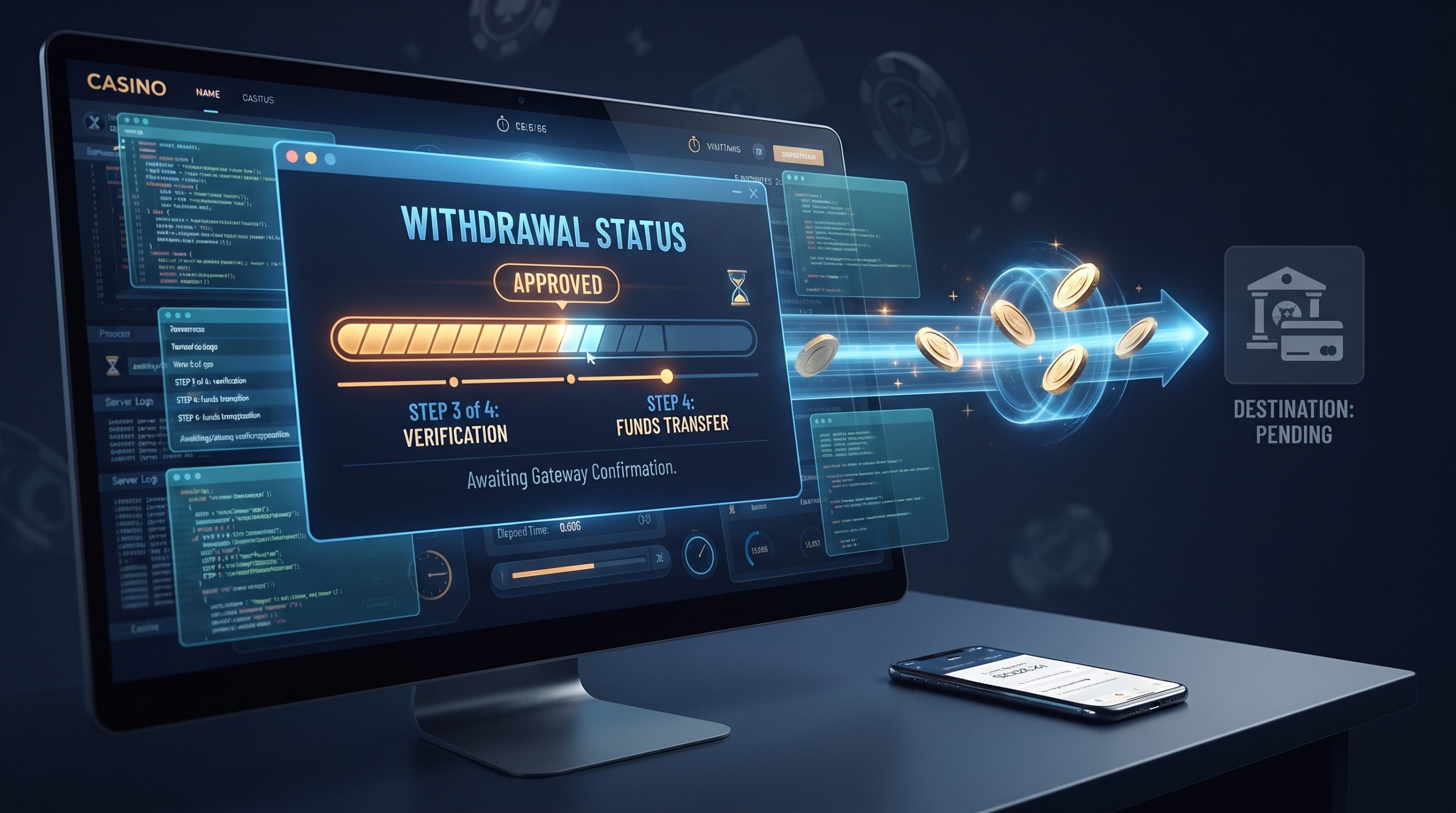
The word “approved” does more damage to player trust than any slow withdrawal ever could. Not because it’s a lie, but because it implies the process is finished when it isn’t. Your casino account says approved. Your bank account says nothing. And the gap between those two facts is where most of the confusion, frustration, and conspiracy theories about online casinos are born.
I’ve written before about the two-stage withdrawal process that most Canadian players never see explained. This piece goes deeper into the second stage, the one that starts after the casino says yes. Because “approved” is not a synonym for “sent,” and “sent” is not a synonym for “received.” Those are three different events, and at most operators, they happen hours or days apart.
If you’ve ever stared at an approved withdrawal wondering whether something went wrong, this is what’s actually happening on the other side of that status bar.
What “Approved” Actually Means in Casino Payment Systems
When a casino marks your withdrawal as approved, it means one thing: their internal review is complete. Someone on the payments or compliance team looked at your account, confirmed your identity verification is current, checked that no bonus terms are being violated, and cleared the transaction for processing. That’s it. The money hasn’t moved.
Approval is the end of the casino’s decision-making process, not the beginning of the money’s journey. Think of it as a gate opening. The car hasn’t driven through yet. At some operators, the gap between approval and the actual payment instruction being sent to the payment processor is minutes. At others, it’s a full business day. A few batch their outgoing payments, meaning your approved withdrawal sits in a queue until the next batch runs, which might be once or twice per day.
The problem is that most cashier interfaces don’t distinguish between “approved” and “sent.” They show one status update and then silence until the money lands. That silence is where trust erodes.
The Handoff Nobody Sees
Once the casino actually sends the payment instruction, it enters a chain that the casino no longer controls. For Interac e-Transfer withdrawals, the instruction goes from the casino’s payment processor to the Interac network, then to your bank. Each step has its own processing window. The casino’s processor might batch outgoing transfers at set intervals. Interac’s network typically moves quickly, often within minutes once the transfer is initiated. Your bank then decides how fast to make the funds available.
For other methods, the chain is longer. Credit card refunds route through the card network, then the issuing bank, and can take three to five business days after the casino sends the instruction. E-wallets like MuchBetter or iDebit have their own processing layers. Wire transfers are the slowest, sometimes taking five to seven business days from the moment the casino initiates them.
The key point is that the casino can honestly say they’ve processed your withdrawal while your bank hasn’t received a thing yet. Both statements can be true at the same time. The money is in transit, sitting in a processing layer that neither the casino’s support team nor your bank’s support team can see clearly.
Why Interac Deposits Are Instant but Interac Withdrawals Aren’t
This is the single biggest source of confusion for Canadian players, and it’s completely understandable. You deposited with Interac e-Transfer and the funds appeared in your casino account within seconds. So why does the withdrawal take one to three business days?
Deposits are push transactions. You initiate them from your bank, your bank sends the money, and the casino’s system credits it immediately upon confirmation. The casino has every incentive to make this instant because a funded account is a playing account. Withdrawals are pull transactions from the casino’s side. The casino initiates a transfer to you, and that transfer passes through compliance checks, payment processor queues, and banking receipt windows that don’t exist on the deposit side.
It’s not that the technology can’t move faster. It’s that the operational infrastructure around outgoing payments involves more steps, more parties, and more scrutiny. Deposits flow through a pipe designed for speed. Withdrawals flow through a pipe designed for verification. The asymmetry isn’t a bug. It’s the architecture. That doesn’t make it less frustrating, but understanding it helps you set realistic expectations. If an operator advertises Interac e-Transfer withdrawals, the realistic window is typically 24 to 72 hours from approval to arrival, not the 30 seconds your deposit took.
The Batch Processing Problem
Some operators process outgoing payments in real time. When your withdrawal is approved, the payment instruction fires immediately. Others use batch processing, where approved withdrawals accumulate and are sent out together at scheduled intervals. This is more common than most players realise, and it explains a lot of the “my withdrawal was approved yesterday but nothing’s happened” complaints.
A casino that batches withdrawals twice per day, say at 10:00 AM and 4:00 PM GMT, means a withdrawal approved at 4:15 PM sits until the next morning’s batch. Add a weekend and you’re looking at a Monday morning batch for a Friday afternoon approval. The casino’s status page still says “approved” the entire time. From the player’s perspective, it looks like nothing is happening for 60-plus hours.
Almost no casino publishes its batch schedule. Support agents often don’t know it either, or aren’t authorised to share it. This is one of those operational details that would solve half the support tickets if it were transparent, but transparency about payment processing timelines remains one of the industry’s persistent blind spots.
What to Actually Do While You’re Waiting
First, check whether your KYC verification is fully complete. A withdrawal can be approved provisionally and then held at the payment stage if a document review flags something. If you uploaded documents recently, confirm with support that verification is finalised, not just submitted.
Second, check the payment method. If you deposited with a method that isn’t available for withdrawals, the casino may have defaulted to an alternative you didn’t choose. Some operators will process a bank wire when Interac isn’t available for outgoing payments, and wires take significantly longer. Your cashier page should show which method the withdrawal is using, but the display isn’t always clear.
Third, don’t cancel and resubmit. This is the most common mistake. Cancelling a withdrawal that’s already in the approved-and-queued stage resets the entire process. You go back to the beginning of the internal review. At operators with reversible pending periods, the cancellation also puts the funds back in your playable balance, which creates its own set of risks. If the status says approved, leave it alone. Contact support for a status update, but don’t touch the withdrawal itself.
Fourth, know the realistic timeline for your specific method. Interac e-Transfer: one to three business days from approval. Credit card refund: three to five business days. E-wallet: one to two business days. Bank wire: five to seven business days. If you’re within that window, nothing is wrong. If you’re past it, then it’s time to escalate with support and ask specifically whether the payment instruction has been sent to the processor.
When “Approved” Doesn’t Mean What You Think
There are situations where a withdrawal shows as approved but is actually held. Some operators use a status that looks like approval but is actually a secondary review stage. This typically happens with larger amounts, first-time withdrawals, or accounts flagged for additional compliance review. The cashier might say “approved” or “processing” while the payment team conducts enhanced due diligence behind the scenes.
Provincially regulated operators in Ontario are required to process withdrawals within specific timeframes under iGaming Ontario’s standards. Grey market operators have no such obligation. If you’re playing at an offshore site and your approved withdrawal has been sitting for a week, you have limited recourse. That’s one of the practical differences between regulated and unregulated platforms that matters most when real money is trying to leave the site.
The status labels themselves are part of the problem. “Approved,” “processing,” “in progress,” “completed” all mean different things at different operators, and none of them are standardised across the industry. Until you see the money in your bank account or e-wallet, every status label is the casino’s internal language, not a banking confirmation.
Honest Assessment
The gap between “approved” and “arrived” is the most poorly communicated part of the entire online casino experience in Canada. It’s not that most operators are doing anything wrong. The money moves through a legitimate chain of processing steps. But the refusal to explain that chain, to show players where their money actually is at each stage, creates a trust problem that no FAQ page or chatbot response can fix.
The operators who will win long-term loyalty are the ones who show a real-time withdrawal tracker: approved, sent to processor, received by payment network, delivered. The technology exists. The will to implement it is what’s missing. Until then, the best thing you can do is understand the timeline for your payment method, complete KYC before your first withdrawal, and resist the urge to cancel and resubmit when the wait feels too long. The system is slower than it should be, but it’s usually working even when it looks like it isn’t.
The word “approved” should mean something definitive. In online casino payments, it means the casino is done with its part. Everything after that is someone else’s timeline, and nobody’s volunteering to explain it.
Gambling is entertainment with a cost attached, so set limits before you play and visit our Responsible Gaming page for support resources, safer-play tools, and help options if gambling stops feeling fun.



Leave a Comment