
You Picked a Casino. Here’s the Order You Should Actually Check Things.

Every casino site in a Canadian player’s search results is designed to get you to the deposit page in under sixty seconds. The game lobby is front and centre. The bonus banner is impossible to miss. The sign-up button follows you down the page. None of that tells you whether the site is worth your money, and most of it is engineered to make sure you never ask.
I’ve looked at enough of these platforms to know that the things that actually matter are buried. The licence is in the footer. The terms are behind a link you have to hunt for. The withdrawal policy is written in language that only makes sense after you’ve already tried to cash out. That’s not an accident. It’s a funnel, and you’re the thing moving through it.
So here’s the order I actually check things when I look at a new casino. It’s backwards from how the site wants you to experience it, which is exactly why it works.
Step One: The Licence. Not the Logo, the Actual Licence.
Scroll to the bottom of the page. Every legitimate online casino displays a licensing statement in the footer. What you’re looking for isn’t a badge or a seal. It’s a jurisdiction and a licence number. In Canada, the only provincially regulated market with a full iGaming framework right now is Ontario, where operators are licensed through iGaming Ontario and regulated by the AGCO. Alberta’s framework through AiGC launches in July 2025. If the casino doesn’t hold a provincial licence, it’s operating in the grey market.
Grey market doesn’t mean the site is a scam. Many offshore operators hold licences from jurisdictions like Malta, Kahnawake, or Curaçao, and plenty of Canadian players use them without incident. But it means something specific: if something goes wrong with a withdrawal, a bonus dispute, or an account closure, you have no domestic regulator to escalate to. Your recourse is limited to the operator’s own complaint process and whatever the offshore regulator is willing to do, which in practice is often very little.
Check the licence first because it determines the floor for everything else. A provincially regulated operator has enforceable standards for player protection, dispute resolution, and responsible gambling tools. A grey market operator might meet those standards voluntarily, or it might not. You won’t know until you need it to matter.
Step Two: The Terms. Specifically the Bonus Terms.
The welcome bonus is almost always the first thing a new player interacts with, and it’s almost always the least understood. Before you even consider claiming one, find the full terms and conditions page. Not the promotional banner. Not the FAQ summary. The actual terms document.
Here’s what to look for. Wagering requirements are the number of times you need to cycle through the bonus (and sometimes the deposit) before you can withdraw. A 30x requirement on a $200 deposit-and-bonus package means you need to wager $6,000 before a single dollar of bonus-linked winnings becomes withdrawable. That number changes everything about whether the bonus is generous or decorative.
Then check the max bet rule during bonus play. Most bonuses cap your bet at $5 or $6 per spin while wagering is active. Exceed it, even once, and the operator can void your bonus and any winnings attached to it. This is the clause that catches more players than any other, and it’s rarely mentioned on the promotions page. Also check whether the bonus is cashable or non-cashable (sticky). A sticky bonus gets subtracted from your balance at withdrawal. It was never real money. It was a tool to extend your play session, and that distinction matters enormously.
Step Three: Deposits and Withdrawals. They’re Not the Same Process.
Deposits at Canadian online casinos are fast. If you’re using Interac e-Transfer, the money hits your casino balance almost instantly. That speed is real, and it’s consistent across nearly every operator. The problem is that players assume withdrawals work the same way. They don’t.
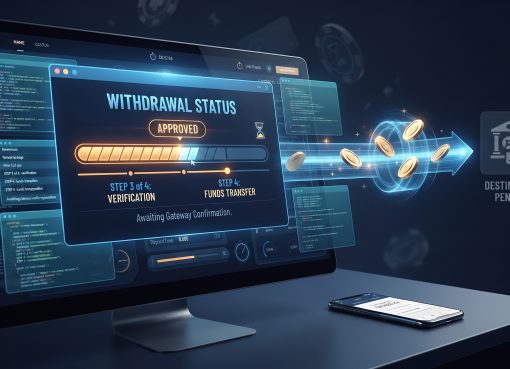
A withdrawal has two stages. First, the casino’s internal review, which includes verifying your identity (KYC), checking wagering compliance, and running fraud checks. This stage can take anywhere from a few hours to five or more business days depending on the operator and whether it’s your first withdrawal. Second, the actual transfer of funds, which for Interac e-Transfer is typically fast once initiated. The gap between “approved” and “sent” is where most of the frustration lives, and operators aren’t always transparent about which stage you’re in.
Before you deposit, check the cashier page. Confirm that Interac is available for withdrawals, not just deposits. Some operators accept Interac deposits but only process withdrawals via bank transfer or cheque, which can take seven to ten business days. That asymmetry is a red flag worth catching early. Also look for minimum withdrawal amounts. Some sites set the floor at $50 or even $100, which matters if you’re playing with a modest bankroll.
Step Four: Responsible Gambling Tools. Not Whether They Exist, but How They Work.
Every online casino available to Canadian players offers some version of responsible gambling tools. Deposit limits, loss limits, session timers, cooling-off periods, self-exclusion. The question isn’t whether the tools are there. It’s how they’re implemented and what they actually do.
Deposit limits are the most common and the most misunderstood. Setting a daily limit of $50 means you can’t deposit more than $50 in a 24-hour window. But lowering a limit typically takes effect immediately, while raising one requires a waiting period of 24 hours to seven days depending on the operator. That asymmetry is intentional and protective. Check how your chosen casino handles limit changes before you need to.
Session timers and reality checks are worth setting up on day one, but they’re notifications, not hard stops. Most casinos will show you a pop-up after 60 or 90 minutes of play. You acknowledge it and keep playing. That’s the design. It’s a nudge, not a lock. If you want a harder boundary, look for session duration limits or mandatory logout features, which are less common but more effective. The point of checking these tools early is simple: you want to know what’s available before you’re in a session where you’d need them.
Step Five: Customer Support. Test It Before You Need It.
This is the step almost nobody takes, and it’s one of the most revealing. Before you deposit, open the live chat. Ask a specific question. Something like: “What’s the processing time for an Interac e-Transfer withdrawal after KYC is complete?” or “Is the welcome bonus cashable or non-cashable?”
What you’re testing isn’t the answer itself, though that matters. You’re testing response time, whether you’re talking to a human or a bot, and whether the agent can give you a specific answer or just pastes a generic paragraph from the FAQ. I’ve seen response times range from under a minute to over 20 minutes on live chat, and the quality gap is even wider. An operator that can’t answer a straightforward question about its own bonus terms before you’ve deposited is unlikely to improve when you’re disputing a withdrawal.
Also check what support channels are available. Live chat is the baseline. Email is standard but slow, often 24 to 48 hours. Phone support is increasingly rare at online casinos. If the only option is a contact form with no estimated response time, that tells you something about how the operator prioritises player communication.
Step Six: Now You Can Look at the Games.
This is where most players start, and it’s the last thing I check. By this point, you already know whether the casino is licensed, whether the bonus terms are reasonable, whether you can actually withdraw your money efficiently, whether the responsible gambling tools meet your needs, and whether support will be there if something goes wrong. The game library is the fun part. It should come after the due diligence, not instead of it.
What you’re looking for in a game library isn’t size. A casino advertising 3,000 games sounds impressive until you realise 2,400 of them are from providers you’ve never heard of and will never open. What matters is provider quality and variety. Look for names like Pragmatic Play, Evolution, Play’n GO, NetEnt, Microgaming, and Red Tiger. Check whether the live casino section has dedicated tables or just the standard shared lobby. If you play table games, check for Canadian-friendly options like Interac-funded live dealer blackjack with reasonable minimum bets, typically $1 to $5 at the low end.
Also check whether the casino lets you try games in demo mode before depositing. Not all do, and the ones that don’t are asking you to commit money before you’ve experienced the product. That’s a small thing, but it signals how the operator thinks about the player relationship.
Honest Assessment
This order feels unnatural the first time you do it. Checking the licence before the lobby, reading terms before claiming a bonus, testing support before depositing. It goes against every design decision the casino has made. That’s the point. The site is built to move you toward a deposit as quickly as possible. Your job is to slow that process down long enough to make an informed decision.
Most players who run into problems at online casinos didn’t get scammed. They deposited at a site that was fine for deposits and frustrating for everything else, and they didn’t find out until their money was already in. Five to ten minutes of checking, in the right order, prevents the vast majority of those situations. It’s not exciting. It’s not complicated. But it’s the single most useful habit a Canadian casino player can build.
The casino wants you to see the games first and the terms last. Reverse that, and you’ll know more about the site than most players who’ve been depositing there for months. It’s not about being paranoid. It’s about being the kind of player who doesn’t end up writing an angry email to a support team that takes 48 hours to respond.
Gambling is entertainment with a cost attached, so set limits before you play and visit our Responsible Gaming page for support resources, safer-play tools, and help options if gambling stops feeling fun.


Leave a Comment