
Deposit Limits Are the Easiest Tool in Your Casino Account. Here’s Why the Default Setting Works Against You.

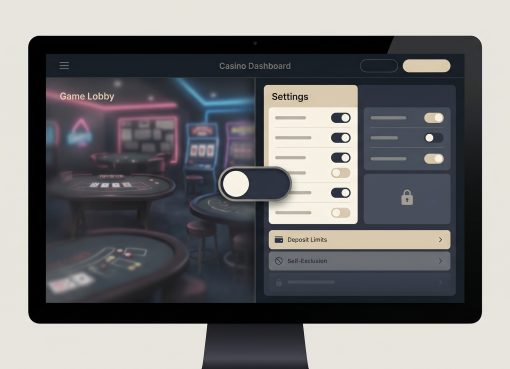
Every provincially regulated casino in Canada gives you the ability to set a deposit limit. Daily, weekly, monthly. The tool is there, it works, and it takes about fifteen seconds to configure. It’s also, by default, turned off. That’s not an oversight. That’s a design choice, and it’s one that works in the operator’s favour every single time a new player skips past the responsible gambling settings on their way to the game lobby.
The deposit limit is the simplest responsible gambling tool available. No algorithms, no behavioural nudges, no ambiguity about what it does. You pick a number, the system enforces it, and once you hit it, you can’t deposit again until the period resets. It’s a hard ceiling. And yet the vast majority of players never set one, because the account creation flow doesn’t ask them to, and the default is effectively unlimited.
That gap between availability and activation is where the real story is. The tool isn’t the problem. The default is.
What a Deposit Limit Actually Does at the System Level
A deposit limit caps the total amount you can move from your payment method into your casino balance within a set timeframe. Most operators offer three tiers: daily, weekly, and monthly. Some let you set all three simultaneously. The system tracks cumulative deposits against whatever ceiling you’ve chosen, and once you hit it, the cashier rejects any further deposit attempt until the clock resets.
The mechanic is intentionally rigid in one direction. Lowering a limit takes effect immediately at most regulated operators. Raising one, or removing it entirely, triggers a cooling-off period, typically 24 hours to 7 days depending on the operator and regulatory framework. Under Ontario’s iGaming standards, operators are expected to impose a delay before any increase takes effect. That asymmetry is the entire point. It’s easy to tighten the ceiling. It’s deliberately slow to loosen it.
This is the one responsible gambling tool where the enforcement is genuinely automatic. Session timers remind you. Reality checks nudge you. Deposit limits actually stop you. There’s no dismiss button.
The Default Is Unlimited, and That’s a Decision
When you create a new account at virtually any online casino operating in Canada, your deposit limit is not set. The field exists somewhere in your account settings or responsible gambling section, but it’s blank. The effective limit is whatever your payment method and the operator’s maximum transaction cap allow. For Interac e-Transfer, that ceiling is often set by your bank, and it can be $3,000 to $10,000 per day depending on your institution and account type.
That means a brand-new player, on their first day, can deposit thousands of dollars without the platform raising a flag or asking whether that amount aligns with their entertainment budget. The system is technically compliant. The tool is available. But the architecture of the signup flow treats the deposit limit as something you go looking for, not something you’re guided toward.
I’ve seen enough account creation flows across Canadian-facing operators to know the pattern. You’ll get a mandatory age confirmation, a terms-and-conditions checkbox, and sometimes a brief mention that responsible gambling tools exist. What you won’t get is a required step where the platform asks you to choose a deposit ceiling before your first transaction. The default is open, and most players never change it.
Why the Number You Pick Matters More Than the Feature Itself
Setting a deposit limit isn’t useful if the number is arbitrary. A $5,000 weekly limit on a $200-per-week entertainment budget isn’t a limit. It’s a formality. The tool only works when the number reflects what you’ve actually decided to spend, not what you think you might spend in a worst-case scenario.
The most practical approach I’ve seen players use is working backwards from their entertainment budget. If you’d spend $50 on a night out, and you play twice a week, a $100 weekly deposit limit mirrors that logic. The monthly figure should be the total you’d be genuinely comfortable losing in a calendar month, because that’s the realistic outcome for most sessions on most games.
Here’s the part that matters: once you set that number, the system doesn’t care whether you’re on a losing streak, whether a reload bonus just landed in your inbox, or whether you’re convinced the next session will be different. The cashier says no. That’s the value. It removes the decision from the moment where you’re least equipped to make it well.
The Cooling-Off Period Is the Mechanism That Actually Protects You
The asymmetry between lowering and raising a deposit limit is the single most important design feature in the entire tool. Lowering is instant. Raising requires a wait. At most Ontario-regulated operators, that wait is a minimum of 24 hours. Some operators extend it to 48 hours or a full seven days.
That delay exists because the moment you want to raise your limit is almost always the moment you shouldn’t. You’ve hit your ceiling, you’re mid-session or just finished one, and the impulse to deposit more is strongest. The cooling-off period forces a gap between the impulse and the action. By the time the increase takes effect, the emotional state that triggered the request has usually passed.
This is also why grey-market operators that offer instant limit increases, or no deposit limits at all, represent a meaningfully different risk profile for players. The tool without the cooling-off mechanism is just a suggestion. The cooling-off period is what turns it into actual protection.
Where to Find It and What to Expect
The location varies by operator, but the pattern is consistent. Look for a “Responsible Gambling” or “Safer Play” section in your account settings. It’s rarely on the main navigation. You’ll typically find it under your profile, account preferences, or a dedicated responsible gaming tab. Some operators bury it two or three clicks deep.
Once you’re there, you’ll see fields for daily, weekly, and monthly limits. Some platforms use dropdown menus with preset amounts ($50, $100, $200, $500). Others let you type a custom figure. I’d recommend setting all three tiers. A daily limit of $25, a weekly limit of $100, and a monthly limit of $300 would be a reasonable starting framework for a casual player. Adjust to your own budget, but start conservative. You can always request an increase later, and the cooling-off period means that decision will be a deliberate one.
After you confirm, most operators will send an email or in-account notification acknowledging the limit. Keep that confirmation. If you ever need to verify what you set, having the record outside the platform is useful.
Deposit Limits and Bonus Offers Interact in Ways Nobody Mentions
Here’s something that rarely appears in any responsible gambling guide: deposit limits can affect your ability to claim deposit-match bonuses. If an operator is running a 100% match up to $500, and your deposit limit is set at $100 per week, you can only claim $100 of that match in any given week. The bonus terms don’t adjust to accommodate your responsible gambling settings. The limit wins.
Some players see this as a reason not to set a limit, or to set it high enough to capture the full bonus. That’s backwards. The deposit limit is there to protect your budget. If a bonus requires you to override your budget to claim it, the bonus isn’t worth claiming. The match percentage is irrelevant if the deposit amount exceeds what you’ve decided you can afford to lose.
This interaction is actually a useful stress test. If your deposit limit prevents you from claiming a bonus, that tells you the bonus was designed for a higher-spending player. That’s information, not a problem.
Honest Assessment
The deposit limit is the most effective responsible gambling tool available at any Canadian online casino, and it’s effective precisely because it’s blunt. No interpretation, no nudging, no option to dismiss. You hit the number, the cashier closes. The cooling-off period on increases means the protection holds even when your judgment doesn’t.
The problem isn’t the tool. The problem is that every operator treats it as opt-in rather than opt-out. The default should be a mandatory selection during account creation, not a feature buried in settings that most players never open. Until that changes, the responsibility falls on the player to find it, set it, and set it at a number that actually reflects their budget rather than their optimism. Do it before your first deposit. It takes fifteen seconds, and it’s the only decision in a casino account that’s designed to work entirely in your favour.
The deposit limit won’t make you a better player. It won’t improve your odds or change the math on any game you play. What it does is make sure the cost of playing stays where you decided it should, before the session started and before the lobby had a chance to change your mind.
Gambling is entertainment with a cost attached, so set limits before you play and visit our Responsible Gaming page for support resources, safer-play tools, and help options if gambling stops feeling fun.


Leave a Comment