
The Casino’s Max Bet Rule During Bonus Play Is the Clause That Voids Everything
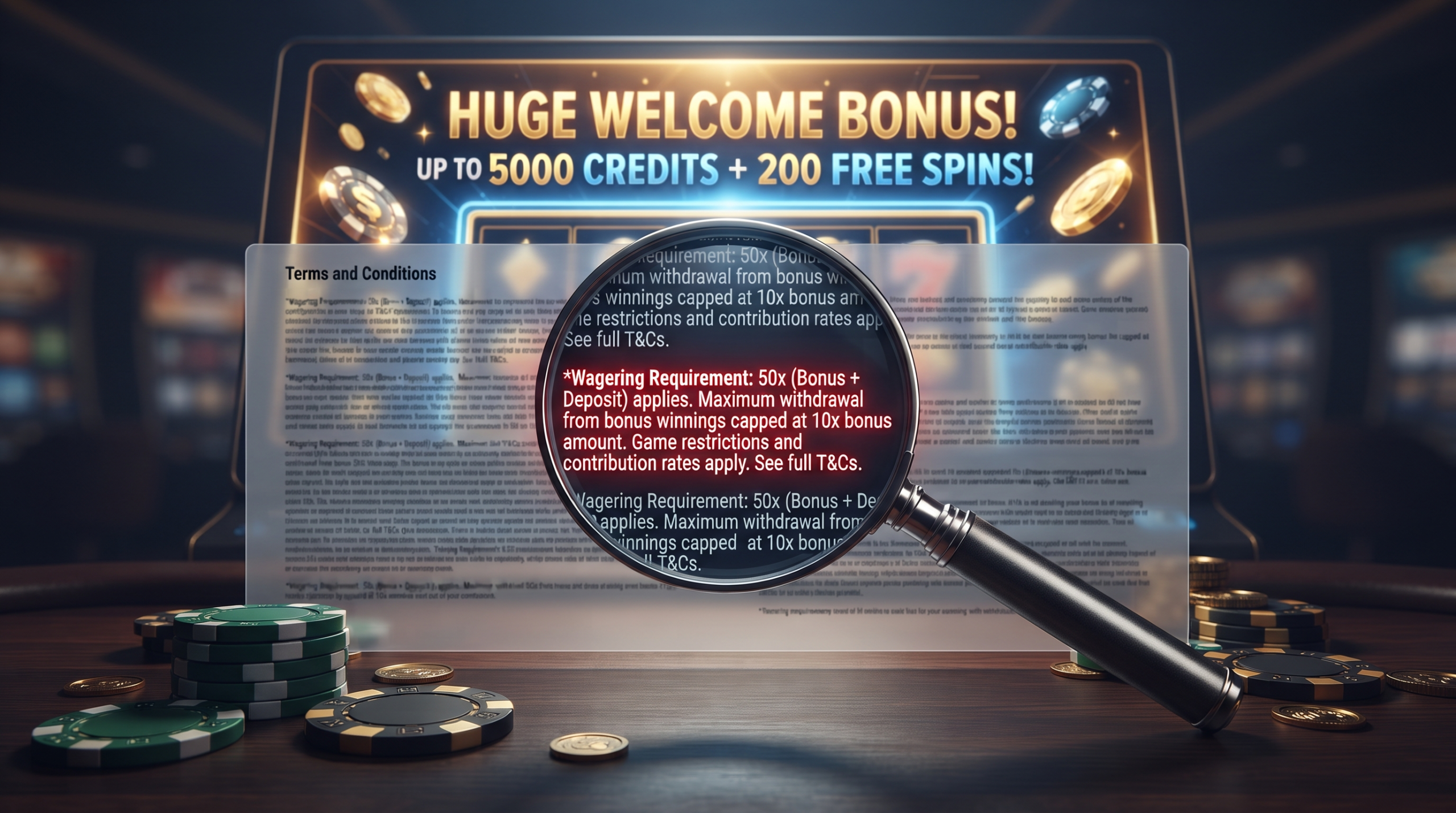
The wagering requirement gets all the attention. Every casino review breaks it down, every player knows to check it, and the number sits right there in the bonus terms where you can’t miss it. The max bet rule sits three paragraphs lower, in a line most players scroll past, and it’s the clause that actually kills more bonus balances than the wagering requirement ever will.
Here’s why it matters more than the headline number. A wagering requirement is a grind. You know it’s there, you know it’s long, and you can plan around it. The max bet rule is a tripwire. Cross it once, even accidentally, and the operator has grounds to void your entire bonus and every dollar of winnings attached to it. No warning, no second chance, no appeal process that goes anywhere.
Most Canadian players I’ve talked to either don’t know this rule exists or assume it only applies to table games. It applies to everything. And the threshold is lower than you’d guess.
What the Max Bet Rule Actually Says
The standard version reads something like this: “Maximum bet during bonus play is $5.00 per spin or $0.50 per payline.” Some operators set it at $6.25 or $8.00, but $5.00 is the most common cap across Canadian-facing online casinos. That number applies to every game you play while any portion of your balance is bonus funds or while wagering requirements remain active.
The rule doesn’t just limit your slot bet. It covers table game wagers, side bets in live dealer games, and feature-buy options on slots that offer them. If a game has a “buy bonus” button that costs $100, clicking it while you have an active bonus is an instant violation. The terms don’t care whether you forgot or whether the game’s interface made it easy to miss.
Some operators phrase the rule per round rather than per spin, which means a single blackjack hand with a split and a double could technically exceed the cap even if your initial bet was $5.00. The maths on that is straightforward: a $5.00 bet that splits into two hands and doubles one of them becomes $15.00 wagered on a single round.
Why Operators Enforce It So Aggressively
The max bet rule exists because of variance. Without it, a player could take a $200 bonus, place a single $200 spin on a high-volatility slot, hit a big multiplier, and withdraw thousands before the wagering requirement ever became relevant. The operator’s entire bonus model depends on you cycling through the funds gradually, where the house edge erodes the balance over time.
A $5.00 cap forces exactly that slow grind. At $5.00 per spin with a 30x wagering requirement on a $200 deposit-and-bonus package, you’re looking at $12,000 in total wagers, spread across at least 2,400 spins. That’s enough volume for the house edge to do its work. The max bet rule isn’t consumer protection. It’s variance management dressed up as a term.
Operators monitor this automatically. Modern casino platforms flag any bet that exceeds the threshold during active bonus play. Some void the bonus immediately. Others let you keep playing and only flag the violation when you try to withdraw, which is worse, because you’ve spent the time grinding through the requirement only to have the result nullified at the cashier.
The Bet Sizes That Catch Players Off Guard
A $5.00 max bet sounds generous until you look at how slot bet structures actually work. Many modern slots have fixed paylines, so the total bet is simply the number you set. But older multi-payline games, particularly Microgaming titles still common in Canadian lobbies, calculate the bet as coin value multiplied by coins per line multiplied by active paylines. A game with 25 paylines, two coins per line, and a $0.10 coin value comes to $5.00 exactly. Bump the coin value to $0.25 and you’re at $12.50 per spin, well over the cap.
Feature buys are the biggest trap. Games like Gates of Olympus and Sweet Bonanza offer a “buy bonus” option that typically costs 100x the base bet. Even at a $0.20 base bet, the feature buy is $20.00, four times the max bet limit. I’ve seen enough forum complaints about this specific scenario to know it catches players regularly. The game doesn’t warn you. The casino doesn’t block the button. You click, you violate, and the terms do the rest.
Live dealer games create their own problems. A $5.00 bet on Lightning Roulette is fine, but adding a $1.00 side bet on top pushes you to $6.00 total wagered per round. Whether that triggers a violation depends on how the operator defines “maximum bet” in their specific terms, and most players aren’t parsing that distinction mid-session.
When the Rule Applies and When It Doesn’t
The max bet rule is active from the moment you accept a bonus until the moment the wagering requirement is fully cleared. Not when you’ve used up the bonus funds. Not when you’re playing with “your money.” The distinction between real balance and bonus balance is irrelevant at most operators. If wagering requirements are still in progress, the cap applies to every bet, regardless of which portion of your balance is funding it.
This is the part that catches experienced players. You deposit $200, get a $200 bonus, and start playing. Your balance climbs to $600. You think, “I’m playing with my own winnings now.” You’re not. The wagering clock is still running, the max bet rule is still active, and a $10.00 spin from that $600 balance is still a violation. The rule lifts only when the wagering counter hits zero.
Some operators offer a “forfeit bonus” option that cancels the bonus and its attached wagering requirement, returning you to your deposited funds minus any losses. If you want to play at higher stakes, forfeiting the bonus before placing a larger bet is the only clean way to do it. But you lose the bonus balance entirely, which is the trade-off most players aren’t willing to make.
How to Actually Check Before You Play
The max bet limit is in the bonus terms, not the promotional banner. It’s typically in a section labelled “General Bonus Terms” or “Wagering Conditions” rather than the specific welcome offer page. At many Canadian-facing operators, you’ll find it buried in a PDF or a separate terms page linked from the footer, not from the bonus itself.
Before you accept any bonus, find three numbers: the wagering requirement multiplier, the max bet per spin or round, and the game contribution percentages. Those three numbers together tell you what the bonus actually costs to clear and what constraints you’re playing under. The max bet figure is the one that determines whether you can play the way you normally would or whether the bonus is going to force you into a bet size that doesn’t suit your style.
If the max bet is $5.00 and your normal slot session runs at $2.00 per spin, the rule won’t affect you. If you typically play at $10.00 or $20.00 per spin, the bonus is going to change your entire session. That’s worth knowing before you opt in, not after you’ve already started grinding.
Honest Assessment
The max bet rule is the most consequential clause in any casino bonus, and it gets a fraction of the scrutiny that wagering requirements receive. A 30x wagering requirement is transparent. It’s a known grind with a known endpoint. The max bet rule is a silent boundary that, once crossed, retroactively erases everything you’ve done. The enforcement is automated, the appeals process is stacked against you, and the operator’s terms give them full discretion.
If you play at bet sizes above $5.00 per spin, most welcome bonuses are not designed for you. Accepting one means either changing your play style for the entire wagering period or risking a violation that voids the bonus and its winnings. The honest move is to check the max bet cap, compare it to your normal bet size, and decline the bonus if they don’t align. A bonus that forces you to play differently than you would with your own money isn’t a bonus. It’s a constraint with a marketing budget.
The welcome bonus page tells you what you get. The max bet rule tells you what you can’t do with it. One of those is more important than the other, and it’s never the one in the banner.
Gambling is entertainment with a cost attached, so set limits before you play and visit our Responsible Gaming page for support resources, safer-play tools, and help options if gambling stops feeling fun.



Leave a Comment