
Mega Moolah Review: The Progressive Jackpot That Built an Industry. Here’s What the Base Game Actually Looks Like.
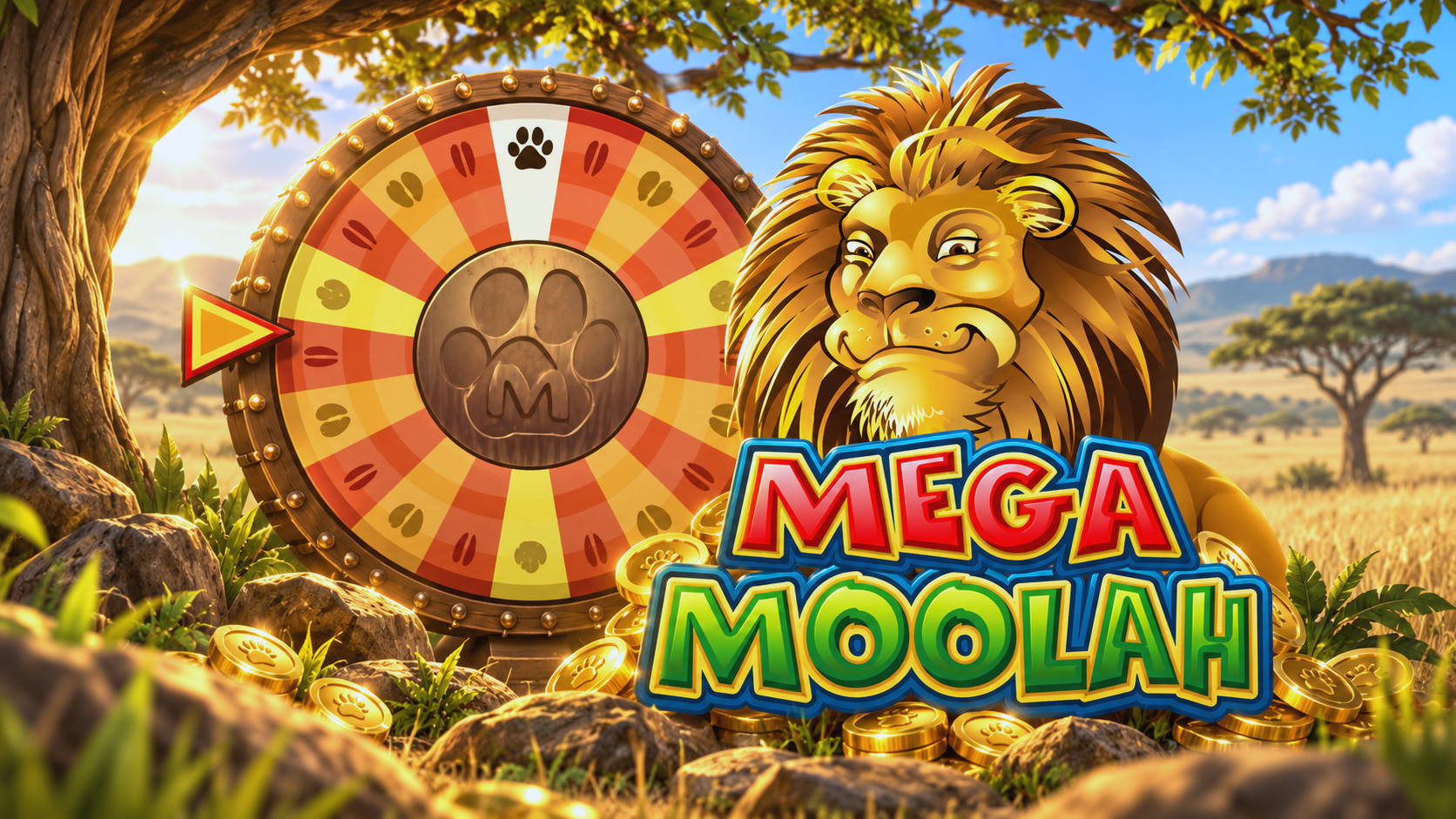
Mega Moolah has paid out more in progressive jackpots than any other online slot in history. That’s not marketing copy. It’s a verifiable record that Guinness has certified more than once. And it’s also the single most effective distraction from what the game actually does during the 99.99% of spins where the jackpot doesn’t hit.
The jackpot is real. The headlines are real. The $20-million-plus payouts are real. But the base game underneath those headlines has an RTP structure, a volatility profile, and a session cost that most players never examine before they start chasing the big number. That’s the gap worth closing.
This is a game where the product you’re buying and the product being advertised are two genuinely different experiences. Understanding both is the only way to decide whether it belongs in your rotation.
What the Game Actually Is
Mega Moolah is a five-reel, 25-payline slot developed by Microgaming (now distributed under Games Global). It launched in 2006 and has barely changed since. The African safari theme, the cartoon animal symbols, the interface design. It all looks like it was built in a different era of online gaming, because it was.
The base game plays like a standard low-to-medium volatility slot from the mid-2000s. Symbol values are modest. The wild (the lion) doubles all wins it contributes to, which is the single most important base-game mechanic. The scatter (the monkey) triggers the free spins round at three or more. None of this is unusual. None of it is why anyone loads the game.
The published RTP is 88.12%. That number needs context, because it includes the contribution to the progressive jackpot pool. The base game RTP, the portion that comes back to you through regular wins, sits lower. Compared to modern slots routinely offering 96% or higher, this is a significant gap. Every spin costs you more in expected value than it would on most other games in the lobby. That’s the trade-off for access to the jackpot wheel.
The Jackpot Wheel Is the Actual Product
The progressive jackpot bonus is triggered randomly on any spin. Higher bets increase the probability of triggering it, but the exact odds aren’t published. When it triggers, you get a wheel with four coloured segments: Mini, Minor, Major, and Mega. The wheel spins. You land on one. That’s it.
The Mini jackpot typically sits around $10. The Minor around $100. The Major fluctuates in the tens of thousands. The Mega is the one that makes the news, seeding at $1 million and regularly climbing past $5 million, $10 million, and occasionally past $20 million before someone hits it. The Mega jackpot’s average payout at the time of hit has historically been in the $7-to-$9-million range, though this varies.
The wheel is weighted. The vast majority of jackpot triggers land on Mini or Minor. Major hits are rare. Mega hits are exceptionally rare. The game doesn’t disclose the segment weighting, which means you’re playing a bonus round where the most important variable, the probability of each outcome, is hidden from you. That’s worth sitting with for a moment.
The Free Spins Round Does Less Than You Think
Three or more scatter symbols trigger 15 free spins with a 3x multiplier. That sounds productive. In practice, the base game’s low symbol values mean even tripled wins rarely produce anything dramatic. I’ve seen enough session reports and community data on this game to know that the free spins round is functional but underwhelming compared to the bonus mechanics in modern slots.
There’s no retrigger mechanic. No expanding wilds during free spins. No progressive multiplier. You get your 15 spins at 3x and you’re back to the base game. For a game released in 2006, this was perfectly standard. By 2025 standards, it feels thin. The free spins exist to break up the base game grind, not to deliver the kind of volatile payouts that games like Gates of Olympus or Dead or Alive 2 are built around.
What It Costs to Play It Properly
The minimum bet is $0.25 across all 25 paylines. The maximum is $6.25. Since higher bets increase the probability of triggering the jackpot wheel, there’s a built-in incentive to bet more. At $6.25 per spin, 500 spins costs $3,125. At $0.25 per spin, the same session costs $125, but your jackpot trigger probability drops accordingly.
With an 88.12% RTP, you’re losing roughly $0.03 per dollar wagered in expected value. On a $0.25 spin, that’s about $0.03 per spin. On a $6.25 spin, it’s about $0.74 per spin. Over a 500-spin session at max bet, your expected loss is around $370, before variance. That’s a meaningful session cost, and it’s higher than what you’d pay on most modern slots at equivalent bet levels.
The realistic way to approach this game is to treat the session cost as the price of a lottery ticket with better entertainment value. If you’re budgeting $50 to $100 for a session, minimum bets stretch your playtime. If you’re chasing the jackpot trigger probability, you need a larger bankroll and a clear loss limit set before you start.
Who It’s For
Mega Moolah is for players who want access to a life-changing progressive jackpot and are willing to accept a below-average base game as the cost of that access. That’s the transaction. If you enjoy the session experience of spinning a slot, the base game will feel dated and unrewarding compared to almost anything released in the last five years.
If you’re a player who evaluates slots by RTP and bonus mechanic depth, this game will frustrate you. The 88.12% RTP is among the lowest you’ll find in a mainstream lobby. The free spins are basic. The base game is repetitive. None of that matters to the player who loads Mega Moolah specifically because it’s the game that has paid out $20 million in a single spin.
Players who need session entertainment, volatility variety, or strong base-game returns should look elsewhere. Players who want to put $20 into a progressive jackpot pool and see what happens, with full awareness of the odds, are the audience this game was built for.
The Operator Configuration Question
Mega Moolah’s RTP is generally consistent across operators because the progressive jackpot network requires standardisation. Unlike many modern slots where operators can select from multiple RTP configurations, the jackpot pool mechanics tie the game to a specific return structure. That said, it’s always worth checking the info screen within the game at your specific operator. Some operators run different configurations where permitted, and the info screen is the only reliable place to confirm what you’re actually playing.
The game is available at most operators running Games Global content, which includes a significant portion of the Canadian online casino market. You’ll find it prominently featured at Rewards Group casinos like Zodiac Casino, Grand Mondial, and Captain Cooks, where it’s often tied directly to the welcome offer. The welcome bonus terms at those operators deserve their own scrutiny, which I’ve covered in the individual reviews of each.
Honest Assessment
Mega Moolah is the most famous progressive jackpot slot ever made, and it deserves that reputation. The jackpot network is real, the payouts are documented, and the scale of the top prize is genuinely unmatched in the industry. But the game underneath the jackpot is a 2006 slot running on 2006 mechanics with an RTP that would be considered unacceptable in any non-jackpot context.
The base game is the price of the jackpot ticket. If you understand that, set a hard loss limit, and treat it as entertainment with a lottery component, it’s a perfectly reasonable choice. If you’re loading it because the lobby put it in front of you and you haven’t looked at the RTP or the session cost, you’re paying more per spin than you realise for a base game that gives back less than almost anything else on the page.
Play it for the jackpot. Budget for the base game. Those are two different numbers, and the second one is the one that matters for your session.
The genius of Mega Moolah isn’t the jackpot itself. It’s that the jackpot makes you forget to ask every question you’d normally ask about a slot before you play it. The RTP, the volatility, the session cost, the bonus depth. Every one of those answers is below average. The jackpot is the only answer that isn’t. Whether that single answer is enough depends entirely on why you sat down.
Gambling is entertainment with a cost attached, so set limits before you play and visit our Responsible Gaming page for support resources, safer-play tools, and help options if gambling stops feeling fun.


Leave a Comment