
Microgaming Quietly Disappeared. Spin Genie Took Its Place. Canadian Lobbies Barely Noticed the Swap.
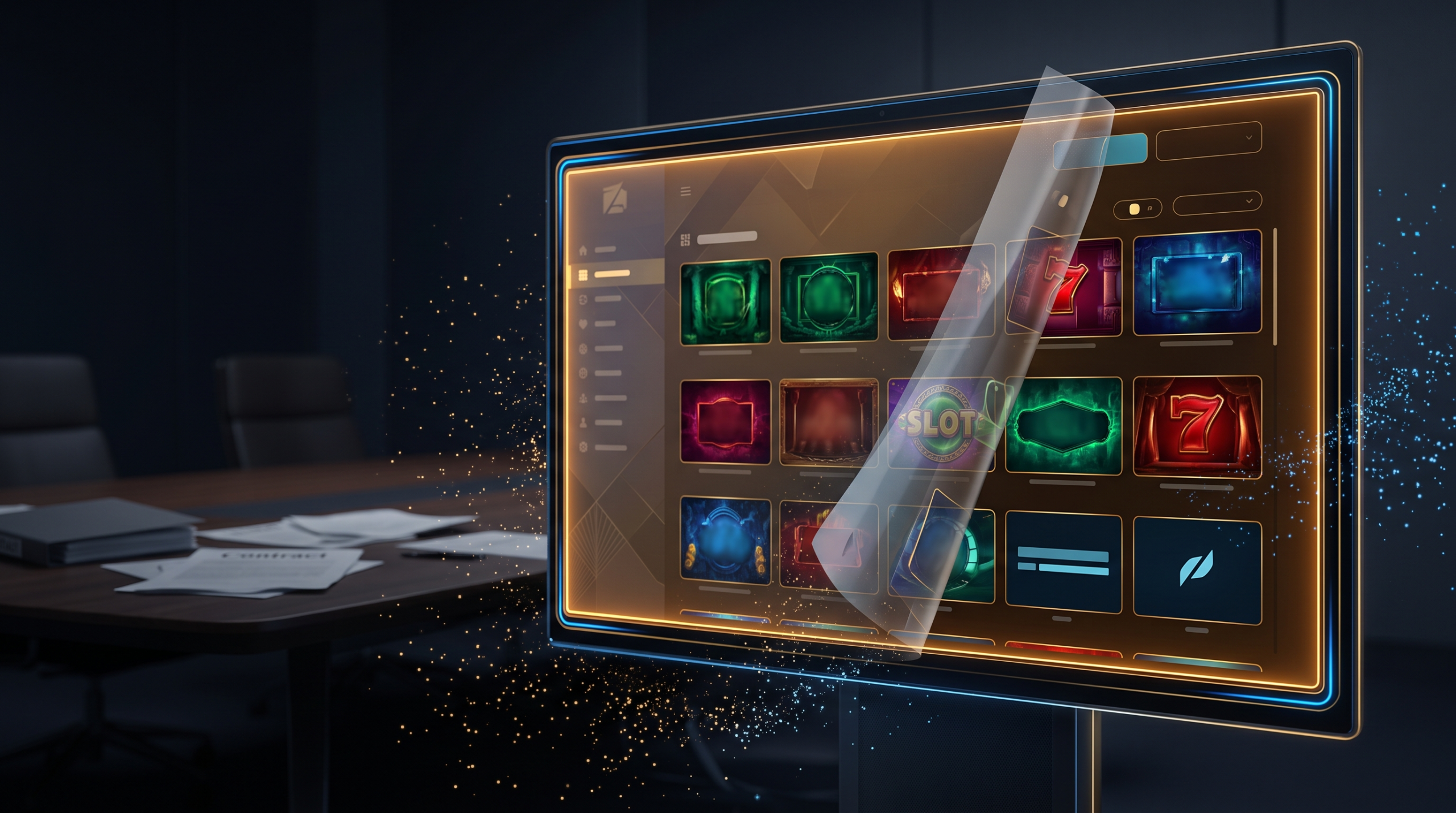
Microgaming was the brand that built the Canadian online casino lobby. Mega Moolah, Immortal Romance, Thunderstruck II. For twenty years, if you played at a Canadian-facing casino, you were almost certainly playing Microgaming titles, whether you knew the name or not. Then in 2022, the company handed its entire B2B games catalogue to a new entity called Games Global, stepped back from game supply entirely, and effectively stopped existing in any way that matters to players. The strange part isn’t that it happened. It’s that most players never noticed.
That’s partly by design. The games didn’t change. The thumbnails look the same. The progressive jackpot network still runs. But the company behind the supply chain, the licensing, the studio relationships, and the commercial terms shifted completely. And two years into the transition, the effects are starting to show up in places Canadian players actually feel: lobby variety, exclusive title availability, and the pace of new releases at loyalty-programme casinos that were built entirely around the Microgaming ecosystem.
This isn’t a rebrand story. It’s a supply chain story. And the difference matters.
What Microgaming Actually Was to Canadian Players
For most of the 2000s and 2010s, Microgaming operated as a full-stack game supplier. It built its own titles, ran its own progressive jackpot network, and licensed its platform to operators who then built entire casinos around the Microgaming catalogue. In Canada, this model was everywhere. Operators in the Casino Rewards Group, which includes names like Zodiac Casino, Grand Mondial, Yukon Gold, and Captain Cooks, ran almost exclusively on Microgaming content. The loyalty programme, the game library, the jackpot feed, the promotional calendar. All of it traced back to one supplier.
That concentration wasn’t unusual at the time. Multi-provider aggregation, where a single casino pulls games from 40 or 50 different studios, is a relatively recent development. For years, picking a casino meant picking a game supplier, and Microgaming was the dominant choice in the Canadian grey market. The brand carried weight because it was genuinely synonymous with the product.
What Games Global Actually Is
In early 2022, Microgaming transferred its entire B2B games business, including its content library, its network of independent studio partners, and its progressive jackpot system, to Games Global, a newly formed company. Games Global isn’t a game developer in the traditional sense. It’s a content aggregation and distribution platform. It manages relationships with over 30 independent studios that previously operated under the Microgaming umbrella, studios like Stormcraft, SpinPlay, All41, and Alchemy Gaming. Those studios still build the games. Games Global distributes them.
The Mega Moolah progressive jackpot network, which has paid out over $1.5 billion CAD lifetime according to Games Global’s own reporting, transferred as part of the deal. So did the commercial contracts with operators. From a player’s perspective, the lobby on day one of the transition looked identical to the lobby the day before. Same games, same jackpot tickers, same interface at most operators. The change was structural, not cosmetic.
What the Official Messaging Doesn’t Emphasise
Games Global positioned the transition as a growth story. More studios, more content, faster releases, broader reach. And some of that has materialised. The company claims to release over 100 new titles per month across its studio network, a pace Microgaming never achieved as a single developer. But volume isn’t the metric that matters to a player sitting in a Canadian lobby trying to find something worth playing.
What the messaging glosses over is the fragmentation. Microgaming, for all its limitations, was one entity with one quality standard and one release pipeline. Games Global is a platform managing dozens of independent studios with varying levels of ambition, budget, and design quality. Some of those studios produce genuinely interesting games. Others produce volume filler, low-volatility titles with generic themes that exist primarily to pad a content catalogue. The Microgaming name used to function as a rough quality filter. Games Global doesn’t serve that function in the same way, because it’s not a brand players interact with. It’s infrastructure.
The Mechanism Behind the Shift
The industry context explains why this happened. By 2020, the multi-provider aggregation model had won. Operators wanted access to Pragmatic Play, Evolution, NetEnt, Play’n GO, and dozens of other suppliers alongside whatever Microgaming offered. The single-supplier model that built the Casino Rewards ecosystem was becoming a competitive disadvantage. Players at aggregated casinos had 3,000 to 5,000 games. Players at Microgaming-exclusive operators had 600 to 800.
Microgaming’s response was to stop being a game developer and let someone else handle distribution. Games Global could aggregate more aggressively, sign more studios, and compete on volume. Meanwhile, Microgaming retained its software platform business, the backend technology that powers operator sites, separate from the game content itself. It was a clean split on paper. In practice, it meant the brand that Canadian players associated with their entire casino experience quietly ceased to be relevant.
What Canadian Players Actually Feel
At casinos that already aggregated multiple providers, the impact has been minimal. Games Global titles sit alongside Pragmatic Play and NetEnt in the same lobby, and nobody thinks about who distributes what. The transition is invisible because it was never the primary relationship.
At loyalty-programme casinos that were built on Microgaming exclusivity, the picture is different. These operators have gradually expanded their content libraries, adding third-party providers to supplement the Games Global catalogue. That’s a net positive for game variety. But it also means the thing that made those casinos distinctive, a curated, single-source library where every game came through one pipeline, is gone. The loyalty programme and the rewards structure remain. The content identity doesn’t.
The progressive jackpot network is the one area where continuity matters most, and it has held. Mega Moolah still seeds at $1 million CAD. The jackpot still triggers across the same network of connected operators. If you’re playing at a Casino Rewards site specifically for the progressive jackpot access, nothing material has changed in how that mechanic works. The brand on the loading screen is different. The maths behind the jackpot pool isn’t.
What It Actually Signals
The Microgaming-to-Games-Global transition is a case study in how the game supply business has consolidated around platform economics rather than brand loyalty. Players don’t choose casinos based on who distributes the games. They choose based on what’s in the lobby, how fast withdrawals process, and whether the bonus terms are reasonable. The supplier layer has become invisible infrastructure, and Games Global is built for that reality in a way Microgaming never was.
For the broader Canadian market, the signal is that single-supplier casino models are functionally over. Even the operators most deeply tied to the Microgaming ecosystem have diversified. The question going forward isn’t whether Games Global can replace Microgaming’s brand equity. It’s whether brand equity at the supplier level matters at all anymore. Based on how quietly this transition happened, the answer appears to be no.
Honest Assessment
The Microgaming name carried real meaning for a generation of Canadian online casino players. It was the closest thing the grey market had to a trusted label. Games Global has inherited the catalogue and the jackpot network, but not the brand recognition, and it isn’t trying to. That’s honest, at least. The company is a distribution platform, and it operates like one. The games that were good under Microgaming, Immortal Romance, Thunderstruck II, Mega Moolah, are still good. The studios that made them still exist. What’s gone is the idea that one name behind the lobby meant something coherent about quality. Canadian players at loyalty-programme casinos should pay more attention to individual studio names now, Stormcraft and SpinPlay in particular, rather than assuming the old Microgaming label still functions as a filter. It doesn’t, because it doesn’t exist anymore.
The most telling detail about this entire transition is how little noise it made. A company that powered half the Canadian online casino market for two decades handed off its entire game business, and the average player’s experience didn’t visibly change. That’s either a testament to how well the transition was managed or a sign that the brand never mattered as much as the games it delivered. Probably both.
Gambling is entertainment with a cost attached, so set limits before you play and visit our Responsible Gaming page for support resources, safer-play tools, and help options if gambling stops feeling fun.
Leave a Comment