
Your Casino Account Has a Login History. Here’s What It Tells You That Your Balance Doesn’t.
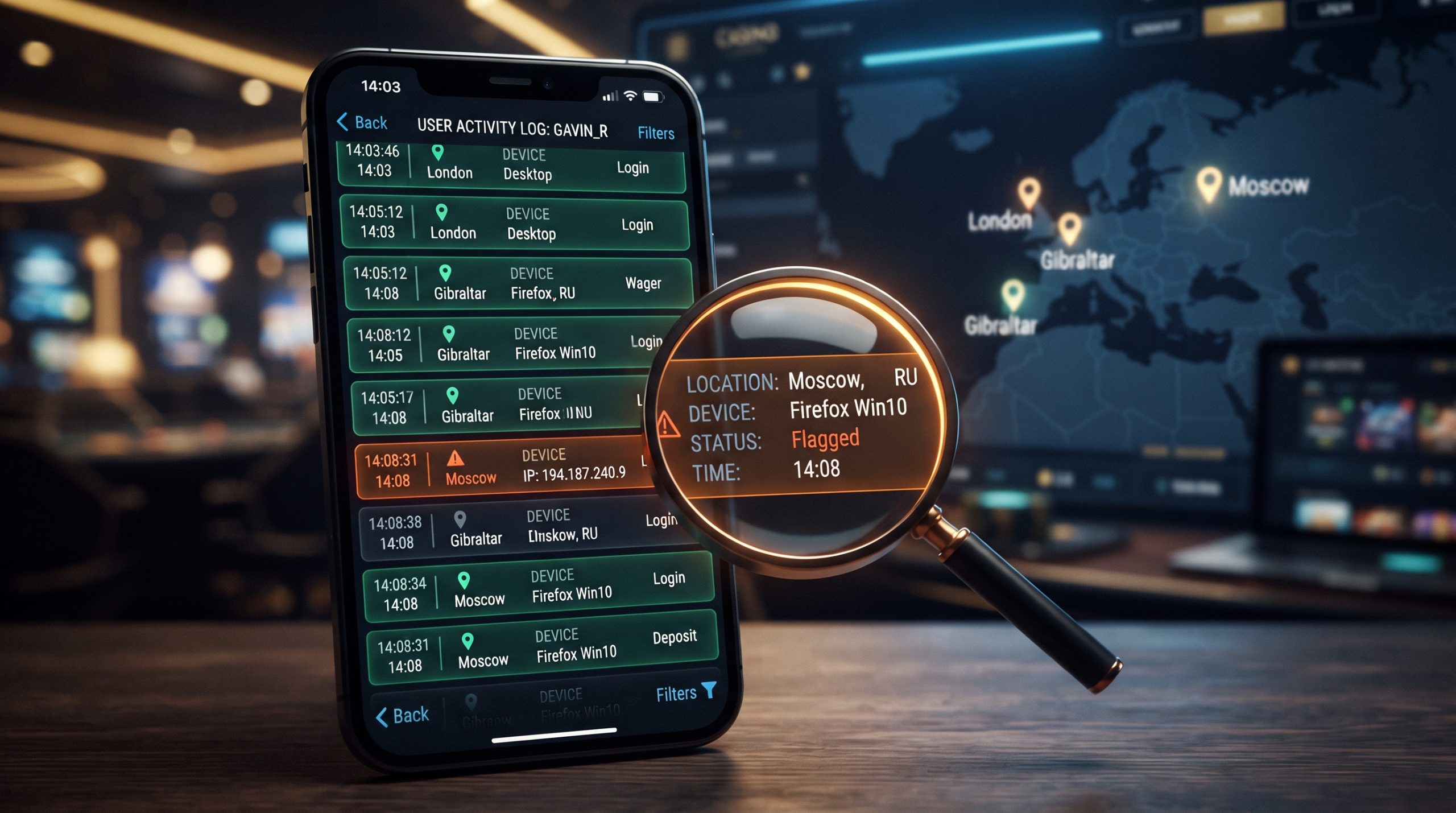
Every regulated online casino keeps a login history. Every session you open, every device you use, every IP address that touches your account gets logged and stored. It’s one of the most useful security tools available to you as a player, and almost nobody looks at it. That’s not because it’s hidden. It’s because the balance is right there on the dashboard, and the balance feels like the only number that matters.
It isn’t. Your balance tells you what’s in the account right now. Your login history tells you who’s been in the account, from where, and when. Those are two very different pieces of information, and the second one is the one that catches problems before they become expensive.
Most players discover their login history exists after something goes wrong. That’s backwards. Here’s how to find it, how to read it, and what the entries actually mean.
Where the Login History Actually Lives
The location varies by operator, but the pattern is consistent. Look under account settings, then security, then something labelled “login history,” “session activity,” or “account activity.” Some operators bury it two menus deep. Others put it on the main account dashboard. Provincially regulated operators in Ontario typically surface it more prominently because AGCO’s responsible gambling framework pushes operators toward transparency tools, though the specific implementation is up to each platform.
What you’ll see is a list. Each entry typically includes a timestamp, a device type (desktop, mobile, tablet), a browser or app identifier, and either an IP address or a general location. Some operators show the country and city. Others show just the province. A few show the full IP, which is more useful if you know what to do with it but less common on player-facing dashboards.
If you can’t find it at all, that itself is worth noting. An operator that doesn’t give you visibility into your own session history is asking you to trust that everything is fine without giving you the tools to verify it. That’s a meaningful gap.
What a Normal Login History Looks Like
Before you can spot something wrong, you need to know what right looks like. For most Canadian players, a clean login history is predictable. The same one or two devices. The same city or region. Sessions that align with your actual playing habits. If you play evenings on your phone from Toronto, your log should show mobile sessions from the Greater Toronto Area clustered between 7 p.m. and midnight.
You’ll sometimes see slight location variations even when nothing is wrong. IP geolocation isn’t precise to your street address. Your ISP might route traffic through a server in a neighbouring city. If you’re on mobile data, your carrier’s network can place you in a different part of the province. A session showing “Mississauga” when you live in Brampton isn’t a red flag. A session showing “Manila” when you’ve never left Ontario is.
The first time you check, scroll back as far as the operator allows. Some platforms keep 90 days of history. Others keep 30. Build a mental picture of what your normal pattern looks like, because that’s the baseline everything else gets measured against.
The Red Flags That Actually Matter
There are four patterns that should stop you cold. The first is a login from a location you’ve never been to. Not a neighbouring city. A different country, a different province you haven’t visited, or a location that makes no sense given your routine. This is the clearest sign that someone else has accessed your account.
The second is a device you don’t recognise. If your history shows “Windows Desktop / Chrome” and you’re an iPhone-only player, something is wrong. Some operators label devices generically, so a new entry reading “Unknown Device” is worth investigating even if the location looks normal.
The third is sessions at times you weren’t playing. A login at 4:13 a.m. on a Tuesday when you were asleep is exactly the kind of entry that gets missed because people scan their history quickly and move on. Timestamps matter. Check them against your actual habits.
The fourth is failed login attempts. Not every operator surfaces these, but the ones that do are giving you genuinely valuable information. A cluster of 3 to 5 failed attempts followed by a successful login is a pattern consistent with credential stuffing, where automated tools cycle through stolen password lists until one works. If you see this and you weren’t the one trying to log in, your account has likely been compromised.
What to Do When Something Looks Wrong
The order matters here. First, change your password immediately. Not tomorrow. Not after you finish your session. Right now. Use something unique to this account. If you’ve been using the same password across multiple sites, this is the moment that habit catches up with you.
Second, enable two-factor authentication if you haven’t already. I’ve written about why 2FA changes your account security profile entirely. The short version: a stolen password without 2FA gives full access. A stolen password with 2FA gives nothing.
Third, contact support and report the suspicious activity. Be specific. Give them the timestamp and device from the entry that doesn’t look right. Ask them to confirm whether any transactions, withdrawals, or account changes were made during that session. Regulated operators are required to investigate. Get the interaction in writing, whether that’s email or a saved live chat transcript.
Fourth, check your balance and transaction history. An unauthorised login doesn’t always mean money was taken. Sometimes accounts are accessed to change withdrawal details, add a new payment method, or harvest personal information for use elsewhere. The damage isn’t always visible on the balance line.
Why This Matters More Than Most Security Advice
Casino accounts are high-value targets for a specific reason: they have verified payment methods attached. Your account isn’t just a gaming profile. It’s a verified identity linked to a bank account or credit card that has already passed KYC checks. For someone with malicious intent, a compromised casino account is a pre-verified financial channel. That’s worth more than a stolen Netflix login.
The login history is the one tool that lets you monitor this yourself, without waiting for the operator to notice something unusual. Operators do run their own fraud detection, and regulated platforms in Ontario have obligations around suspicious activity monitoring. But no automated system catches everything, and the person most likely to notice that a 3 a.m. login from Vancouver doesn’t fit the pattern is you.
I’ve seen enough support threads and player forums to know that the most common reaction to account compromise is surprise. “I had no idea anyone else was logging in.” The login history would have told them. They just never looked.
Building the Habit
You don’t need to check every session. Once a week is enough for most players. Once every two weeks is the minimum I’d suggest for anyone with a balance sitting in their account between sessions. Make it part of your routine the same way you’d check a bank statement. Open the account, check the login history before you play, and move on if everything looks normal.
If your operator shows the last login on the dashboard when you sign in, pay attention to it. That single line, “Last login: [date, time, device],” is a quick sanity check. If the timestamp doesn’t match your last session, dig deeper.
The players who catch problems early are the ones who built this into a 30-second habit. The players who don’t find out weeks later, usually when a withdrawal fails or a support ticket reveals account changes they didn’t make.
Honest Assessment
The login history is the most underused security feature in any online casino account. It’s not exciting. It’s not a bonus. It doesn’t improve your odds or unlock anything. What it does is give you a verifiable record of every time your account was accessed, and that record is the difference between catching a compromised account in 48 hours and discovering it three weeks later when the damage is already done. Combined with two-factor authentication and a unique password, it turns your account from an easy target into a genuinely difficult one. The tools are already there. The gap is that almost nobody uses them.
Your casino balance is the number you care about. Your login history is the number that protects it. One of them deserves a glance every time you log in, and it’s not the one you’ve been checking.
Gambling is entertainment with a cost attached, so set limits before you play and visit our Responsible Gaming page for support resources, safer-play tools, and help options if gambling stops feeling fun.


Leave a Comment