
Your Casino Cashier Lists Five Withdrawal Methods. Here’s Why Only Two of Them Are Fast.

The cashier page at most Canadian online casinos looks generous on the way out. Five withdrawal methods, sometimes six, all listed with clean icons and reassuring labels. What the page doesn’t show you is the gap between the fastest and slowest option. It’s not a matter of hours. It’s a matter of days, sometimes a full week, and the difference has nothing to do with the casino’s internal processing. It has to do with how each payment rail actually moves money once the operator releases it.
Most players pick their withdrawal method the same way they picked their deposit method. Whatever was easiest on the way in. That logic works for deposits because nearly everything is instant. It falls apart for withdrawals because the infrastructure behind each method operates on a completely different timeline. Interac e-Transfer and a bank wire use the same banking system but arrive days apart. An e-wallet settles in hours. A cheque arrives in the mail like it’s 2004.
The casino’s internal review is the first bottleneck, and I’ve written about that separately. This is about the second stage. What happens after the casino says “approved” and the money enters the payment network. That’s where your method choice either saves you three days or costs you seven.
Interac e-Transfer: The Fastest Rail Most Canadians Have Access To
Interac e-Transfer is the default deposit method at Canadian online casinos for a reason. It’s fast, it’s familiar, and nearly every Canadian bank supports it. For withdrawals, it remains the fastest option available at most operators, but the experience isn’t symmetrical. Deposits land in seconds. Withdrawals typically take anywhere from a few hours to 24 hours after the casino releases the funds, depending on the operator’s payment processor and your bank’s receiving speed.
The important detail is that Interac e-Transfer availability for withdrawals isn’t guaranteed just because it was available for deposits. Some operators accept Interac deposits but don’t offer Interac withdrawals, which forces you into a slower method on the way out. That asymmetry is worth checking before you deposit. If the cashier page lists Interac under deposits but not under withdrawals, you’re looking at a bank transfer or e-wallet as your exit, and both come with different timelines.
When Interac e-Transfer is available for withdrawals, it’s consistently the fastest option for Canadian players. The transfer limit is set by your bank, not the casino or Interac itself. Most major Canadian banks cap Interac e-Transfer at $3,000 per transaction, though some business accounts or credit unions set different thresholds.
Bank Transfer: Same Banking System, Completely Different Speed
A bank transfer sounds like it should be comparable to Interac e-Transfer. Both end up in your bank account. Both use Canadian banking infrastructure. The similarity ends there. A standard bank wire or EFT withdrawal from an online casino typically takes three to five business days after the casino releases the funds. Some operators quote up to seven.
The delay isn’t arbitrary. Bank transfers go through intermediary processing that Interac e-Transfer bypasses. The funds move from the casino’s payment processor to a correspondent bank, then to your bank, then to your account. Each step adds time, and weekends and holidays pause the chain entirely. A withdrawal approved on a Friday afternoon might not arrive until the following Thursday.
Bank transfers do handle larger amounts more comfortably than Interac e-Transfer, which is why they remain an option. If you’re withdrawing $5,000 or more, a bank transfer might be the only method that processes the full amount in a single transaction. For anything under $3,000, choosing a bank transfer over Interac e-Transfer when both are available is choosing the slower road for no benefit.
E-Wallets: Fast Settlement, Extra Step
E-wallets like MuchBetter, ecoPayz (now Payz), and iDebit occupy a middle position that’s faster than bank transfers but comes with a structural trade-off. The withdrawal from the casino to your e-wallet is typically fast. Many operators process e-wallet withdrawals within 24 hours of approval, and some settle in under 12. That part is genuinely quick.
The catch is that your money is now in an e-wallet, not in your bank account. Moving it from the e-wallet to your bank adds another step, another fee in some cases, and another one to three business days. The total time from casino approval to money in your chequing account can end up comparable to a bank transfer once you factor in both legs of the journey.
E-wallets make sense if you play at multiple casinos and want a central balance you can move between them, or if you prefer keeping your casino activity separated from your main bank account. They don’t make sense if your goal is simply getting money into your bank account as quickly as possible. For that, Interac e-Transfer wins every time it’s available.
Credit and Debit Cards: The Deposit Method That Barely Works in Reverse
Visa and Mastercard appear on nearly every casino’s deposit page. They appear on far fewer withdrawal pages, and when they do, the experience is noticeably worse than every other option. Card withdrawals are processed as refunds through the card network, which means they follow the card issuer’s refund timeline, not the casino’s payment timeline. That’s typically three to five business days, sometimes longer.
Canadian players using credit cards face an additional complication. Many Canadian credit card issuers block gambling transactions entirely, both deposits and withdrawals. Even when a deposit goes through, the withdrawal back to the same card can be declined by the issuer, which sends you back to the cashier page to pick a different method after you’ve already waited for the casino’s internal approval.
Debit card withdrawals through Visa Debit are slightly more reliable but still slower than Interac e-Transfer in practice. The funds route through the Visa network rather than through Interac’s infrastructure, adding processing time. If your debit card supports both Visa Debit and Interac, choosing the Interac path is faster every time.
Cheques: Still Listed, Rarely Worth It
Some Canadian online casinos still list cheque as a withdrawal method. The processing time is exactly what you’d expect from a physical document sent through the mail. Seven to 21 business days is the standard range, and that’s after the casino’s internal review is complete. The cheque then needs to clear at your bank, which adds another hold period of up to five business days depending on the amount and your bank’s policy.
The only scenario where a cheque makes practical sense is a very large withdrawal that exceeds the limits of every electronic method available. Even then, most operators will process a bank wire for large amounts, which is faster. Cheques exist on cashier pages largely as a legacy option. Choosing one when Interac e-Transfer is available is choosing a two-to-four-week timeline over a 24-hour one.
The Two Timelines Nobody Separates
Every withdrawal has two distinct stages, and the cashier page conflates them into a single quoted timeframe. Stage one is the casino’s internal review: identity verification, bonus compliance checks, fraud screening. That stage is the same regardless of your withdrawal method. It can take anywhere from a few hours to 72 hours depending on the operator, your verification status, and the amount.
Stage two is the payment transfer itself. That’s where your method choice matters. An Interac e-Transfer that’s been approved and released by the casino arrives within hours. A bank transfer that’s been approved and released takes three to five business days. The casino’s quoted withdrawal time often blends both stages into a single range like “one to five business days,” which makes a fast method look slow and a slow method look comparable.
If you want to know how fast a casino actually pays, you need to separate those two numbers. Ask support how long the internal review takes, then add the transfer time for your specific method. That gives you a realistic expectation instead of a marketing range.
Honest Assessment
For Canadian players, the withdrawal method decision is simpler than the cashier page makes it look. If Interac e-Transfer is available for withdrawals, use it. It’s the fastest electronic rail available to most Canadians, it deposits directly into your bank account, and it doesn’t require a third-party wallet or a refund through a card network. Everything else is either slower, involves an extra step, or both.
The real decision isn’t which method to pick at withdrawal time. It’s checking which methods are available for withdrawals before you deposit. The cashier page is designed to get money in quickly. Getting money out quickly requires you to read the withdrawal column, not the deposit column. If an operator accepts Interac deposits but doesn’t offer Interac withdrawals, that’s information worth having before your money is in the account, not after.
The cashier page treats all withdrawal methods as roughly equivalent options. They aren’t. The difference between the fastest and slowest method on the same page can be two weeks. The icons are the same size. The timelines are not.
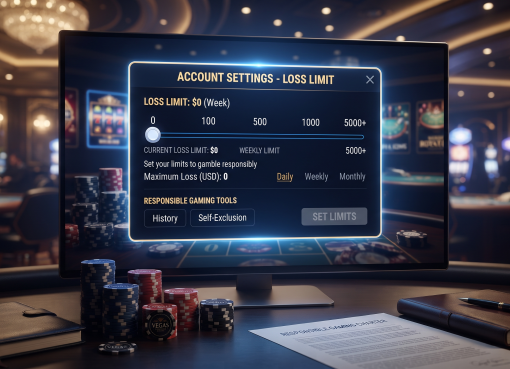
Gambling is entertainment with a cost attached, so set limits before you play and visit our Responsible Gaming page for support resources, safer-play tools, and help options if gambling stops feeling fun.

Leave a Comment