
Pragmatic Play Just Launched a Canadian-Facing Live Casino Studio. The Timing Tells You Where the Money Is Moving.
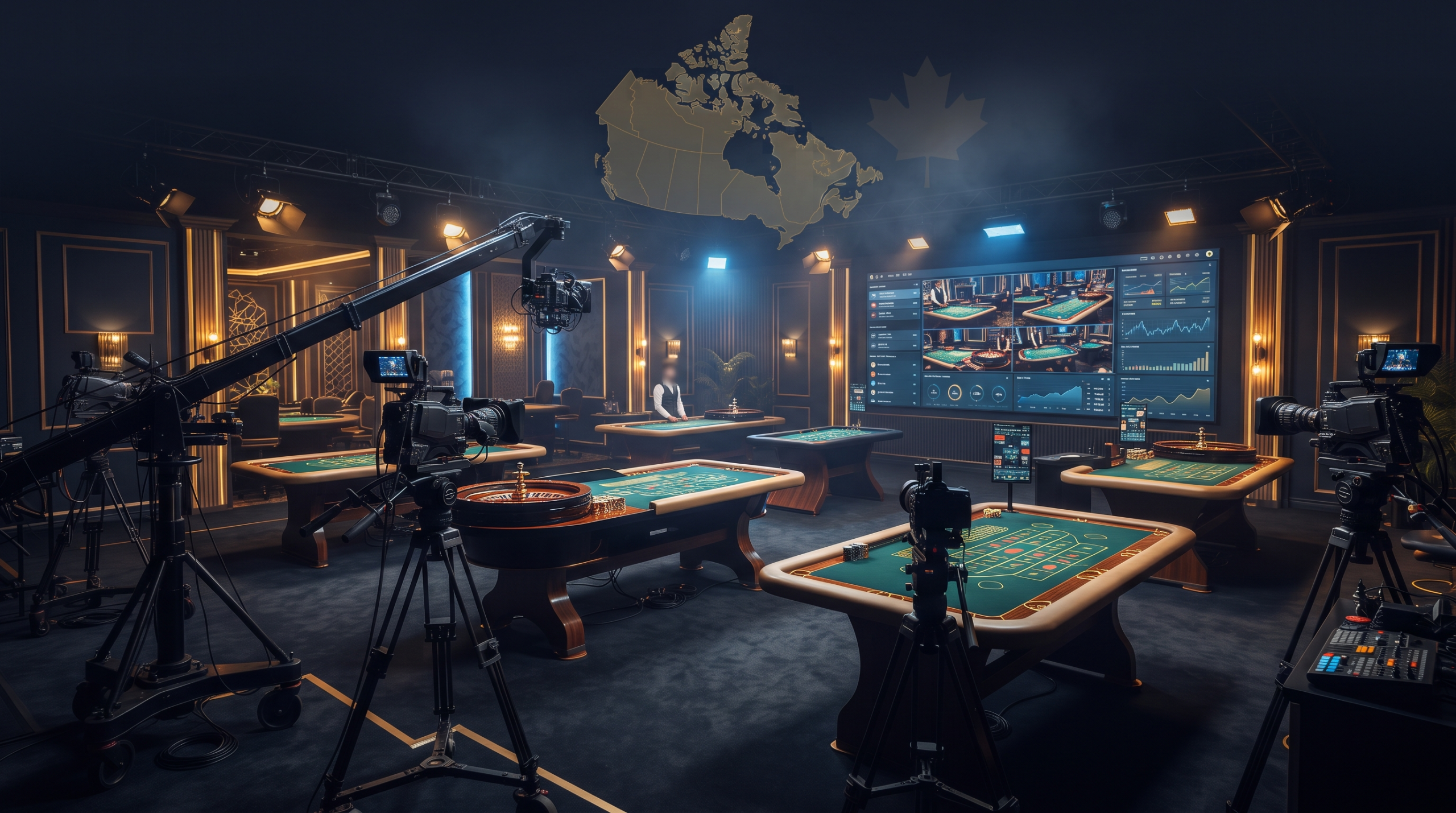
Live casino is the most expensive square footage in any online casino lobby. Not because the games cost more to build, though they do. Because live dealer tables require real studios, real staff, real cameras, and real bandwidth running around the clock. That cost structure means the supplier who controls the live casino tab controls the operator’s biggest recurring expense. Pragmatic Play has been quietly building toward exactly that position in the Canadian market.
The company’s push into dedicated Canadian-facing live dealer content isn’t a surprise if you’ve been watching the supplier side of the industry. Evolution dominates live casino globally and charges accordingly. Operators have been looking for credible alternatives that let them negotiate harder or diversify their supplier mix. Pragmatic Play sees that gap and is walking straight into it, with localised studios, Canadian-friendly scheduling, and a pricing model designed to undercut the incumbent.
What matters for players isn’t the corporate strategy. It’s what happens to your lobby, your table limits, and your game selection when a second major live supplier starts competing for the same screen real estate.
What Pragmatic Play Actually Is to Canadian Players
If you play at any grey-market or provincially regulated Canadian casino, you’ve almost certainly played a Pragmatic Play slot. Gates of Olympus, Sweet Bonanza, Big Bass Bonanza, Wolf Gold. The company supplies games to the majority of operators serving Canadian players, and its slot portfolio is one of the three or four most visible in any Canadian lobby.
Live casino is a different business. Pragmatic Play launched its live dealer vertical in 2019, which makes it relatively young compared to Evolution’s decade-plus head start. The live product includes blackjack, roulette, baccarat, game shows, and a growing list of variants. In European and Latin American markets, Pragmatic Play Live has gained real traction. In Canada, adoption has been slower, partly because Evolution’s dominance is so entrenched and partly because Canadian-facing operators have been cautious about splitting their live supplier contracts.
That caution is starting to fade. The economics are pushing operators to look for options, and Pragmatic Play is making itself the obvious second choice.
What Actually Happened (and What the Announcements Aren’t Saying)
Pragmatic Play has been expanding its live casino studio capacity and signing distribution deals that specifically target the Canadian player base. The company now operates multiple studio locations and has been adding tables with North American time-zone scheduling, Canadian-dollar denomination options, and English and French dealer availability. Several operators serving Canadian players have integrated Pragmatic Play Live alongside their existing Evolution setup in 2024 and into 2025.
The press releases frame this as “expanding our global footprint” and “meeting player demand.” That’s technically true, but it understates what’s actually happening. This is a market-share play against Evolution, executed through pricing. Pragmatic Play typically charges operators lower integration fees and more competitive revenue-share rates than Evolution. For an operator running 40 or 50 live tables, the difference in supplier cost can be substantial, often in the range of 2 to 4 percentage points on revenue share.
What the announcements don’t say is that this puts pressure on Evolution to either match on price or justify the premium through exclusivity and product quality. That negotiation is already happening behind the scenes at most major operators.
The Mechanism Behind It: Why Live Casino Economics Force This Move
Live casino tables generate higher average revenue per player than slots. A single live blackjack table with a $5 minimum can process hundreds of hands per hour across seven seats. The hold percentage is lower than slots, typically 2 to 5 percent depending on the game, but the volume and session length compensate. Players who sit down at a live table tend to stay longer than players spinning a slot.
For suppliers, the challenge is that live casino has high fixed costs. Every table needs a trained dealer, camera operators (or automated camera systems), a physical studio space, and streaming infrastructure. You can’t spin up a live table the way you deploy a new slot title. This means the supplier that achieves scale first has a structural cost advantage, which is exactly why Evolution has been so dominant. They built the infrastructure early and spread the cost across hundreds of operator clients.
Pragmatic Play’s strategy is to accept lower margins in the short term to win operator contracts, build volume, and reach the scale where their per-table costs become competitive. It’s the same playbook they used in slots five years ago, when they flooded lobbies with high-volume releases at aggressive pricing. It worked there. Whether it works in live casino, where quality perception and dealer training matter more, is the open question.
What It Actually Signals for the Canadian Market
The Canadian online casino market is large enough to attract dedicated infrastructure investment but fragmented enough that no single regulatory framework governs the whole country. Ontario’s regulated market under iGaming Ontario has clear supplier licensing requirements. The grey market, which still serves the majority of Canadian provinces, operates under offshore licences where supplier integration decisions are purely commercial.
Pragmatic Play’s Canadian push signals that suppliers now view Canada as a market worth building dedicated capacity for, not just serving with overflow tables from European studios. That’s a meaningful shift. Three years ago, most Canadian players accessing live casino were connecting to studios in Latvia, Malta, or the Philippines. The time-zone mismatch meant peak-hour tables in Canada were off-peak tables in Europe, which sometimes meant fewer tables, slower dealer rotations, and limited game variety during Canadian evening hours.
A supplier investing in North American time-zone studios changes that equation. It also signals that the Canadian market’s revenue has crossed the threshold where dedicated investment makes financial sense. Industry estimates put Canadian online casino gross gaming revenue in the range of $2 to $3 billion annually across regulated and grey-market operators, though precise figures are difficult to verify given the grey market’s opacity.
What Changes for Players (If Anything)
In the short term, you’ll notice more Pragmatic Play-branded live tables appearing in casino lobbies that previously only carried Evolution. The branding is different, the studio aesthetic is different, and the game-show-style titles (like Mega Wheel and PowerUP Roulette) have a distinct feel compared to Evolution’s Crazy Time or Lightning Roulette.
The practical impact comes down to three things. First, table availability during Canadian peak hours (roughly 7 PM to midnight Eastern) should improve as more supplier capacity comes online in compatible time zones. Second, table minimums may edge lower at some operators. When an operator has two live suppliers competing for lobby placement, the supplier with lower minimums gets more recreational players, which gives operators leverage to push for $1 or $2 minimum tables rather than the $5 floors that are currently standard. Third, game variety increases. Pragmatic Play’s live portfolio includes some formats that Evolution doesn’t offer, and vice versa. More supplier competition means more variety in the live tab.
What won’t change is the fundamental cost structure. Live casino games still have a house edge. The RTP on live blackjack with standard rules sits around 99.5 percent with perfect strategy, but most players don’t play perfect strategy, and side bets carry significantly higher house edges, often 5 to 10 percent. More tables and more suppliers don’t change the math. They change the experience.
Honest Assessment
Pragmatic Play’s Canadian live casino push is good for players in the ways that supplier competition is always good for end users. More options, better availability, and downward pressure on table minimums. The company has proven in slots that it can scale aggressively and win lobby placement through pricing. Live casino is harder to scale because the product quality is visible in real time. A poorly trained dealer or a laggy stream is immediately obvious in a way that a mediocre slot release isn’t.
Evolution’s product quality remains the benchmark. Their dealer training, studio production values, and game innovation (Lightning Roulette, Crazy Time) set a standard that Pragmatic Play hasn’t consistently matched yet. But “consistently” is doing a lot of work in that sentence. Pragmatic Play’s best live tables are genuinely good, and their pricing advantage is real. For operators, the decision is increasingly about portfolio diversification rather than choosing one supplier over the other. For players, that means your live casino tab is about to get more interesting, even if you don’t notice the supplier logo in the corner of the screen.
The live casino tab has been the quietest monopoly in your casino lobby. One supplier, one set of tables, one pricing structure that operators had no leverage to negotiate. That’s changing. Whether the new entrant earns its place on quality or just on price will take another 12 to 18 months to become clear. In the meantime, you’ll have more tables to choose from during the hours you actually want to play. That part is straightforward.
Gambling is entertainment with a cost attached, so set limits before you play and visit our Responsible Gaming page for support resources, safer-play tools, and help options if gambling stops feeling fun.



Leave a Comment