
Casino Self-Exclusion in Canada: What Happens After You Click the Button
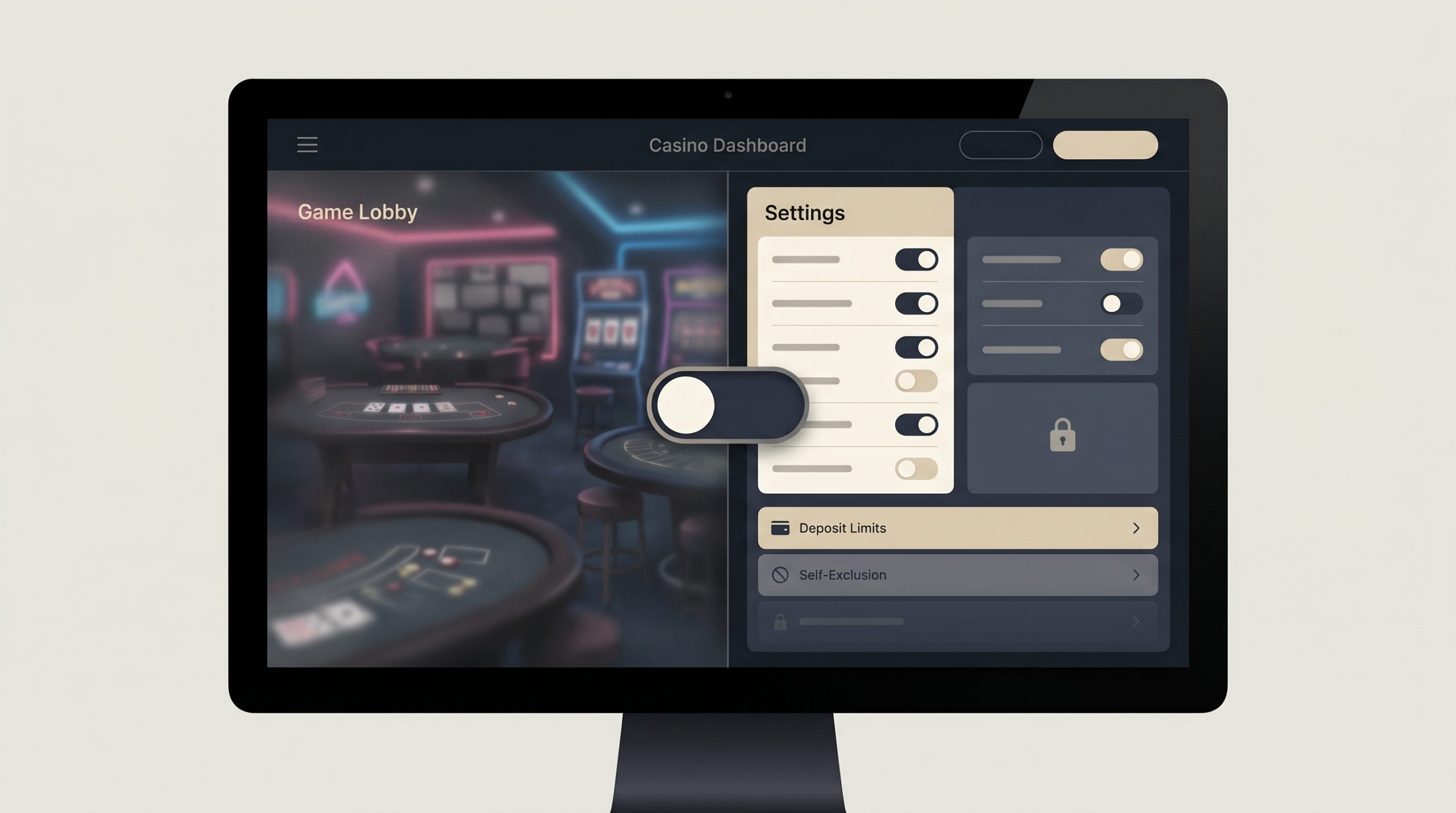
Every regulated online casino in Canada has a self-exclusion option. It’s in the responsible gambling section, usually two or three clicks from the main menu. The button is there. What almost nobody explains is what happens after you press it. How quickly does it take effect? Does it cover one site or every site under the same licence? Can you reverse it? And what about the grey market operators you might also have accounts with?
These aren’t edge cases. They’re the first questions anyone would ask before using the tool, and the answers vary more than you’d expect depending on the province, the operator, and whether the platform is regulated at all. Self-exclusion is one of the most important player protections available in Canadian online gambling. It’s also one of the least understood, partly because the people who need it most are rarely in the mood to read policy documents.
I’ve gone through the self-exclusion frameworks for Ontario, Alberta, and several grey market operators to map out what actually happens at each stage. Some of it is reassuring. Some of it has gaps worth knowing about before you need the tool.
What Self-Exclusion Actually Does at the Account Level
Self-exclusion locks you out of your account for a set period. On provincially regulated sites in Ontario, the minimum is typically six months, with options for one year, five years, or indefinite. During that period, you can’t log in, deposit, place wagers, or access the game lobby. Your account isn’t deleted, but it’s frozen. Any remaining balance is returned to you, usually via the original deposit method.
The mechanism is straightforward, but the timing matters. Under Ontario’s regulatory framework, self-exclusion is supposed to take effect immediately or within a very short window. In practice, “immediately” can mean within minutes on some platforms and within 24 hours on others. That gap matters if someone is activating the tool during a difficult session. A 24-hour delay undermines the entire purpose.
Once active, the operator is also required to stop sending you marketing emails, push notifications, and promotional offers. This is one of the parts that works well on regulated sites. It’s also one of the parts that falls apart completely on grey market platforms, where your email address may already be shared across multiple brands under the same parent company.
Ontario’s BetGuard and Cross-Operator Exclusion
Ontario launched BetGuard in 2024, and it changed the self-exclusion landscape meaningfully. Before BetGuard, self-excluding at one Ontario-regulated site didn’t affect your accounts at other regulated sites. You had to go operator by operator, which is a lot to ask of someone in crisis. BetGuard introduced a centralised system: one registration excludes you from all iGaming Ontario-regulated platforms simultaneously.
That’s a genuine improvement. The minimum period through BetGuard is one year, and during that time, every regulated operator in the province is required to block your access. The system uses identity matching, so creating a new account at a different regulated site should, in theory, be caught and blocked.
The limitation is scope. BetGuard covers iGaming Ontario-regulated operators only. It doesn’t reach grey market sites, and it doesn’t extend to other provinces. If you have accounts with offshore operators, those remain active unless you self-exclude from each one individually. And some offshore sites make that process deliberately difficult, burying the option or requiring email requests instead of offering an instant toggle.
Alberta’s Framework Is New and Still Filling In
Alberta’s regulated online casino market launched in July 2025, and the self-exclusion framework is part of the licensing conditions managed through AGLC and AiGC. Each licensed operator is required to offer self-exclusion tools, but as of July 2025, Alberta doesn’t yet have a centralised cross-operator system equivalent to Ontario’s BetGuard.
That means self-exclusion in Alberta currently works on a site-by-site basis. If you exclude yourself from one regulated operator, you’d need to repeat the process at each additional platform where you hold an account. It’s early days for the market, and a centralised system may follow, but right now the gap exists and it’s worth knowing about.
For players in provinces without regulated online markets, the situation is simpler in the worst way: there’s no provincial self-exclusion infrastructure for online gambling at all. You’re relying entirely on whatever the individual operator offers, which varies from robust to nearly non-existent.
Grey Market Sites Handle This Differently, and Not in Your Favour
On grey market platforms, self-exclusion exists in name but often not in practice. I’ve seen sites where the self-exclusion option is a form you submit by email, with a response time of “up to 72 hours.” I’ve seen others where the cool-off period maxes out at 30 days, with no option for longer exclusion. Some sites let you reactivate your account the moment the cool-off ends, with no friction, no check-in, and a welcome-back bonus waiting in your inbox.
That last detail is the one that should concern you most. A regulated operator that sends you a promotional offer during a self-exclusion period is violating its licence conditions. A grey market operator that does the same thing is violating nothing, because there’s no regulator with jurisdiction to enforce the rule. The tool exists on paper. The accountability behind it doesn’t.
This is one of the clearest practical differences between regulated and grey market platforms. It’s not about game selection or bonus size. It’s about whether the safety net actually holds weight when you need it.
What Happens When the Exclusion Period Ends
On most regulated platforms, the end of a self-exclusion period doesn’t mean your account automatically reactivates. Under Ontario’s framework, there’s typically a reinstatement process. You may need to contact the operator, confirm your intention to return, and in some cases complete a brief responsible gambling acknowledgement. The 24-hour cooling-off before reinstatement is a common safeguard.
This friction is intentional and it’s good design. The point is to make sure the decision to return is deliberate, not impulsive. Some operators handle this better than others. The ones that require a phone call or live chat interaction before reactivation are, in my view, doing it right, even if it feels inconvenient. Inconvenience is the point.
On grey market sites, by contrast, I’ve seen accounts that reactivate automatically at midnight on the day the exclusion expires. No check-in, no acknowledgement, no pause. Just a lobby and a balance. That’s not a responsible gambling tool. That’s a timer.
The Gap Nobody Talks About: Multiple Accounts Across Markets
Here’s the scenario that falls through every crack. A player in Ontario self-excludes through BetGuard, which locks them out of all provincially regulated sites. But they also have two accounts with grey market operators based in Curaçao and one with a platform licensed in Malta. None of those are covered. The player would need to self-exclude from each one individually, assuming the option exists and works.
There’s no cross-jurisdictional self-exclusion system anywhere in the world that covers this scenario comprehensively. It’s not a Canadian-specific failure. But it’s a Canadian-specific reality for the large number of players who hold accounts across both regulated and grey market platforms. The tools work within their boundaries. The problem is that player behaviour doesn’t stay within those boundaries.
If you’re considering self-exclusion, the most effective approach is to activate it everywhere you have an account, starting with the regulated platforms where the tool is strongest and then working through any grey market accounts manually. It’s more effort than it should be, but it closes the gaps that a single-platform exclusion leaves open.
Honest Assessment
Self-exclusion in Canada works best where regulation is strongest, and Ontario’s BetGuard system is the clearest example of that. A single registration that locks you out of every regulated operator in the province is a meaningful safeguard, and the reinstatement friction is well-designed. Alberta’s market is too new to have equivalent infrastructure, and provinces without regulated online markets offer nothing at all.
The real weakness isn’t the tool itself. It’s the assumption that players only gamble on regulated platforms. Many don’t, and the grey market sites they also use are the ones where self-exclusion is weakest, slowest, and least accountable. If you’re going to use self-exclusion, treat it as a multi-site project, not a single button press. And if you’re choosing where to play in the first place, the strength of the self-exclusion system is one of the most underrated reasons to stick with regulated operators.
Self-exclusion is the tool you hope you never need and the one you want to understand before you do. The best version of it is invisible until the moment it matters, and then it works immediately, completely, and without loopholes. Canada isn’t there yet. Ontario is closest. Everywhere else, the player still has to do most of the work themselves.
Gambling is entertainment with a cost attached, so set limits before you play and visit our Responsible Gaming page for support resources, safer-play tools, and help options if gambling stops feeling fun.



Leave a Comment