
Casino Account Limits in Canada: How to Set Them, What They Actually Control, and Why Defaults Work Against You
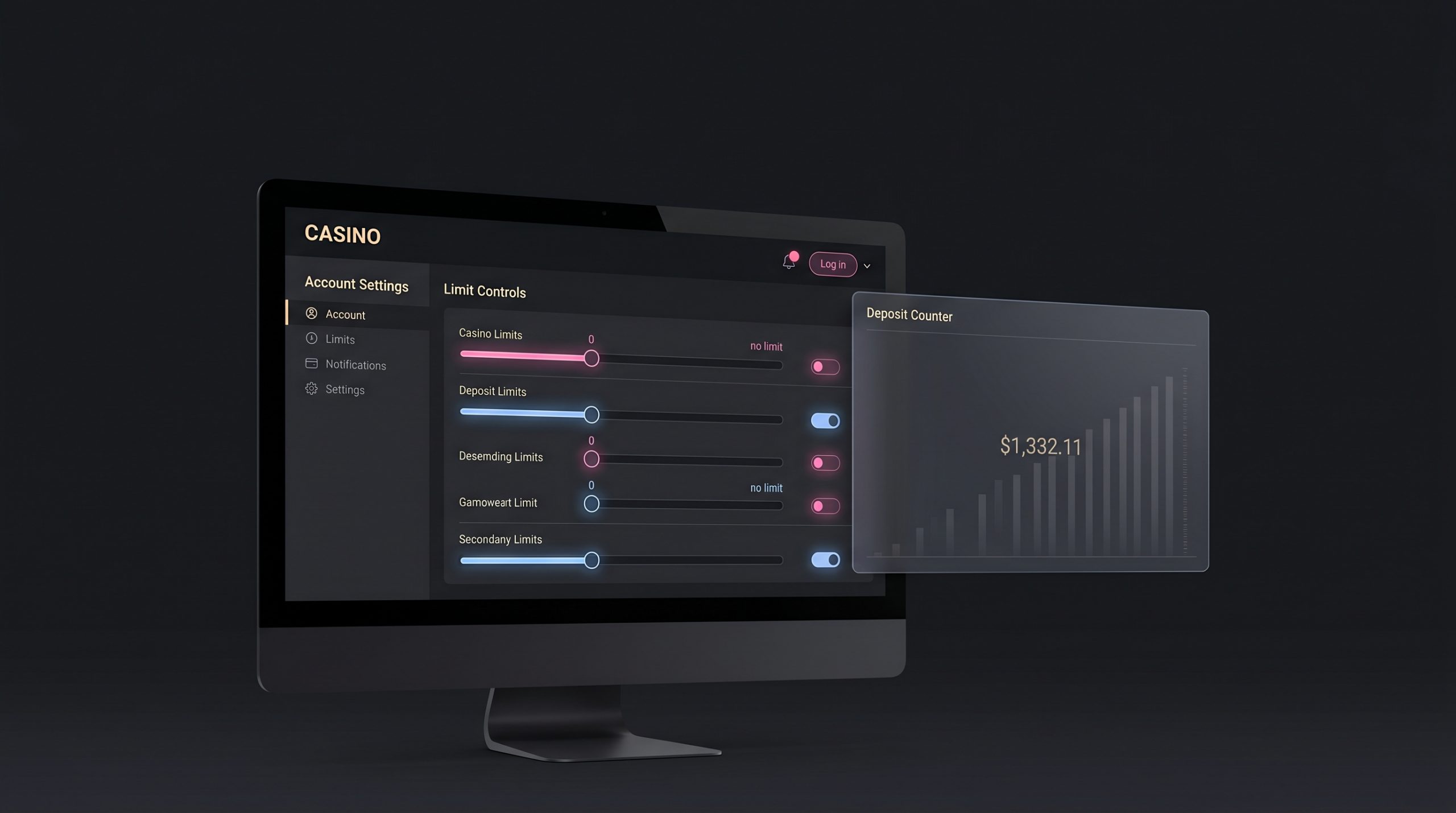
Every provincially regulated casino in Canada is required to offer account limit tools. Deposit limits, loss limits, session timers, wager caps. The infrastructure exists. What nobody tells you is that the default setting on nearly every one of those tools is either blank or set to the maximum the platform allows. That’s not neutral. That’s a design choice, and it favours the operator.
The tools themselves aren’t complicated. Setting a weekly deposit limit takes about 30 seconds. But finding where those controls live, understanding which limits actually restrict behaviour versus which ones just send a notification, and knowing which ones lock in immediately versus which ones have a cooling-off delay before they take effect requires more attention than most players give it. That gap between availability and usability is where money disappears.
This is a walkthrough of what each limit type actually controls, where the friction is built in, and which settings are worth configuring before you play a single spin.
Deposit Limits Are the Only Hard Wall
A deposit limit is the one tool that creates a genuine barrier between your decision and your money. Once you hit the cap, the cashier won’t process another deposit until the period resets. Daily, weekly, or monthly. Most regulated operators in Canada offer all three tiers, and they stack. A $100 daily limit still operates inside a $400 weekly limit, which still operates inside a $1,000 monthly limit.
The critical detail is the asymmetry in how changes work. Lowering a deposit limit takes effect immediately on most platforms. Raising one triggers a mandatory cooling-off period, typically 24 hours for daily limits and up to 7 days for weekly or monthly adjustments. Under Ontario’s regulatory framework, operators are expected to enforce this delay to prevent impulsive increases. That asymmetry is the whole point. It means the limit you set when you’re thinking clearly holds even when you’re not.
I’ve seen enough cashier interfaces to know that the deposit limit field is almost never pre-populated. The blank field is the default, and blank means unlimited. If you don’t actively set a number, the platform treats your bank balance as the ceiling.
Loss Limits Sound Useful but Work Differently Than You’d Expect
A loss limit caps how much net loss you can accumulate in a given period. In theory, it’s the most player-protective tool available. In practice, the definition of “loss” varies between operators, and that variance matters.
Some platforms calculate loss as deposits minus withdrawals. Others calculate it as total wagers minus total wins within the period. The difference is significant. If you deposit $200, run it up to $500, then lose it back to $50, one calculation method says you’ve lost $150. The other might say you’ve lost far more, depending on how many wagers cycled through your balance on the way down. The number on the loss limit dashboard doesn’t always match the number in your head.
Loss limits also tend to trigger a notification rather than a hard block on some platforms. The session doesn’t always end automatically. You get a pop-up, you acknowledge it, and you can continue playing with whatever balance remains. That’s a notification, not a limit. Check whether your operator’s loss limit actually locks you out or just waves a flag. The distinction is the difference between a guardrail and a suggestion.
Session Time Limits and Reality Checks
Session timers come in two forms. A hard session limit logs you out after a set duration, typically configurable in increments of 30, 60, or 120 minutes. A reality check is a periodic pop-up that shows you how long you’ve been playing and, on better platforms, how much you’ve deposited and lost during the session.
The reality check is the more common implementation. Most regulated Canadian operators default to showing one every 60 minutes, though some let you set the interval as low as 15 or 20 minutes. The problem is that a pop-up you can dismiss in one tap doesn’t create much friction. Research on session interventions consistently shows that the ones requiring an active decision, like re-entering a password or waiting 30 seconds before continuing, are more effective than a single “OK” button.
Hard session limits are less common but more effective. If you know your risk window, a 90-minute hard cap removes the decision entirely. The session ends. You’d need to log back in to continue, and that re-login step creates a natural pause that the “OK” button doesn’t.
Wager Limits Exist on Some Platforms but Rarely Get Mentioned
A wager limit caps the maximum amount you can stake per bet or per session. This is distinct from the max bet rule during bonus play, which is a term the operator imposes to protect their promotion. A wager limit is a tool you set yourself to control bet sizing.
Not every operator offers this. Among those that do, the implementation varies. Some apply it globally across all games. Others apply it only to slots, leaving table games uncapped. If you’re someone who tends to increase bet size during a losing streak, a wager limit is the most targeted tool available, but only if the platform actually offers one and applies it to the game types you play.
It’s worth checking the responsible gambling settings page specifically for this option. If it’s absent, a deposit limit becomes your only real spending control, because loss limits and session timers don’t prevent you from betting $50 a spin on a $200 balance.
Where Operators Bury the Controls
Under Ontario’s regulatory framework, operators must make responsible gambling tools accessible. “Accessible” doesn’t mean prominent. I’ve seen platforms where the limit settings require four taps from the main screen: profile, settings, responsible gambling, then a sub-menu for each limit type. That’s technically accessible. It’s also buried deep enough that a casual player won’t stumble across it.
Better operators put a direct link to limit controls in the cashier itself, right where you’re making a deposit. That placement matters because it catches you at the moment the decision is relevant. The ones that hide it behind a sub-menu in account settings are meeting the regulatory expectation without meeting the player where they actually are.
If you’re evaluating a new platform, navigate to the limit controls before you deposit. Time how many steps it takes. If you can’t find them within 60 seconds, that tells you something about the operator’s priorities, regardless of what their responsible gambling page says.
The Combination That Actually Works
No single limit tool is sufficient on its own. A deposit limit doesn’t prevent you from burning through your entire deposit in 10 minutes on high-stakes spins. A session timer doesn’t stop you from depositing again the moment it expires. A loss limit that only sends a notification isn’t a limit at all.
The combination I’d recommend for most players is a weekly deposit limit set to an amount you’ve decided on before opening the app, a reality check interval of 30 minutes or less, and a hard session limit if the platform offers one. If wager limits are available, set one that keeps your bet size proportional to your deposit. A rough benchmark: if your weekly deposit limit is $100, a $2 maximum wager gives you at least 50 spins of runway before variance even enters the picture.
Set all of these during registration or immediately after your first login. The cooling-off delay on increases means the limits you set in that first calm session will hold even if your second or third session goes sideways. That’s the entire value proposition.
Honest Assessment
The tools exist. The regulatory pressure to provide them is real, especially in Ontario. But availability isn’t the same as effectiveness, and the default configuration on virtually every platform I’ve looked at is set to “off” or “maximum.” That means the burden falls entirely on the player to opt into protection, which is the opposite of how consumer safety works in almost every other industry.
Until operators start defaulting to reasonable limits that players can raise rather than blank fields that players must fill, the responsible gambling tools section of any casino site is a feature that works only for people who already know to look for it. If you’re reading this, you’re one of those people. Use that advantage. Set the limits now, not after you need them.
The best time to configure account limits is when you don’t feel like you need them. That’s not a paradox. It’s the whole design principle behind cooling-off periods, delayed increases, and hard caps. The tools are built for the version of you that hasn’t had a bad session yet. Let that version make the decisions.
Gambling is entertainment with a cost attached, so set limits before you play and visit our Responsible Gaming page for support resources, safer-play tools, and help options if gambling stops feeling fun.



Leave a Comment