
Your Casino Cashier Shows Five Payment Options. Only Two Work the Way You Expect.
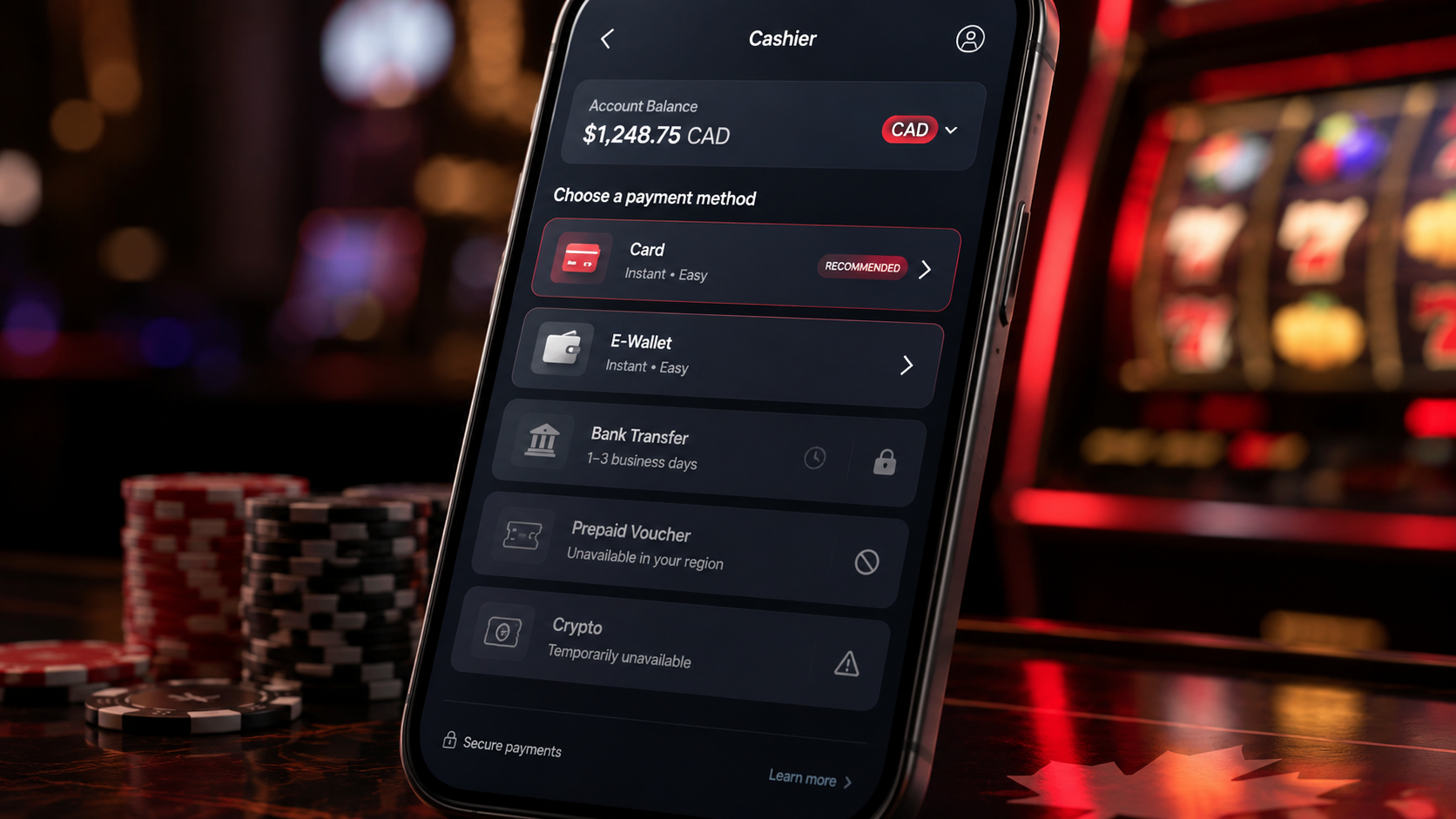
Every online casino cashier in Canada looks roughly the same. Five or six logos in a row. Visa. Mastercard. Interac. Maybe iDebit or MuchBetter. Sometimes a crypto option tucked at the end. The presentation suggests equivalence, as if each method does the same thing with different branding. That’s not close to true.
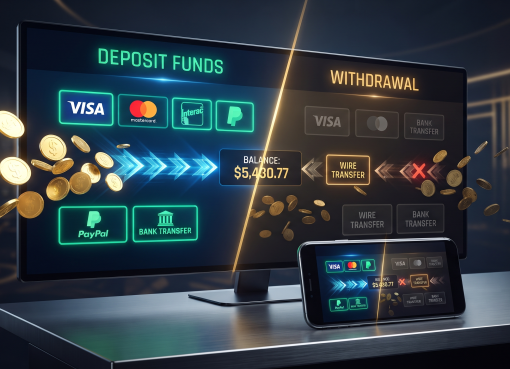
The gap between deposit options and withdrawal options is one of the most consistent friction points in Canadian online gambling, and it catches players at exactly the wrong moment. You pick a deposit method because it’s fast and familiar. You don’t find out it doesn’t work for withdrawals until you’re trying to cash out. By then, you’re filling out forms for a method you never planned to use.
Here’s how the most common payment methods actually work at Canadian online casinos, what each one does well, and where the gaps are that nobody flags until you’re already waiting.
Interac e-Transfer: The Closest Thing to Seamless, With Caveats
Interac e-Transfer is the default for a reason. Deposits land instantly. Most Canadian bank accounts are already set up for it. There’s no account to create, no app to download, no intermediary holding your funds. For deposits, it’s as close to frictionless as online casino banking gets in this country.
Withdrawals through Interac are where it gets more interesting. When an operator offers Interac for both deposits and withdrawals, the transfer itself is typically fast, often arriving within hours of approval. But not every casino that accepts Interac deposits will process Interac withdrawals. I’ve seen this pattern often enough to know it’s not an edge case. It’s common, especially at offshore or grey-market sites that use Interac on the deposit side because it converts well, then route withdrawals through bank wire or cheque.
The transfer limits aren’t set by the casino or by Interac itself. They’re set by your bank. Most major Canadian banks cap Interac e-Transfer sends at $3,000 per transaction, though some set daily or weekly limits lower than that. If you’re depositing $500, this won’t matter. If you’re withdrawing $10,000, you may receive it in multiple transfers over several days, even after the casino has approved the full amount.
Visa and Mastercard: Easy In, Complicated Out
Credit and debit cards are the most recognisable logos in any cashier. Deposits are instant. The process is identical to buying something online. That familiarity is exactly why so many players default to cards without checking what happens on the other side.
Visa withdrawals are possible at some operators, processed as refunds to the original card. When they work, they typically take 1 to 5 business days after approval. Mastercard withdrawals are rarer. Many casinos don’t offer them at all, even when Mastercard deposits are accepted without issue. This isn’t the casino being difficult. Mastercard’s network handles refund-to-card transactions differently, and many processors simply don’t support it for gambling payouts.
There’s another layer most players don’t think about until it happens. Some Canadian banks block gambling transactions on credit cards entirely. The deposit goes through on a debit Visa but gets declined on a credit Visa from the same bank. There’s no universal rule here. TD, RBC, BMO, and Scotiabank all handle it differently, and their policies shift without much notice. If your card deposit is declined, it’s often the bank, not the casino.
iDebit and InstaDebit: The Middle Layer Nobody Talks About
iDebit and InstaDebit sit between your bank account and the casino. They connect directly to your online banking, pull the deposit through, and handle the transfer. For players whose banks block direct casino transactions, these services often work when cards don’t.
Deposits through both are typically instant. Withdrawals are where they diverge from Interac in ways that matter. When a casino processes a withdrawal to iDebit or InstaDebit, the funds land in your iDebit or InstaDebit account first. From there, you transfer to your bank. That second step adds 1 to 3 business days on top of whatever the casino’s internal processing took. It’s not a long wait, but it’s a wait that doesn’t exist with direct Interac withdrawals.
Both services also charge fees in certain situations. iDebit charges a small fee per transaction at some operators. InstaDebit’s fee structure varies. The amounts are modest, typically $1.50 to $3.00 per transaction, but they add up across multiple deposits in a session. Neither service makes these fees particularly visible until the confirmation screen.
E-Wallets: MuchBetter, ecoPayz, and the Bonus Exclusion Problem
E-wallets like MuchBetter and ecoPayz (now Payz) appear at a growing number of Canadian-facing casinos. They work well mechanically. Deposits are instant. Withdrawals are often faster than card refunds, typically processed within 24 to 48 hours after approval. The funds land in your e-wallet account, and from there you transfer to your bank or spend directly.
The catch is in the bonus terms. A significant number of operators exclude e-wallet deposits from welcome bonus eligibility. The reasoning from the operator side is fraud prevention, since e-wallets make it easier to move money between accounts quickly. From the player side, it means you might deposit $200 through MuchBetter, expect a matched bonus, and receive nothing because the terms specify “Visa, Mastercard, or Interac deposits only.” This exclusion is almost always buried in the bonus terms, not flagged at the cashier.
If you’re not chasing a bonus, e-wallets are genuinely convenient. If you are, check the terms before you deposit. Not after.
Bank Wire and Cheque: The Fallback Nobody Wants
Bank wire transfers and cheques still exist as withdrawal options at many casinos, particularly offshore operators. They’re slow. Bank wires typically take 3 to 7 business days after approval, and some banks charge a receiving fee of $15 to $45 CAD for incoming international wires. Cheques can take 7 to 21 business days to arrive by mail, and then you’re waiting for your bank to clear them, which can add another 5 business days for a hold.
These methods exist as fallbacks. If a casino lists bank wire or cheque as its only withdrawal options, that tells you something about its payment infrastructure. It’s not necessarily a dealbreaker, but it’s a signal worth reading. Operators with robust payment processing offer Interac or e-wallet withdrawals. Operators that route everything through wire or cheque are typically working with fewer banking relationships, which often correlates with slower processing across the board.
The Deposit-Withdrawal Mismatch Is a Feature, Not a Bug
The pattern across all of these methods is consistent. Deposits are fast, frictionless, and available through almost every method listed. Withdrawals are slower, restricted to fewer methods, and subject to an internal review stage that has nothing to do with the payment provider. That asymmetry isn’t accidental. Casinos are incentivised to make deposits effortless and withdrawals deliberate.
This is why the cashier page deserves a look before you deposit, not after you win. The specific things to check: Does the casino offer your deposit method for withdrawals? If not, what withdrawal methods are available, and what are the processing times? Are there fees? Is there a minimum withdrawal amount? Some operators set minimums at $50 or $100 CAD, which means small balances can get stuck.
The two-stage withdrawal process applies regardless of payment method. The casino reviews and approves the withdrawal internally first. Only then does the payment provider’s transfer begin. A “1 to 3 business day” estimate from the payment method means 1 to 3 days after approval, not after you click withdraw.
Honest Assessment
For most Canadian players, Interac e-Transfer is the best option when it’s available for both deposits and withdrawals. It’s direct, fast on both sides, and doesn’t require a third-party account. The only real limitation is bank-set transfer caps, which only matter at higher amounts. If your preferred casino doesn’t offer Interac withdrawals, that’s worth knowing before you deposit, because it means your cashout is going through a slower, less convenient channel regardless of how smooth the deposit felt.
E-wallets are a solid second choice if you’re not claiming a deposit bonus. Cards are fine for deposits but unreliable for withdrawals, especially Mastercard. Bank wires and cheques are last resorts. The payment method you choose shapes the entire withdrawal experience, and the cashier page tells you everything you need to know if you read it before you fund your account rather than after you’re trying to leave with a balance.
The real takeaway isn’t which method is “best.” It’s that the deposit experience and the withdrawal experience are two completely different products at most casinos, and the cashier page is designed to make them look like one. Check the withdrawal tab first. That’s the one that matters when it matters.
If you want to understand how the internal review stage works and why “approved” doesn’t mean “sent,” I’ve broken that process down in detail in the piece on how casino withdrawals actually work in Canada. And if you’re evaluating Interac e-Transfer withdrawals specifically, that’s covered separately, including why some casinos offer it for deposits but not cashouts.
Gambling is entertainment with a cost attached, so set limits before you play and visit our Responsible Gaming page for support resources, safer-play tools, and help options if gambling stops feeling fun.


Leave a Comment