
Mega Moolah vs. Mega Fortune: Two Progressive Jackpots. One Pays Out More Often Than You Think.
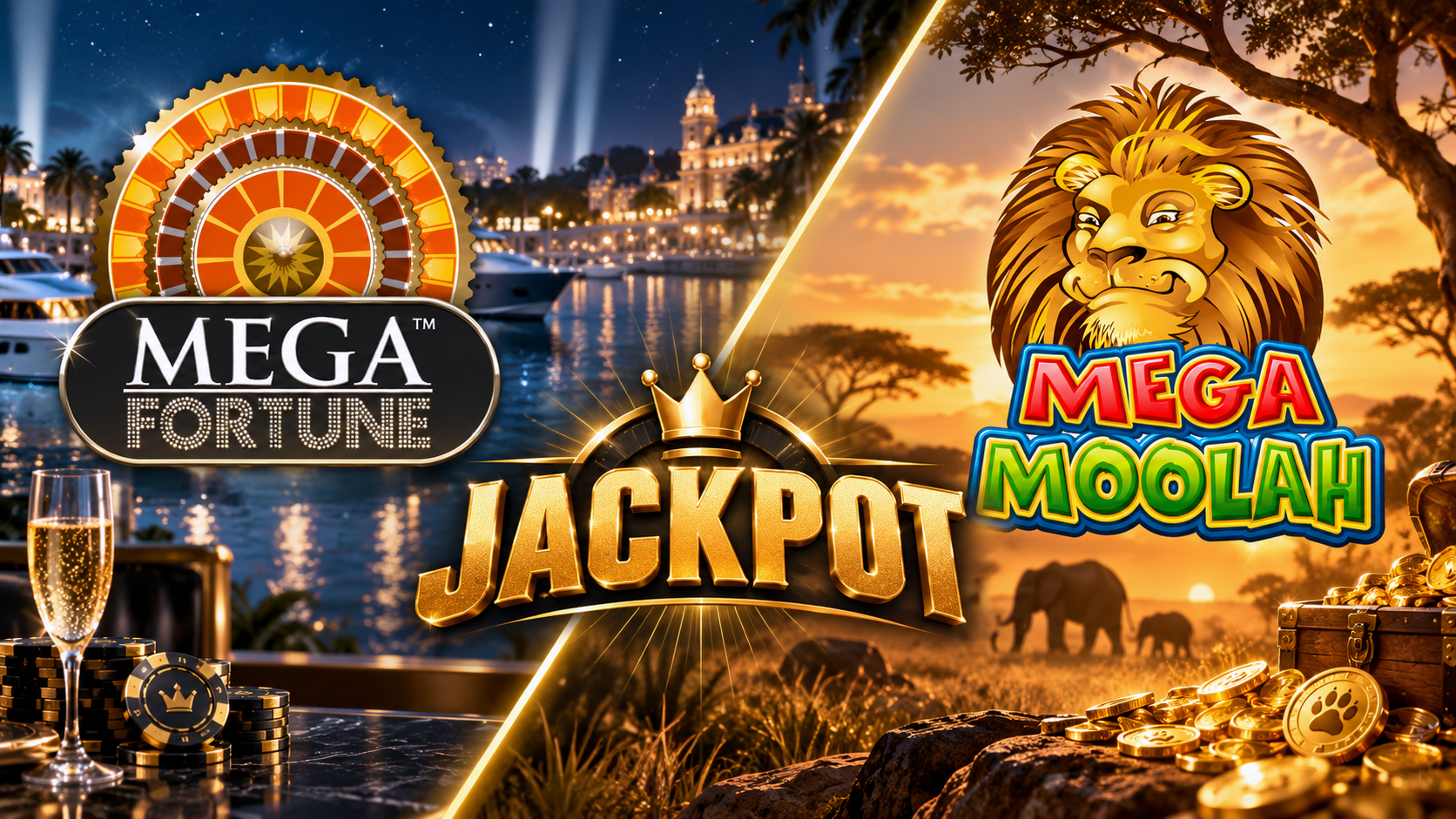
Progressive jackpot slots sell one thing: the number at the top of the screen. It ticks upward, it gets into the millions, and every spin feels like it might be the one. Mega Moolah and Mega Fortune are the two names that have dominated that space for over a decade, and most players treat them as interchangeable. Pick whichever one has the bigger counter, spin, hope. That’s the whole strategy.
It’s a reasonable instinct and a bad one. These two games share a category but not a design philosophy. The way each jackpot triggers, what the base game costs you while you wait, and how frequently the top prize actually drops are all meaningfully different. One of them has a trigger mechanic that’s entirely random. The other makes you earn your way into the bonus round first. That distinction changes everything about how a session actually plays out.
I’ve looked at both of these games the way I look at everything: backwards. Not the jackpot counter first, but the base game RTP, the trigger mechanic, the volatility of the non-jackpot experience, and the historical payout data that’s actually available. Here’s what the comparison looks like when you strip the ticker away.
The Base Games Aren’t Even Close
Mega Moolah is a Microgaming title, now under Games Global, running on a 5-reel, 25-payline format with an African safari theme. Its published RTP is 88.12%, which is one of the lowest you’ll find on any modern slot. That number isn’t a typo. A significant portion of each bet is siphoned into the progressive jackpot pools, and the base game reflects it. Standard spins feel thin. The free spins feature, triggered by three or more scatter symbols, awards 15 spins with a 3x multiplier, but even that round rarely delivers anything that changes the shape of a session.
Mega Fortune, built by NetEnt, runs on a 5-reel, 25-payline setup with a luxury lifestyle theme. Its published RTP sits around 96.6%, though the effective RTP including the jackpot contribution is typically cited closer to 93.7%. That’s still substantially higher than Mega Moolah’s base return. The non-jackpot experience is noticeably more generous. You’ll see small and medium wins more regularly, and the free spins round, triggered by three or more champagne bottle scatters, awards 10 free spins with a 3x multiplier and retrigger potential.
In practical terms, this means Mega Fortune is a more sustainable session game. Mega Moolah drains a bankroll faster between jackpot opportunities. If you’re playing either of these for anything other than the progressive, Mega Fortune is the less punishing choice by a wide margin.
The Jackpot Trigger Mechanic Is the Real Difference
Mega Moolah’s jackpot triggers randomly. Any spin, any bet size, can activate the Jackpot Bonus Wheel. You don’t need a specific symbol combination. You don’t need to be in a bonus round. The game simply decides, on any given spin, whether you enter the wheel. Higher bets increase the probability, but the mechanic is fundamentally random. You spin the wheel, and it lands on one of four jackpots: Mini, Minor, Major, or Mega. The Mega starts at $1,000,000 CAD and grows from there.
Mega Fortune works differently. The jackpot is accessed through a three-stage bonus wheel, but you have to get there first. Three bonus symbols on reels 1, 2, and 3 trigger the Wheel of Fortune bonus. The first wheel determines whether you win a cash prize, move to the second wheel, or stop. The second wheel does the same. Only the third, innermost wheel contains the Mega Jackpot segment. You’re playing through layers of gatekeeping, and most bonus triggers end at the first or second wheel with a modest cash prize.
This is a fundamental design difference. Mega Moolah’s randomness means every spin carries jackpot potential regardless of what’s happening on the reels. Mega Fortune requires you to land a specific trigger, then navigate a multi-stage bonus. The path to the top prize is longer and more conditional.
What the Payout History Actually Shows
Mega Moolah’s jackpot history is the more documented of the two. The Mega jackpot has hit at amounts ranging from roughly $1,000,000 CAD to over $26,000,000 CAD. It typically drops every six to twelve weeks, though that interval isn’t guaranteed and has stretched longer. The average Mega jackpot payout, based on publicly tracked data, tends to sit in the $5,000,000 to $8,000,000 CAD range. Games Global expanded the Mega Moolah network to include multiple linked titles, which means more players feeding the pool and, in theory, faster accumulation.
Mega Fortune’s record jackpot hit in 2013 at approximately €17.8 million, which remains one of the largest online slot payouts ever recorded. But the Mega Fortune jackpot tends to drop at lower amounts than Mega Moolah’s, often in the €2,000,000 to €5,000,000 range. It also historically triggers more frequently, sometimes dropping every few weeks. NetEnt’s progressive network is smaller than Games Global’s Mega Moolah network, which means the pool grows more slowly but resets and pays out more often.
The pattern, if you can call it that, is this: Mega Moolah tends toward fewer, larger payouts. Mega Fortune tends toward more frequent, smaller ones. Neither pattern is predictive. Progressive jackpots are random events, and past frequency tells you nothing about the next drop. But if you’re choosing between two lottery tickets, the historical shape of each lottery is worth understanding.
What It Actually Costs to Sit at Each Table
Mega Moolah’s minimum bet is $0.25 CAD per spin across all 25 paylines. At that stake, the jackpot trigger probability is at its lowest. Players who want a meaningful shot typically play at $2.50 to $6.25 per spin. At $2.50 per spin and a pace of 400 spins per hour, you’re looking at $1,000 CAD per hour in theoretical action. With an RTP of 88.12%, the expected loss rate is roughly $119 CAD per hour at that pace. That’s steep for a base game that delivers very little between jackpot opportunities.
Mega Fortune’s minimum bet is $0.25 CAD as well. The same $2.50 per spin at 400 spins per hour gives you $1,000 CAD in action, but with an effective RTP closer to 93.7%, the expected loss rate drops to around $63 CAD per hour. You’re also seeing more frequent base game wins and free spin triggers, which means your bankroll survives longer. A $200 CAD session budget at Mega Fortune will typically last noticeably longer than the same budget at Mega Moolah.
Neither game is cheap. Progressive jackpot slots are, by design, negative-expectation games with a portion of every bet redirected to the pool. But the cost difference between these two is real and measurable. Mega Moolah takes more from you per hour for the privilege of chasing its jackpot.
The Bet Size Question Nobody Asks
There’s a persistent belief that you must bet the maximum to win a progressive jackpot. With Mega Fortune, this is partially true in spirit: higher bets increase the frequency of the bonus trigger, and the bonus round is the only path to the jackpot. With Mega Moolah, the relationship is more direct. Games Global has confirmed that higher bets increase the probability of triggering the Jackpot Bonus Wheel, but the jackpot has been won on bets as low as $0.25.
The practical question isn’t whether you can win at minimum bet. It’s whether the probability adjustment is significant enough to justify the bankroll cost. If you’re tripling your bet size to marginally increase your jackpot trigger chance, you’re also tripling your hourly loss rate on a base game that already returns less than 89 cents on the dollar. The maths rarely favour the max-bet approach unless your bankroll is large enough to absorb extended losing sessions without stress. For most players, a moderate bet sustained over a longer session gives you more total spins and, therefore, more total chances.
Who Each Game Is Actually For
Mega Moolah is for the player who wants the biggest possible number and is willing to pay for it in base game quality. The safari theme is dated, the animations are functional at best, and the non-jackpot experience is genuinely below average. You’re not here for the game. You’re here for the counter. If that’s your honest reason for playing, Mega Moolah’s random trigger and consistently large payouts make it the more direct bet.
Mega Fortune is for the player who wants jackpot exposure without a punishing base game. The luxury theme has aged better visually, the free spins round delivers more regular value, and the higher effective RTP means your session lasts longer. The trade-off is a more conditional jackpot path and historically smaller top payouts. If you want to play a slot that happens to have a progressive attached, rather than endure a slot because it has a progressive attached, Mega Fortune is the better session.
Neither game is a good choice for players who are volatility-averse or working with session budgets under $50 CAD. Progressive jackpot slots are high-variance by nature, and both of these will produce long stretches of losses between meaningful wins.
Honest Assessment
Mega Moolah is the bigger lottery ticket. Mega Fortune is the better slot machine. That’s the cleanest way to frame it. If you’re playing strictly for the jackpot and nothing else matters, Mega Moolah’s random trigger and larger average payouts give it the edge. If you want a game that respects your bankroll while still offering a shot at a life-changing number, Mega Fortune is the smarter seat.
I’d play Mega Fortune. Not because I think the jackpot is more likely to hit, but because the 90 minutes between jackpot triggers are more tolerable. An 88.12% RTP base game is a grind, and most sessions at Mega Moolah end with nothing to show for it and a bankroll that evaporated faster than it should have. Mega Fortune at least gives you a game worth playing while you wait for something that, statistically, almost certainly isn’t coming. That’s not pessimism. That’s the honest maths of progressive slots, and the game that acknowledges it in its design is the one I’d choose.
Two games, one category, completely different philosophies. The jackpot counter at the top of the screen is the same colour on both. Everything underneath it isn’t. Pick the one that matches what you’re actually there to do, and be honest with yourself about the answer. The counter doesn’t care either way.
Gambling is entertainment with a cost attached, so set limits before you play and visit our Responsible Gaming page for support resources, safer-play tools, and help options if gambling stops feeling fun.

Leave a Comment