
Interac e-Transfer Limits Aren’t Set by the Casino. Here’s Who Actually Controls Them.

The most common complaint I see from Canadian casino players about Interac isn’t speed. It’s limits. A player tries to deposit $2,000, the transfer gets declined, and the first instinct is to blame the casino. The operator must have capped the amount. Except in most cases, the casino never touched it. The limit was set by the player’s bank, and neither the casino nor Interac itself had anything to do with it.
This confusion isn’t random. It exists because three different parties are involved in every Interac e-Transfer, each with their own limits, and none of them are particularly eager to explain where their responsibility ends and someone else’s begins. The result is a system where players hit walls they didn’t know existed and can’t figure out who built them.
Once you understand how the limits actually layer on top of each other, the whole deposit and withdrawal process at a Canadian casino starts making more sense. It also explains why the same player can deposit $3,000 at one operator and get declined for $1,500 at another.
Three Layers of Limits, One Transaction
Every Interac e-Transfer that moves money into or out of a casino account passes through three separate gatekeepers. First, your bank or credit union sets per-transaction and daily limits on how much you can send or receive via e-Transfer. Second, Interac itself maintains a system-wide maximum. Third, the casino operator sets its own deposit and withdrawal minimums and maximums.
The transaction will fail if it exceeds any one of those three limits. But the error message you see rarely tells you which layer blocked it. Most players see a generic decline and assume the casino is the problem. In practice, the bank is the bottleneck far more often than the operator.
Interac’s own system-wide limit for e-Transfer is $25,000 per transaction for sending, though most personal banking accounts are set well below that ceiling. The system-wide cap is rarely the issue. It’s what your specific financial institution has configured for your specific account type that matters.
Your Bank Sets the Real Ceiling
This is the part that catches people off guard. Every major Canadian bank sets its own Interac e-Transfer limits, and they vary significantly. As of mid-2025, TD allows up to $3,000 per transaction for most personal chequing accounts. RBC sets it at $3,500. Scotiabank caps at $5,000. CIBC and BMO fall somewhere in that range depending on the account type. Credit unions often have lower limits, sometimes as low as $1,000 per transfer.
These are the limits your bank publishes in its e-Transfer FAQ or account terms. They apply to all e-Transfers, not just casino deposits. Sending $2,500 to a friend for rent is subject to the same cap as sending $2,500 to an online casino.
Some banks also impose rolling daily and weekly limits on top of the per-transaction cap. So even if your per-transaction limit is $3,000, you might only be able to send $5,000 in a 24-hour period. This is why a second deposit in the same day sometimes fails even though the first one went through without a problem.
The Casino’s Limits Are Usually More Generous Than You’d Expect
Most online casinos available to Canadian players set their Interac deposit minimums between $10 and $20. Their maximums typically range from $4,000 to $10,000 per transaction, with some operators allowing higher amounts for verified accounts or VIP players. These limits are published in the cashier section, though you sometimes have to click into the specific payment method to see them.
The irony is that the casino’s limit is often higher than what your bank will let you send. A casino might accept a $5,000 Interac deposit, but if your bank caps e-Transfers at $3,000, you’ll never reach the casino’s ceiling. The casino isn’t blocking anything. Your bank is.
For withdrawals, the dynamic flips slightly. Casinos tend to set tighter withdrawal limits than deposit limits. Daily withdrawal caps of $3,000 to $7,500 are common, with weekly and monthly ceilings layered on top. This is the one area where the casino’s own limits are more likely to be the binding constraint, not your bank’s.
Why the Same Amount Works at One Casino and Fails at Another
I’ve seen this question come up repeatedly in player forums. Someone deposits $2,000 at Casino A without a problem, then tries the same amount at Casino B and gets declined. They assume Casino B has a lower limit. Sometimes that’s true. But more often, the issue is timing.
If you deposited $2,000 at Casino A earlier in the day and your bank’s daily e-Transfer limit is $3,500, you only have $1,500 of headroom left. Casino B isn’t declining you. Your bank is, because you’ve already used more than half your daily allowance. The casino’s error message won’t explain this. It’ll just say the transaction failed.
The fix is straightforward but requires you to know your bank’s limits in advance. Check your online banking portal or call your bank directly. Most banks list e-Transfer limits under the Interac settings or FAQ section. Once you know the actual numbers, you can plan deposits around them instead of guessing.
Increasing Your Limits Is Possible, but It’s a Bank Conversation
Some banks allow you to request a higher e-Transfer limit. TD, for example, lets business account holders send up to $10,000 per transaction. Personal account holders at some institutions can request temporary or permanent increases by contacting their branch or calling the support line. The approval isn’t guaranteed, and the bank may ask why you need the higher limit.
This is worth knowing because it means the limit isn’t always fixed. But it also means the casino’s support team can’t help you with it. I’ve seen players open live chat at a casino asking to increase their deposit limit when the restriction is entirely on the banking side. The casino agent can confirm their own platform’s maximum, but they have zero visibility into what your bank allows.
If you’re consistently hitting a wall, the conversation needs to happen with your bank, not the casino.
What This Means for Responsible Play
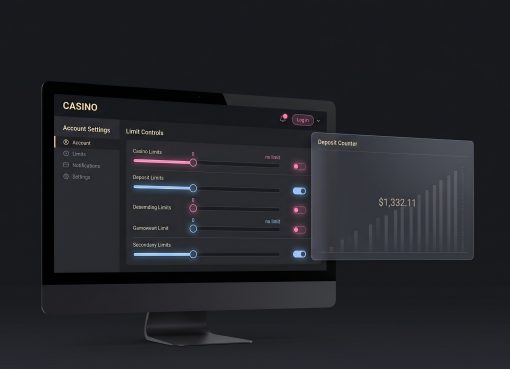
There’s a responsible gambling angle here that’s easy to overlook. Bank-imposed Interac limits function as an accidental spending brake. If your bank caps you at $3,000 per day, that’s $3,000 per day across all e-Transfers, including casino deposits. It’s not a substitute for a deposit limit set within the casino itself, but it adds a layer of friction that can slow impulsive top-ups.
The important distinction is that bank limits weren’t designed as responsible gambling tools. They reset daily. They don’t track your total gambling spend. And they can be increased with a phone call. A deposit limit set inside the casino, by contrast, typically requires a cooldown period before it can be raised. The two serve different purposes, and one doesn’t replace the other.
If you’re relying on your bank’s e-Transfer cap as a spending control, set a proper deposit limit at the casino level too. The bank limit is a speed bump. The casino limit is the actual guardrail.
Honest Assessment
The Interac e-Transfer limit system isn’t broken. It’s just poorly communicated. Three parties set three different limits, none of them tell you about the other two, and the error messages when something fails are useless. The result is that Canadian players routinely blame the wrong party when a deposit gets declined.
Your bank is the most common bottleneck. Know your per-transaction limit, your daily limit, and your rolling limit before you try to move money. The casino’s limits are almost always published in the cashier. Interac’s system-wide cap is high enough that it’s rarely the issue. Once you map all three layers, declined deposits stop being a mystery and start being predictable.
The one thing I’d push back on is the lack of transparency in error messages. When a deposit fails, the player should be told which limit was exceeded. That information exists somewhere in the transaction chain. The fact that it doesn’t reach the player is a design choice, not a technical limitation.
The next time a deposit gets declined, don’t start with the casino’s live chat. Start with your bank’s e-Transfer settings page. The answer is almost always there, buried in a FAQ that nobody reads until something goes wrong.
Gambling is entertainment with a cost attached, so set limits before you play and visit our Responsible Gaming page for support resources, safer-play tools, and help options if gambling stops feeling fun.


Leave a Comment