
Your Casino Login Uses an Email and Password. Here’s Why That’s Not Enough Anymore.
You can open a casino account in under two minutes. Email, password, a few personal details, and you’re in. That speed is the selling point. It’s also the vulnerability. The same login process that gets you to the lobby in ninety seconds is, at most operators, the only thing standing between your balance and anyone who happens to know your password.
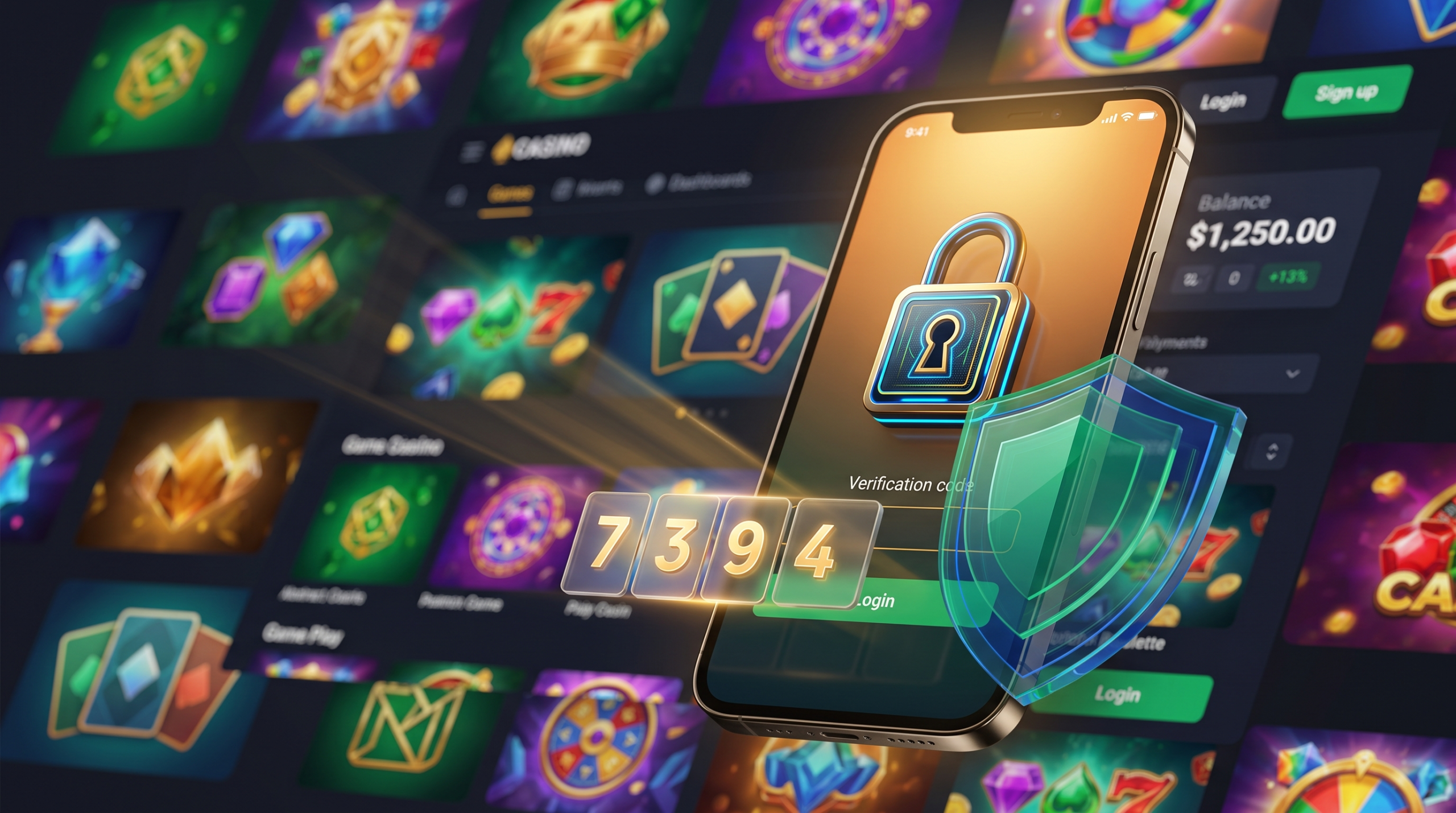
Two-factor authentication changes that equation. It adds a second verification step, usually a code sent to your phone, so a stolen password alone isn’t enough. Banks have required it for years. Most Canadian online casinos still treat it as optional, if they offer it at all. The ones that do often bury it three menus deep in account settings, where nobody who isn’t specifically looking for it will ever find it.
That gap between what’s available and what’s visible is worth understanding, because the risk it creates is real and entirely avoidable.
What Two-Factor Authentication Actually Does
The concept is simple. Instead of one layer of security (your password), you add a second layer that requires something you physically possess. Typically, that’s your phone. When you log in, the casino sends a one-time code via SMS or through an authenticator app like Google Authenticator or Authy. You enter the code, and only then does the session open.
The important distinction is that this second factor is time-sensitive and device-specific. A password can be guessed, reused from a breached database, or phished. A six-digit code that expires in 30 seconds and lives on your phone is a fundamentally different problem for anyone trying to access your account without permission. It doesn’t make the account unhackable. It makes it dramatically harder to compromise remotely, which is where the vast majority of account takeover attempts come from.
Why Casino Accounts Are Higher-Value Targets Than You Think
There’s a perception that casino account security is a secondary concern. You’re not storing savings there. You deposit, you play, you withdraw. But the account itself holds more than a balance. It’s linked to your Interac e-Transfer, your email, your full legal name, your date of birth, and in many cases, scans of your government-issued ID from the KYC process. That’s a complete identity package.
An attacker who gains access doesn’t just see your $150 balance. They see a verified account with a payment method already connected. At some operators, they can change the withdrawal destination before you notice. At others, they can use the stored personal information for identity fraud elsewhere. The casino account is the door, not the room.
I’ve seen enough credential breach databases to know that password reuse is the norm, not the exception. If you used the same email and password at a casino that you used at a forum that got breached in 2019, the risk isn’t theoretical. It’s a lookup.
Which Canadian Operators Actually Offer It
This is where the picture gets uneven. Provincially regulated operators in Ontario’s iGaming market are more likely to offer two-factor authentication than grey market sites, but it’s not universal even among licensed platforms. As of June 2025, some of the larger operators running under iGaming Ontario provide SMS-based 2FA or authenticator app support, but the feature is almost never enabled by default. You have to go looking for it.
The typical path is something like: Account Settings → Security → Two-Step Verification. Some operators call it “two-step login.” Others label it “extra security.” A few bury it under “privacy settings,” which makes no sense but is consistent with how casino UX tends to treat anything that isn’t directly related to depositing or playing.
Grey market operators are even less consistent. Some offshore platforms offer authenticator app integration because the underlying platform software supports it. Others offer nothing beyond a password and a security question, which is essentially one factor plus a second password you’ll forget.
SMS Codes vs. Authenticator Apps
Not all second factors are equal. SMS-based codes are the most common option at Canadian casinos, and they’re better than nothing, but they carry a known weakness: SIM swapping. An attacker who convinces your mobile carrier to transfer your number to a new SIM card will receive your verification codes. It’s not easy, but it happens, and Canadian carriers have been targets.
Authenticator apps generate codes locally on your device. They don’t travel over the mobile network, so SIM swapping doesn’t affect them. Google Authenticator, Authy, and Microsoft Authenticator all work the same way. You scan a QR code during setup, and the app generates a new six-digit code every 30 seconds. The code never leaves your phone unless you type it in.
If a casino offers both options, the authenticator app is the stronger choice. If it only offers SMS, use it anyway. The gap between SMS verification and no verification is far larger than the gap between SMS and an authenticator app.
What Operators Should Be Doing But Mostly Aren’t
The industry standard in banking is mandatory two-factor authentication. You don’t get to opt out of your bank’s login verification because you find it inconvenient. Casinos, which hold verified identity documents and connected payment methods, still treat 2FA as a feature you can toggle on if you’re security-conscious enough to find it.
Under Ontario’s regulatory framework, operators are required to maintain responsible security practices, but there’s no specific mandate requiring two-factor authentication for player accounts. That’s a gap. The KYC process ensures the operator knows who you are. Two-factor authentication ensures that only you can act as you. One without the other leaves a hole.
Some operators do prompt 2FA setup after the first withdrawal or after a KYC review. That’s better than nothing, but it’s still reactive. The strongest approach would be requiring it at registration, the same way they require age verification. I haven’t seen a Canadian-facing operator do that yet.
Setting It Up Takes Two Minutes. That’s the Irony.
The process is genuinely fast. Log into your casino account. Find the security settings. Select two-factor authentication. If it’s SMS-based, you enter your phone number and confirm a code. If it’s app-based, you scan a QR code with your authenticator app and enter the displayed code. Done. The whole thing takes less time than the registration process did.
One step most people skip: save the backup codes. Every authenticator setup generates a set of one-time recovery codes in case you lose access to your phone. Write them down. Store them somewhere that isn’t your phone. If your device breaks or gets stolen, those codes are the only way back into your account without going through a full identity re-verification with the operator’s support team, which can take days.
If your casino doesn’t offer 2FA at all, the minimum you should do is use a unique password for that account. Not your email password. Not your banking password. A password that exists nowhere else. A password manager handles this without any effort on your part.
Honest Assessment
Two-factor authentication is the single most effective security step you can take at an online casino, and it’s the one almost nobody takes because almost nobody is asked to. The operators who offer it deserve credit for making it available. They don’t deserve credit for hiding it behind three menu layers and never mentioning it during onboarding.
If you’re playing at a provincially regulated operator in Ontario or Alberta, check your security settings today. If the option exists, enable it. If it doesn’t exist, that’s worth factoring into how much you trust that platform with your personal information. A casino that completed a full KYC review, holds scans of your ID, and connects to your Interac account but doesn’t offer a second authentication factor is asking you to accept a level of risk that banks stopped tolerating a decade ago.
The casino industry spent years building faster registration, smoother deposits, and instant account creation. All of that speed is a feature when you’re the one logging in. It becomes something else entirely when someone else is.
Gambling is entertainment with a cost attached, so set limits before you play and visit our Responsible Gaming page for support resources, safer-play tools, and help options if gambling stops feeling fun.
Leave a Comment