
Your Casino Account Has a Transaction History. Here’s What to Actually Look For in It.
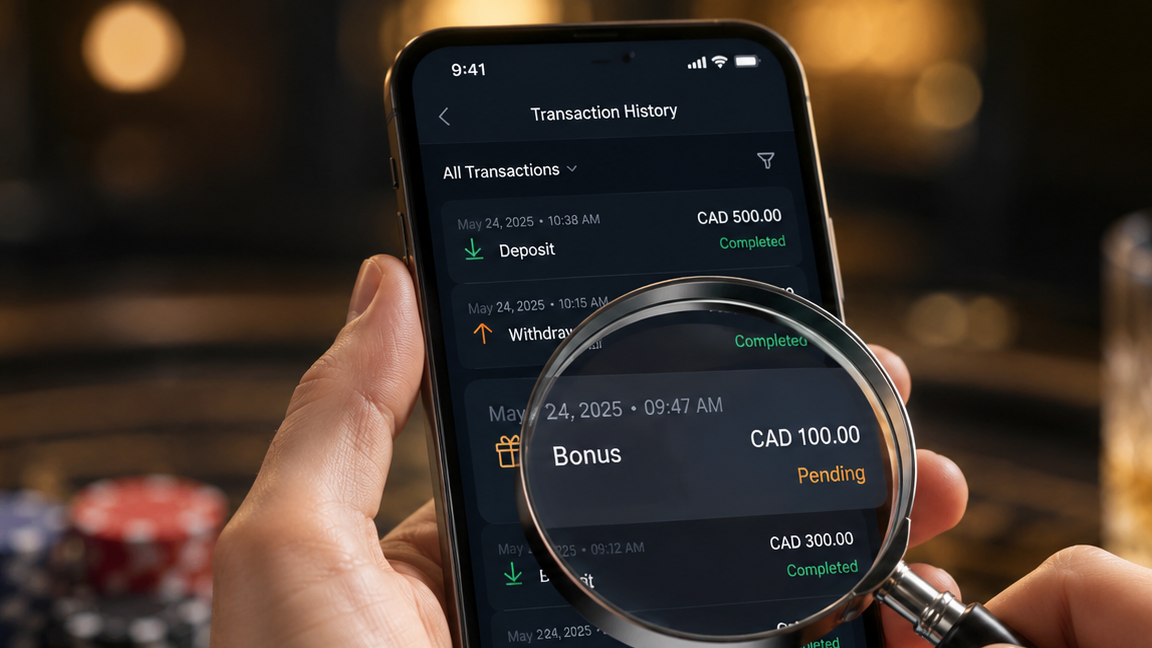
Every online casino gives you a transaction history. It’s usually buried two or three clicks deep inside your account settings, which tells you something about how much operators want you looking at it. Most players never open it. The ones who do tend to glance at a deposit total, feel a brief pang of something, and close the tab.
That’s a mistake, but not for the reason you’d expect. The transaction history isn’t just a record of how much you’ve spent. It’s the only verifiable paper trail you have if a withdrawal goes missing, a bonus gets voided, or a dispute lands in your lap. It’s also the place where the gap between what you think happened and what actually happened becomes impossible to ignore.
The problem is that most transaction histories are designed to be technically complete without being genuinely useful. Understanding what the entries mean, what the status labels are actually telling you, and what’s conspicuously absent from the record is a skill worth having before you need it.
What Your Transaction History Actually Records
At minimum, your transaction history logs deposits, withdrawals, and bonus credits. Each entry typically includes a timestamp, an amount in CAD, a transaction type, and a status label. Some operators also log bonus expirations, wagering contributions, and loyalty point conversions. Others don’t, and the absence of those entries matters more than their presence.
The key distinction most players miss is that your transaction history is not a complete financial record of your account. It doesn’t show you net position. It doesn’t show you session-level wins and losses. It doesn’t show you how much of your balance came from deposited funds versus bonus funds versus winnings. Those numbers exist somewhere in the operator’s system, but they’re rarely surfaced to you in a single view.
What you’re looking at is a log of money moving in and out of the account boundary. Think of it as a bank statement for a very specific, very opaque institution. The transactions are real. The context around them is yours to reconstruct.
Status Labels Mean Less Than You Think
Every transaction gets a status. The labels vary by operator, but the common ones are “Completed,” “Pending,” “Processing,” “Approved,” and “Cancelled” or “Reversed.” Players tend to treat “Approved” and “Completed” as the same thing. They’re not, and the difference can cost you days.
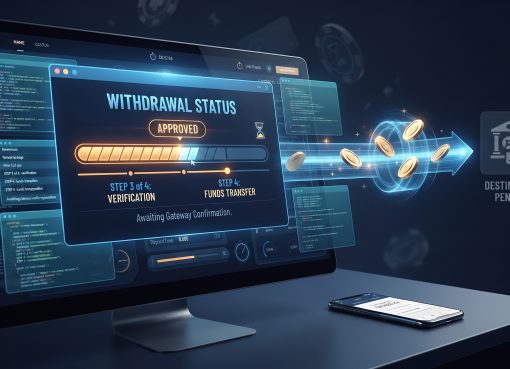
“Approved” typically means the casino’s internal review is finished. The withdrawal has passed fraud checks, KYC verification, and bonus compliance. But “Approved” does not mean the money has left the operator’s account. The transfer to your Interac e-Transfer, bank account, or e-wallet happens after approval, and that’s a separate process with its own timeline. I’ve seen operators where “Approved” withdrawals sat for 24 to 48 hours before the actual transfer initiated.
“Pending” is even less informative. It can mean the withdrawal is in a queue, it can mean KYC documents are under review, or it can mean the casino is inside a contractual processing window and hasn’t looked at it yet. The label doesn’t tell you which. If your transaction history shows a withdrawal as “Pending” for more than 48 hours with no further status change, that’s when you contact support and ask specifically which stage of the process it’s in.
The Entries That Should Be There but Often Aren’t
Most transaction histories handle deposits and withdrawals clearly enough. Where they get thin is on the bonus side. A welcome bonus credit will usually appear as a line item. But the wagering progress against that bonus, the moment it converted from bonus funds to withdrawable cash, or the moment it expired and was removed from your balance? Those events often leave no trace in the main transaction log.
This creates a specific problem. If you had a $200 bonus with a 30x wagering requirement, you needed to cycle $6,000 through eligible games before that bonus became real money. If the bonus expired before you hit that threshold, the bonus funds and any winnings derived from them were removed. But your transaction history might only show the original $200 credit and then nothing. No expiry entry. No removal entry. Just a balance that’s suddenly lower than you expected.
Some operators, particularly those in Ontario’s regulated market, are better about logging bonus-related events. But it’s not universal. If you’re playing with active bonus funds, screenshot your bonus balance and wagering progress separately. Don’t rely on the transaction history to reconstruct what happened after the fact.
Reversed Withdrawals Tell a Story You Need to Read
The most important entry in any transaction history is one most players hope never to see: a reversed withdrawal. This happens when a pending withdrawal is cancelled and the funds are returned to your playable balance. Sometimes the player initiates this. Sometimes the operator does.
Player-initiated reversals happen during the pending period, which at some operators can be 24 to 72 hours. The casino lets you cancel your own withdrawal and keep playing with the money. I’ve written about why this is one of the most dangerous features in any casino account. If your transaction history shows a pattern of withdrawal requests followed by reversals, that’s not a technical issue. That’s a behavioural signal worth paying attention to.
Operator-initiated reversals are different. These typically mean something failed in the compliance check. Maybe your KYC documents didn’t pass review. Maybe the withdrawal exceeded a limit tied to bonus terms. Maybe the payment method you used for deposits isn’t available for withdrawals. The transaction history will show the reversal, but it rarely tells you why. You’ll need to contact support for the reason, and you should, because the reason determines whether you can fix it or whether the funds are effectively locked.
How to Use It as a Dispute Record
If you ever need to file a complaint with an operator, a payment provider, or a regulator, your transaction history is your primary evidence. Under Ontario’s regulatory framework, operators registered with iGaming Ontario are required to maintain transaction records and make them accessible to players. But “accessible” doesn’t always mean “easy to export.”
Some operators let you download your history as a CSV or PDF. Others only display it on-screen with no export function. If your operator falls into the second category, take screenshots regularly. Once every month is reasonable. Once every session is better if you’re playing with bonus funds or making withdrawals.
The critical entries to document are: every deposit with the payment method used, every withdrawal request with its status changes, every bonus credit, and any reversed transaction. If a dispute arises, the operator’s internal records will be more detailed than yours. Having your own copy means you can identify discrepancies rather than relying entirely on the operator’s version of events.
What a Monthly Review Actually Looks Like
This doesn’t need to be complicated. Once a month, open your transaction history and check three things. First, do the deposit totals match what you intended to spend? Add them up. If the number surprises you, your deposit limits need adjusting. Second, are there any pending transactions older than five business days? If so, something is stuck and you need to ask why. Third, count the reversals. If there are any you didn’t initiate, find out what happened.
The monthly review also functions as a responsible gambling tool, and a more honest one than most of the tools casinos promote. Deposit limits tell you what you set. Transaction histories tell you what you did. The gap between intention and behaviour is where most players get into trouble, and the transaction log is the only place that gap is recorded in hard numbers.
Honest Assessment
Your transaction history is the most useful and most ignored feature in your casino account. It’s not designed to be user-friendly, and that’s partly the point. Operators have no incentive to make it easy for you to see exactly how much you’ve deposited, how many withdrawals got reversed, or where your bonus funds disappeared to. The information is there, but the burden of interpreting it falls entirely on you.
If you play at any online casino regularly, checking your transaction history monthly is the bare minimum. Exporting or screenshotting it is better. And if you’re playing with bonus funds, tracking wagering progress separately is essential, because the transaction log won’t do it for you. The players who never look at their transaction history are the same players who discover problems only after the money is gone and the evidence is hard to reconstruct.
The transaction history isn’t the exciting part of any casino account. It’s the part that tells you the truth when everything else in the interface is designed to keep you focused on the next spin. Open it once. Read it properly. You’ll play differently after that.
Gambling is entertainment with a cost attached, so set limits before you play and visit our Responsible Gaming page for support resources, safer-play tools, and help options if gambling stops feeling fun.


Leave a Comment